Anti Arthritis Gloves With Finger & Hand Support Compression
$33.56
$47.99
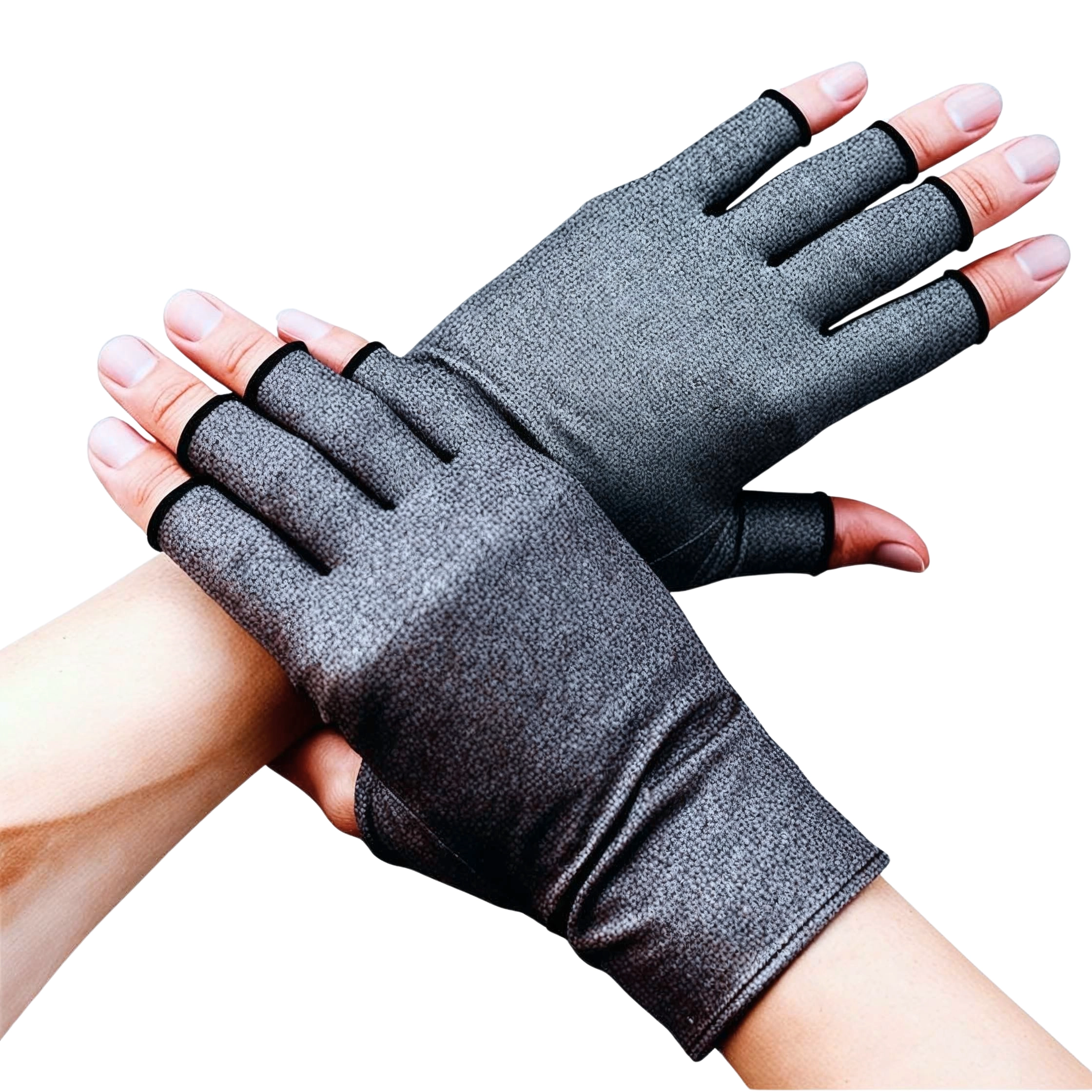
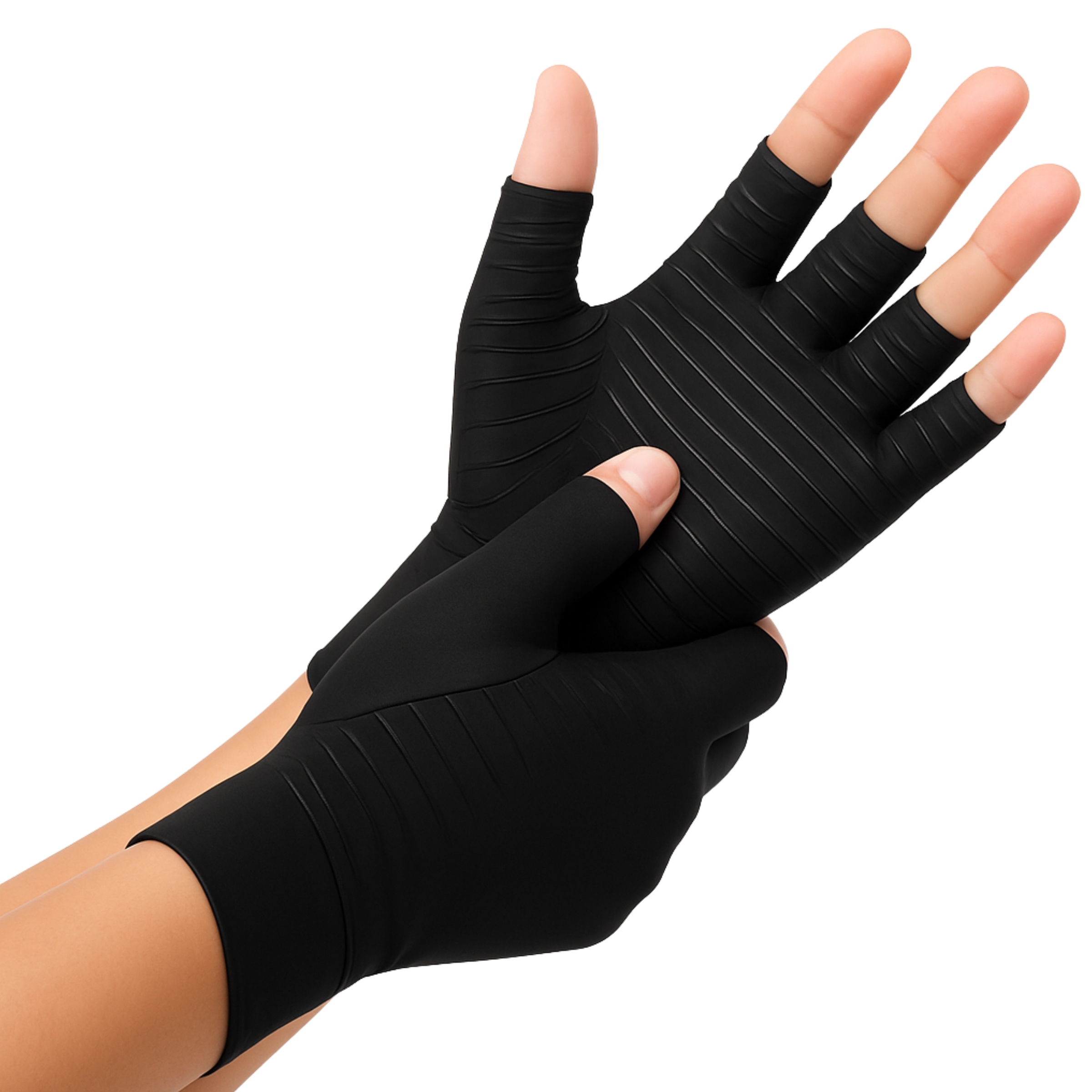
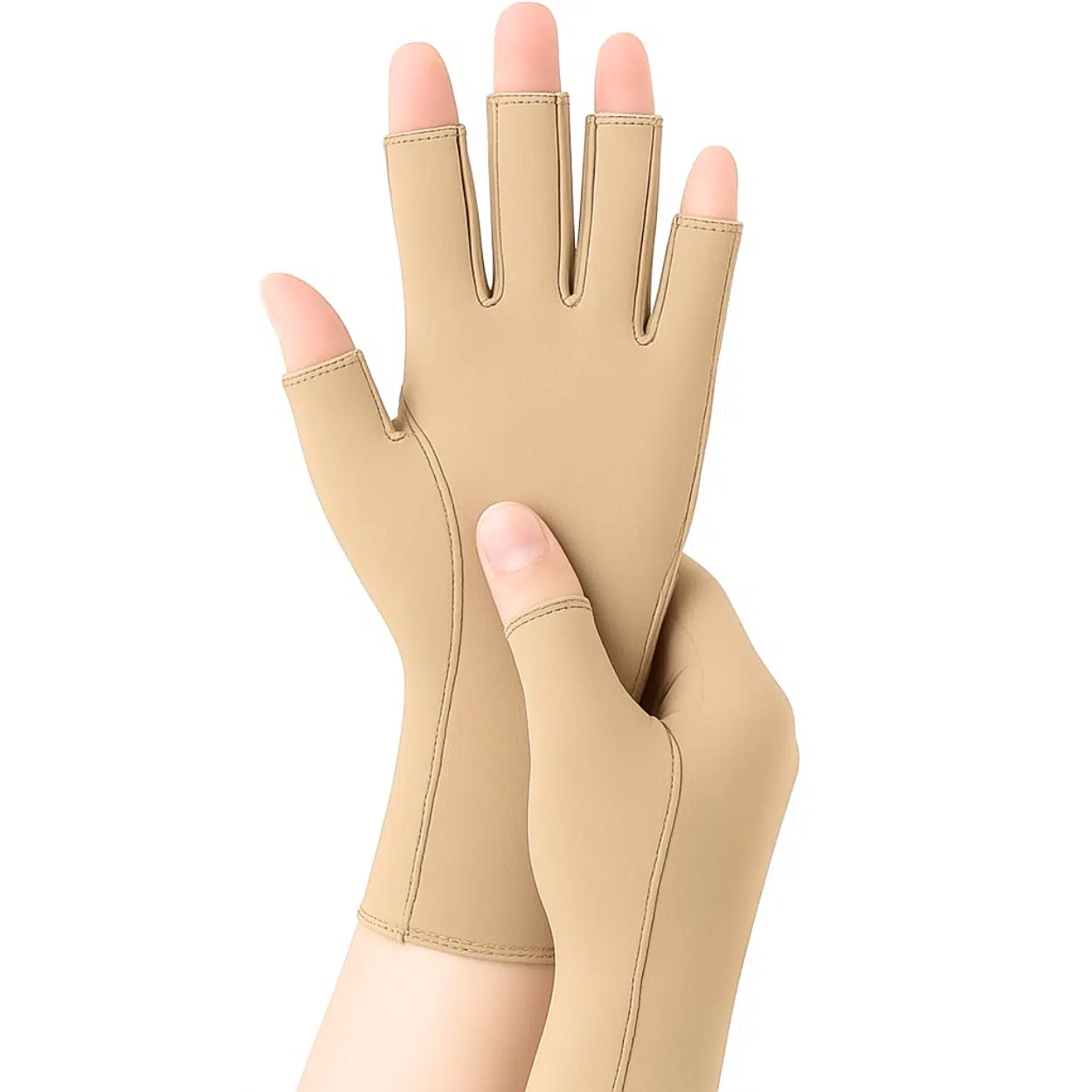
Why arthritic hands hurt – and how compression support may helpWhen arthritis affects your hands, it can affect almost everything you do with them. Turning a key, lifting a mug, typing, opening jars or using your phone can all trigger pain, stiffness or a heavy, tired feeling in your fingers. All of these movements depend on gripping and twisting through the many small joints in the fingers and thumbs, and arthritic joints often cope with that much less well.You may notice that your fingers look or feel swollen or “puffy”, your grip is not as strong as it used to be, and your hands feel clumsy or unreliable, especially when they’re sore. Swelling comes from extra joint fluid and a thickened joint lining, so the knuckles and the joints near the fingertips can look fuller and feel tight. Pain naturally makes you more cautious about squeezing or gripping firmly, so the muscles that power your grip are not used as confidently. When joints no longer glide smoothly, holding and controlling objects can feel less certain, and you may notice you check your grip more than you used to. This is often why simple jobs like turning a key or lifting a mug suddenly feel awkward or painful.Cold can make these symptoms worse. Lower temperatures tend to stiffen muscles and soft tissues and slow blood flow. Already irritated joints, especially in the fingers and at the base of the thumb, can feel even more stiff and painful when they’re cold. Some people also notice that their fingers change colour in the cold and then throb as they warm up again, which can make joint discomfort stand out even more and leave the whole hand feeling sore and very sensitive.Our Anti‑Arthritis Compression Gloves are designed as a light support for everyday use with exactly these problems: sore, stiff, puffy joints; less confidence in your grip; and extra sensitivity to cold. They offer medium‑to‑firm compression using a soft, breathable fabric and an open‑finger design, to help protect sore joints, keep them moving, and still let you feel and grip objects clearly.What is happening inside the hand joints“Arthritis” means inflammation and irritation inside joints. In osteoarthritis, the smooth cartilage that cushions your joints gradually wears thinner and the underlying bone can thicken and form small bony spurs. In rheumatoid arthritis, the lining of the joint (the synovium) becomes inflamed as part of an immune process and can grow thicker. These conditions start for different reasons, but in the small joints of the hand they often lead to similar changes: the lining is inflamed, there is extra fluid inside the joint, and some parts of the joint surfaces are under more pressure than others.Your hands contain many small joints: the knuckles at the base of the fingers (metacarpophalangeal joints), the middle finger joints (proximal interphalangeal joints), the joints near the fingertips (distal interphalangeal joints), and the joint at the base of the thumb where it meets the wrist (the thumb carpometacarpal joint). When the lining of these joints is inflamed and producing excess fluid, the space in and around the joint becomes more crowded. The capsule around the joint stretches to accommodate this, and the cartilage and nearby bone are exposed to more pressure in some areas than others. That’s why joints feel stiff and sore, especially after rest or first thing in the morning when fluid has had time to collect. Fingers can look swollen or thicker than before, particularly around the knuckles and the joints close to the fingertips. It may be harder to fully bend or straighten the fingers without a pulling or “blocking” sensation, and the base of the thumb can ache or feel weak with pinching or twisting movements, such as opening bottles, turning taps or using a key. That is often why your first movements of the day can feel particularly stiff or sore.In a healthy hand, these joints glide smoothly as you make a fist, straighten your fingers, or pinch between thumb and forefinger. The joint surfaces are well matched, covered with smooth cartilage, and bathed in a small amount of slippery joint fluid. In arthritic joints, the cartilage can wear, the bone underneath can change shape slightly, and the lining can stay inflamed. The joint then becomes less even and less tolerant of heavy or repeated loads. Movements that were once effortless, such as carrying shopping bags or twisting lids, now put more strain on the joint surfaces and can easily trigger pain. That uneven pressure is one reason certain movements or positions hurt more than others.Muscles, soft tissues and the effect of coldWhen joints are painful or swollen, the soft tissues around them – the tendons that bend and straighten your fingers, the ligaments that hold joints in line, and the small muscles in your hand and forearm – all have to work harder to support and move the hand. The small muscles between the finger bones and the muscles that control the base of the thumb are especially busy when you grip, pinch or type. When the joints are not moving smoothly, these muscles have to react more to small wobbles and changes in direction, which makes them fatigue more quickly. That’s why typing for a while, chopping vegetables or carrying a few shopping bags can leave arthritic hands feeling more tired and achy than you would expect from the amount of work you have done.Over time, many people also start to move differently or avoid using the hand fully. You may rely more on your less‑painful hand, hold objects closer to your body to reduce strain, or keep your fingers slightly bent most of the time to avoid the discomfort of fully straightening them. Over weeks and months, these ways of moving to avoid pain can lead to extra stiffness and weakness. Joints and soft tissues that are moved less regularly lose some of their easy flexibility, and muscles that are under‑used gradually lose strength. Everyday tasks such as opening jars, using cutlery, buttoning a shirt or doing up zips can then feel harder, reinforcing the sense that your hands are not as capable as they were. So even if the underlying arthritis has not changed quickly, your hands can feel stiffer and weaker simply because they have been used less.Cold tends to magnify this. When the temperature drops, blood flow to the fingers can decrease and the soft tissues can tighten. This makes already tight joint capsules and tendons feel even more resistant to movement. A hand with arthritic knuckles or a sore thumb base can feel particularly stiff if you’ve been outside in cold weather, driving with a cold steering wheel, or holding chilled objects. If you also experience Raynaud‑type colour changes, the cycle of fingers going pale, then blue, then red and throbbing as they warm can add a burning or aching sensation on top of the joint pain.How compression can change symptomsA well‑fitted compression glove will not change the underlying joint structure in arthritis, but it can change how those joints and soft tissues cope with everyday loads. Medium‑to‑firm compression and gentle warmth apply steady, even pressure around the fingers, thumb, hand and wrist, which many people find soothing over sore or mildly swollen joints. For many, this steady pressure seems to give the nervous system a more constant, non‑irritating touch input to the nerves in the skin, which can take the edge off how sharp or throbbing the pain can feel.Compression also gives a mild sense of support around small joints, helping to reduce tiny, jerky movements and limiting how often you accidentally push right to the very end of your bending or straightening range. Arthritic finger and thumb joints are often most irritated at those extremes; a snug layer around the joints can nudge movement into the more comfortable part of the range without holding you rigidly. Gentle, even pressure can discourage mild, day‑to‑day puffiness from feeling as if it’s collecting in one area of the hand. This does not replace medical‑grade garments for significant swelling related to circulation or lymphatic problems, but for the familiar feeling of “my fingers feel puffy by the evening”, it can make the tissues feel less spongy and more supported.As the fabric moves with your hand, it improves your sense of where your joints are in space (proprioception). This can make it easier to judge finger position and grip strength when you hold a mug, turn a tap or use a mouse, and may reduce the feeling of clumsiness or “dropping things” that pain and stiffness can cause. The warmth provided around sensitive joints can help muscles and soft tissues relax and allow joint fluid to move more easily. This can make the first few movements after rest – such as first thing in the morning or after sitting still for a while – feel less stiff and more manageable.You may particularly notice the difference in repetitive hand work. For example, when you’re using a keyboard and mouse for an hour or more, the small joints at the bases of the fingers and the tendons on the back of the hand are dealing with repeated low‑level bending and straightening. With arthritis, that repetition can make the joints feel hot and puffy. A compression glove gently hugging those joints and tendons can give steadier touch input to the nervous system and make the strain feel less focused on one sore area, so typing and mouse use feel less aggravating. That is often why people report that the usual end‑of‑day ache is less intense when they wear gloves for longer desk spells.Another familiar situation is opening jars or turning tight taps, which place twisting and pinching loads through the thumb base and the index‑finger knuckle. In an arthritic thumb joint, the worn cartilage and inflamed lining cope poorly with that twisting movement. A glove that wraps firmly around the thumb base and palm does not hold the joint still, but it can give a subtle “check” or gentle stop as you move, so you’re less likely to push right into the very end of your range. It also supports the soft tissues that usually tense up to stabilise the joint. The movement is still there, but the peak stress on the sore joint can feel lower and more manageable. That is why jobs like opening jars or turning taps can feel more controlled with a glove on.Osteoarthritis and rheumatoid arthritis both tend to be long‑running conditions. In osteoarthritis, changes in cartilage and bone structure are not reversed by rest alone. In rheumatoid arthritis, the immune system’s tendency to inflame joints can persist even when symptoms are well controlled. Because of this, everyday strategies that make it easier to keep using your hands – such as spreading gripping and twisting jobs more evenly through the day, exercises from a clinician, and supportive products like compression gloves – are important. They help you move at a level your joints can cope with, so joints stay as flexible as possible and muscles maintain strength, rather than losing function simply because you’ve been forced to avoid using your hands.Show moreShow lessHow our Anti‑Arthritis Gloves support your hands throughout the dayTargeted compression where your hands work hardestOur Anti‑Arthritis Gloves are supplied as a pair and provide medium‑to‑firm compression across the fingers, thumbs, hands and wrists. The stretchy knit fabric hugs the small joints in your hands in all directions, offering steady support as you move.By holding the soft tissues close to the joints, the gloves can help reduce small wobbles and the very end‑of‑movement “peaks” around painful joints, which often provoke sharp discomfort. When you grip a saucepan handle, carry a shopping bag or hold a steering wheel, your finger and thumb joints are repeatedly bending and straightening under load. A glove that wraps those joints can make these movements feel smoother and more controlled, without locking anything in place. People often say their hands feel more “held” and less fragile, without feeling rigid or splinted.Because the fabric covers the palm, the backs of the fingers and the thumb base, it also supports the small muscles that sit between the finger bones and around the thumb. When you squeeze a sponge, twist a handle or use a hand tool, these muscles are working to stabilise the joints as well as to produce force. Mild compression over these areas can make that work feel less tiring by providing an external layer of support, so the muscles do not have to switch on as hard just to keep joints lined up. Over time, that can mean less fatigue with repeated hand use.You may notice this particularly when:gripping everyday handles (such as pans, bags or a steering wheel)doing repeated fine tasks such as typing or using a mousetwisting or pinching with the thumb, such as opening jars or turning tapsThese gloves are not rigid braces. They are deliberately thin and flexible so they move with you, guiding your hands towards more comfortable positions but never holding you in a fixed angle. When sized correctly, you should feel a consistent, snug pressure rather than pinching, cutting in, or any blocking of the movement you already have.Open fingertips so you can still feel and gripThese gloves are designed specifically with open fingertips so that feeling and fine control are preserved. The fabric on each finger and thumb extends to just below the nail. That means the joints that are often most affected by arthritis – the knuckles and the middle and end joints of the fingers – sit inside the glove and receive compression, while the very tips of the fingers and thumb remain uncovered.This open‑finger design allows you to carry on with typing, using touchscreens, holding cutlery, pens and tools, handling paperwork, driving, and most household tasks, while still getting the benefits of gentle support and warmth around the joints themselves. When you type, the open fingertips let you feel the keys clearly, while compression over the knuckles and middle joints helps steady those joints and the tendons that lift and lower the fingers. When you chop vegetables, the bare finger pads give you precise feedback about the knife handle, while compression around the thumb base and index‑finger knuckle can make the twisting and pinching feel more controlled.The fabric is smooth and does not use sticky grip prints or raised dots. Any improvement in how securely you hold objects comes from reduced pain, reduced puffiness and better control of the small joints in your fingers, rather than from an artificial gripping surface. The surface is kept smooth on purpose, so outer gloves, splints or sleeves can slide on and off easily over the top.Comfortable on the skin with consistent supportOur arthritis gloves are made from soft, skin‑friendly fibres with stretch built in, chosen to balance comfort with consistent compression. The knit has some give in every direction, so it moulds to the shape of your hand rather than creasing and digging in. The material is comfortable enough to wear for long periods, yet elastic enough to spring back to shape after use, helping maintain a similar level of support over time.Breathable fabric helps limit overheating and sweat build‑up, which matters when you’re wearing the gloves while working, driving or doing housework. The aim is a snug, warm feel rather than hot and sweaty.Seams are kept low in bulk and are positioned with arthritic hands in mind. They are placed away from common sore spots such as the backs of enlarged knuckles, the base of the thumb and the bony area at the base of the little finger, where rough seams often rub. By keeping seams flat and clear of these prominent joints and tendon lines, the glove is less likely to create new pressure points when you hold handles, tools or a steering wheel. This attention to seam placement is one reason many people find our arthritis gloves comfortable enough to wear for hours at a time, not just a few minutes.Easy to care for, so they keep their supportTo keep the gloves working well day after day, wash them regularly in cool or warm water, by hand or on a gentle machine cycle, using a mild detergent. Avoid bleach and fabric softeners, which can affect the fibres, and let them air dry flat or on a line, away from direct high heat. Tumble drying and ironing are best avoided.Looking after the fabric in this way helps it keep its shape and level of compression, so you continue to feel a consistent level of support rather than bagginess in some areas and tightness in others. This consistency is particularly important when you’re managing a long‑term condition like arthritis, where you may wear the gloves on many days or for repeated periods throughout the week.Wear them on their own – or as a linerThese gloves are designed to be versatile. Indoors, you can wear them on their own for day‑to‑day activities. If you use a rigid or semi‑rigid splint or brace on your clinician’s advice, the thin, low‑bulk fabric means you can often wear the glove underneath as a soft liner, provided the combination still feels comfortable and does not restrict circulation. The fabric is kept slim so our arthritis gloves usually sit smoothly under standard wrist and thumb splints without bunching.Outdoors in cold weather, you can wear them under thicker winter gloves or mittens. The compression glove provides the gentle contact against the skin and helps trap warmth around the joints, while the outer glove adds insulation and protection from wind and rain. This layered approach can be especially helpful if cold worsens your pain or stiffness, or if your fingers tend to change colour or feel numb in the cold.For example, wearing the compression glove under a thicker mitten on a cold day means the small hand joints are kept warm and gently hugged, while the outer glove shields them from temperature drops. Many people with arthritis and Raynaud‑type symptoms find this combination more comfortable than relying on a single thick glove pressed directly against the skin.Finding the right fitFor compression to feel helpful, fit matters more than maximum tightness. These gloves come in three sizes:Small: 13–17 cmMedium: 17–20 cmLarge: 20–24 cmTo find your size, measure around your palm at its widest point, just below the knuckles and excluding the thumb. If one hand is noticeably larger, use that hand for sizing. Use this measurement to choose your size from the range above.Palm circumference is used because most of the useful compression comes from the glove supporting the palm and the bases of the fingers, where many of the small joints and soft tissues sit. A snug fit here helps the glove gently hug the knuckles, middle finger joints and thumb base as you move.If your measurement falls between two sizes, most people find the larger size more comfortable for longer‑term wear, especially if your hands tend to swell during the day. Trying to “size down” for extra tightness is not necessary and can make the gloves uncomfortable or restrict circulation. If they are uncomfortably tight, they are unlikely to be helpful for day‑to‑day use.When correctly sized, the gloves should feel snug and supportive but not painful, leave your fingertips free, and allow you to move your fingers and wrist as far as you normally can for your condition, without any new restriction caused by the glove itself. You should not see deep marks that take a long time to fade once the gloves are removed.Is this glove right for you?Common situations where people use these glovesOur Anti‑Arthritis Compression Gloves are designed first and foremost for adults with arthritis affecting their hands and fingers, including osteoarthritis and rheumatoid arthritis.They are often used, alongside other care recommended by clinicians, when people are dealing with:Hand pain and stiffness from long‑term overuse or tendon irritation – for example from repetitive work, hobbies or frequent tool use. This type of soft‑tissue irritation often sits on top of existing joint changes and can make arthritic hands feel even more tired and reluctant to move.Carpal tunnel–type hand and wrist discomfort – as a soft, comfortable layer for the hand and palm, alongside any specific splints or treatments your clinician has advised.Fibromyalgia or nerve‑related sensitivity affecting the hands – where some people find that gentle, constant contact and warmth feel more soothing than bare skin, making it a little easier to tolerate contact with tools, cutlery or keyboards.Mild swelling or stiffness in the hands during recovery from injury or immobilisation – once your clinician confirms that it’s safe for you to start moving more and that light compression is appropriate. In hands that already have arthritis, this post‑injury stiffness can sit on top of the usual joint changes.In all of these situations, our arthritis gloves are intended to make day‑to‑day use of your hands more comfortable and confident. They do not replace medical assessment, prescribed splints, exercise programmes, or other treatments your clinician has recommended, but they can work alongside them and often make it easier to put that advice into practice.When to speak to a clinician firstCompression gloves are not suitable for everyone. Before using them, speak to a GP, physiotherapist, or other appropriate clinician if you:have known circulation problems affecting your handshave significant loss of sensation in your hands and cannot reliably feel pressure, heat or discomfortnotice very severe or rapidly worsening swelling in one or both handshave had a recent major injury or surgery to the hand or wrist and have not yet been advised that compression garments are safe for younotice new or unexplained hand symptoms, such as sudden changes in shape, colour, or how well the hand worksSudden changes or very severe symptoms may signal a new problem that needs individual assessment. If you’re unsure whether these gloves are appropriate in your situation, it’s always sensible to check with a clinician who has assessed your hands and knows your overall health.More about specific diagnosesIf you’ve been given a specific diagnosis for your hand or wrist problem, you may want a little more detail on what that means and how gentle compression gloves might sit alongside your other care. The panels below explain how common problems tend to show up in the wrist, hands and fingers, why they cause the symptoms you’re noticing, and where light–medium compression gloves may fit in, based on the general effects described earlier.Sprains (ligament injuries)When a sprained wrist or finger still feels “wobbly”After a sprain in the wrist or fingers, it’s common to feel as though the joint is not quite as trustworthy as it was. You might notice a sense that the joint could “give way” if you put weight through it, sharp twinges with certain movements, or hesitation when you grip, push up from a chair, or catch yourself from a stumble.Ligaments act like strong straps that hold the bones of a joint in place. In the wrist and finger joints, they run along the sides and back of the joint, preventing it from sliding too far in one direction. When they’re overstretched or partially torn, they can take time to recover. While they’re healing, the joint may feel less stable and the muscles around it have to work harder to keep things controlled. This extra muscle work, especially in the small muscles around the thumb and in the forearm, can leave the area feeling tired or sore, even after the initial swelling and bruising have faded.These effects are often felt around the base of the thumb after a sideways sprain, or on the outside of the wrist after a fall onto an outstretched hand. Because the stabilising ligaments are not yet back to full strength, sudden twists or loading through the hand – such as pushing open a heavy door, supporting yourself on a handrail, or catching a falling object – can feel as if the joint might give way. It’s understandable to guard the joint, but long‑term guarding can make stiffness and weakness worse.Once your clinician is happy for you to start using the joint more normally, a light–medium compression glove can give a gentle “held” feeling around the injured area during everyday lighter tasks. The fabric hugging the wrist and finger joints provides extra feedback about where your hand is in space, which may make movements like turning taps, lifting a kettle or typing feel more confident and less hesitant. A steady wrap around the joint can also provide warmth, which may ease residual stiffness. For someone with existing hand arthritis, this extra sense of “giving way” can sit on top of already sore joints and further reduce confidence in using that hand, so this mild reassurance can be particularly valuable.The glove will not hold the joint in place like a rigid splint, and it is not a substitute for any brace or taping your clinician recommends. It acts as a soft, reassuring layer when you’re getting back to everyday hand use.Fractures and post-cast stiffness (wrist, hand, or finger)When the cast comes off but your hand still feels “rusty”After a wrist, hand or finger fracture, time in a cast or rigid splint is often essential to let the bone heal. Once the cast is removed, though, many people are surprised by how stiff and tight the joints feel, how weak the grip has become, and how awkward the hand seems with everyday tasks like cutting food, making a fist, doing up buttons or turning keys.While the bone is healing, the joints above and below the fracture move much less than usual. The small muscles that move and stabilise the fingers and thumb are not being used fully, so they weaken. The soft tissues around the joints – tendons, ligaments and the joint capsule – are held in one position and gradually shorten. When you first start moving again, trying to make a fist or straighten your fingers out from a curled position can feel tight or even painful at first, then ease slightly as the tissues warm up and you keep the hand moving.The wrist itself may feel particularly stiff when you try to bend it forwards or backwards or turn the palm up and down. Everyday tasks such as pouring from a kettle, using a knife and fork or turning door handles can feel clumsy and hard work, even though the bone is now healed enough to use.If you already have arthritis in your hand, this post‑cast stiffness sits on top of your usual morning or post‑rest stiffness, so the gap between how the hand used to feel and how it feels now may seem large.Once your clinician confirms that the fracture is stable and that it is safe to start moving more, a compression glove can provide warmth around stiff joints, which often makes gentle movement and exercises feel easier. The fabric wrapping the knuckles, middle joints and thumb base can give a soft sense of support as you relearn everyday actions like holding cutlery, using a mouse or turning door handles. When you’re up and about and using the hand repeatedly, the gentle, even pressure can help mild post‑fracture swelling around the fingers feel less obvious, so movements feel a little smoother and less “full”.Being in a cast or moving less after an injury or surgery can increase the risk of blood clots in some people. These gloves do not treat or prevent blood clots and must not be relied upon for that. If you have risk factors for clots, or notice worrying symptoms such as sudden unexplained swelling, pain or colour changes in a limb, you should seek medical advice promptly.The glove does not hold bones in place, speed bone healing or replace any exercises or splints your clinician recommends. Its role is to add comfort and gentle support as you rebuild movement and strength in the weeks after the cast comes off.Soft tissue bruises and minor impact injuriesWhen a “knocked” hand stays tender for longer than you expectedIf you bump or catch your hand, you may be left with bruising and soreness in the muscles, tendons or ligaments. Even when nothing is broken, you can still experience localised tenderness when you press or lean on the area, a dull ache that flares with use, and reluctance to grip strongly or put weight through the hand.Common spots for this include the fleshy pad at the base of the thumb, the muscle between thumb and index finger, or the knuckles if you’ve caught them. When these tissues are bruised, the small blood vessels and nerve endings in the area are irritated. Pressure from leaning on the heel of your hand, pressing a tap down, or gripping a handle squeezes those tissues and can re‑provoke discomfort until healing has progressed. If a bruise lies over an arthritic joint, the underlying joint irritation can make the whole area feel especially sore and slow to settle – it can feel as if a familiar joint problem has suddenly become sharper and more sensitive.A glove can add a comfortable layer of gentle contact over the area, which some people find less aggravating than direct, point‑pressure contact from surfaces and handles. The fabric spreads pressure slightly when you lean on a handrail, support yourself on the worktop, or rest your hand on a desk, and the warmth can help ease aching in the surrounding muscles. Mild support to the soft tissues during light activity, such as household chores or desk work, can make it feel easier to keep using the hand while the bruising resolves, instead of avoiding that hand completely.It remains important to follow any advice you’ve been given about rest, a gradual return to activity, and when to seek review if symptoms are not improving over a reasonable timeframe. If pain is severe, swelling is marked, or you are unsure whether something might be broken, you should seek medical assessment rather than relying on a glove.Post-casting stiffness (prolonged immobilisation)Stiff, tight hands after weeks in a cast or splint for soft‑tissue problemsSometimes the wrist, hand or fingers are held still in a cast or firm splint for reasons other than a fracture – for example after tendon or ligament surgery, or to protect a severe sprain or tendon injury. When the splint finally comes off after several weeks, it is normal to find that you cannot make a full fist or fully straighten your fingers, the wrist feels tight when you try to bend or twist it, and even simple movements feel hard work.During prolonged immobilisation, the joint capsule and surrounding soft tissues shorten because they are held in one position. The small muscles that cross the wrist and finger joints lose strength because they have done very little for a while, and your sense of where the hand is without looking at it becomes less sharp. The first few movements after a period of rest can feel particularly stiff and uncomfortable; as joints move and tissues warm, things often ease slightly, although fatigue and soreness can still build with use.If you also live with osteoarthritis in the hand or wrist, immobilisation‑related stiffness can amplify the usual joint changes. Tasks that once were automatic, such as tying laces, driving or preparing a meal, can suddenly feel clumsy and effortful, not because the surgery or injury has “gone wrong”, but because the whole system is out of practice.As you begin to move again, following your surgeon’s or therapist’s guidance, a light compression glove can provide gentle warmth around stiff joints while you do your prescribed exercises, such as opening and closing the hand, bending and straightening the wrist, or practising pinch grips. The gentle support around the fingers and thumb may make it more comfortable to practise gripping light objects like cups, cutlery or pens as you gradually ask more of the hand. If there is mild residual swelling in the fingers after prolonged splinting, the even pressure of the glove can help that feel less prominent as you return to everyday tasks.The main drivers of recovery after prolonged immobilisation are gradually increasing how far and how often you move the joints, and doing any specific exercises you have been given. A glove can make that process feel less sore and more secure, but it is not a treatment on its own and should not be used instead of any splints or exercises recommended as part of your rehabilitation.Dislocations (fingers or wrist)When a previously dislocated joint feels fragileAfter a finger or wrist dislocation has been reduced (put back into place) and treated, you may still notice that the joint feels vulnerable or “not quite right”. You may worry about it popping out again, or be hesitant to bear weight or grip strongly with that part of the hand.A dislocation can stretch or tear the ligaments and joint capsule that normally hold the joint securely. In a healthy joint, these tissues act as a firm sleeve that keeps the bone ends aligned as they roll and slide against each other. When that sleeve has been damaged, even after the bones are correctly aligned again, the joint may feel less secure for a while. The muscles around the joint have to take on more of the stabilising role, and they can tire quickly. You might be particularly wary of pushing open a heavy door with the affected hand, catching yourself on a handrail, or doing forceful grip tasks like opening jars, because these ask the joint to absorb sudden or heavy loads and can trigger a sharp warning pain.For someone who already has arthritis in that joint, the combination of structural wear and a history of dislocation can make the area feel especially fragile and painful. It is common to feel as if you must constantly “guard” the joint, which in turn can leave the whole hand feeling tight and over‑tense.Once your clinician confirms that it’s safe to use the joint more normally, a compression glove can give a light “hug” around the area as you return to day‑to‑day use. The fabric contacting the skin over the joint improves awareness of joint position, which may help you avoid awkward extremes of movement during tasks like lifting a pan or carrying shopping. The warmth and steady contact can make the change from rest to using the hand feel less sudden, so gradual increases in use feel more manageable. Here, the glove’s main job is to add comfort and confidence for routine hand tasks; it does not replace any splint, taping or exercises prescribed as part of your recovery, and it will not prevent re‑dislocation on its own.FibromyalgiaWhen hands ache or burn even with light touch or useIn fibromyalgia, the nervous system becomes more sensitive to pain signals. For some people, this includes the wrists, hands and fingers. You might notice aching, burning or throbbing in the hands even with light use, tenderness to touch where even gentle pressure feels uncomfortable, and stiffness and reduced hand stamina, especially when you’re generally more tired.Holding a book or phone for more than a few minutes, chopping vegetables, or doing repetitive fine tasks such as using a keyboard can feel disproportionately exhausting or sore, even if your joints themselves look normal on scans or X‑rays. The underlying issue is usually not ongoing damage in the hand joints themselves, but how the brain and nerves are processing signals from your skin, muscles and tendons. Normal touch or movement can be “turned up” and felt as more painful than expected – which is why everyday contact can feel surprisingly intense.For some people, a soft layer of gentle compression and warmth makes touch feel more predictable and less “sharp”, and helps their hands feel more settled and less exposed. Wearing a glove while you work at a desk, prepare a simple meal or use a phone can provide a steady, predictable contact that your nervous system can gradually pay less attention to, which for some reduces the contrast when you then grip or press on objects. In this situation, the glove is acting mainly as a comfort layer that takes the edge off contact, rather than as joint support.Others with fibromyalgia may find any pressure uncomfortable. If your hands are very sensitive, it’s best to introduce the gloves gradually, for short periods, and stop if they make symptoms worse. They are not a treatment for fibromyalgia itself, but for those who tolerate them they can make hand contact and light hand use a little easier to manage. If you also have arthritis in your hands, improving tolerance for light contact can make it easier to keep using your joints at a level they can manage.Chronic regional pain syndrome (CRPS)Severe, unpredictable hand pain after an injury or surgeryChronic regional pain syndrome (CRPS) can develop after an injury, surgery, or sometimes a relatively minor event. When it affects the wrist, hand or fingers, people often experience severe, burning or throbbing pain, marked sensitivity to touch or temperature, changes in skin colour or temperature, and stiffness and difficulty moving the hand.Even light contact, such as clothing brushing the skin or cool air across the hand, can provoke sharp pain. CRPS involves a change in how the nerves and blood vessels in the area behave. Signals from touch, movement and temperature are processed differently, so the hand can feel much more painful than you would expect from the original injury.Because sensitivity can be extreme, not everyone with CRPS will find compression or even light fabric contact tolerable. Where your specialist feels it’s appropriate, and where the skin and circulation allow, a very gentle compression glove may provide a uniform, soft contact that some people find less aggravating than clothing, bedding and cool air brushing against the skin from different directions. The glove can offer a mild sense of support during any guided movement or light tasks, helping to reduce the feeling that every touch or change in air temperature is harsh on the hand.Any use of compression in CRPS should be discussed with your treating team first. Our arthritis gloves are not a treatment for CRPS, but in some situations agreed with your specialist they may offer some extra comfort. Where arthritis is also present, improving tolerance for very light hand use can help you keep joints moving within any programme your clinicians have set.Ehlers–Danlos syndrome-related joint painHands that feel loose, “slippy” or easily strainedIn hypermobile forms of Ehlers–Danlos syndrome (EDS), the connective tissues that support joints are more stretchy than usual. In the wrists, hands and fingers, this can show up as joints that move further than average, a feeling that joints might “slip” or give way, frequent small sprains or strains from everyday tasks, and aching and fatigue in the hands after relatively light use.Most people’s finger joints come to a firm “stop” at the end of their movement. In hypermobility, joints can glide beyond that typical range, which makes it easy to over‑stretch without realising. The ligaments that normally act as firm straps are more elastic, so they offer less of a check at the end of movement. In the hands, that might mean the middle finger joints bending back more than usual when you press on a surface, or the thumb bending further away from the palm when you grip. Because of this, the small muscles around the joints have to work harder to control movement, particularly when you’re doing things like lifting pans, carrying shopping, typing, or holding tools.Over the years, this increased movement can contribute to extra wear in some joints, and arthritis can develop earlier than expected in areas such as the thumb base or the knuckles. Everyday loads that don’t bother most people can feel “too much” for joints that are already moving beyond the range they cope best with. You may notice that gripping firmly, supporting your weight on your hands, or doing long spells of desk work leaves the fingers and wrists aching deeply and feeling as if they could give way.A light–medium compression glove can give a gentle, even pressure around the hand and fingers, which can make joints feel more “contained”. The steady wrap improves awareness of finger and wrist position, which may help you avoid hanging on ligaments at the very end of the range when you push, pull or lift. For example, when typing or using a mouse, a glove can make it easier to keep the wrist in a more mid‑range position instead of letting it sag or over‑extend onto the desk.Warmth and light support can ease background aching, particularly after a day of desk work, driving or chores. For many people with EDS, the main benefit of a glove is this extra sense of control and containment, rather than strong mechanical restraint. Gloves are not a substitute for an overall plan agreed with your clinician that may include targeted strengthening, spreading gripping and twisting jobs more evenly through the day, and adapting certain tasks. Many people with EDS develop their own ways of gripping and supporting objects; an arthritis glove like this can support those strategies by adding comfort and clearer feedback from the joints.Persistent musculoskeletal hand or wrist painOngoing hand or wrist pain that never quite settlesSome people live with hand or wrist pain that flares with particular tasks such as typing, lifting or gripping tools, eases with rest but never fully disappears, and has persisted for months rather than weeks. This type of pain often involves a mix of irritated tendons (for example, along the thumb side of the wrist or over the back of the hand), stressed joints at the bases of the fingers, and protective muscle tension around the wrist and small finger joints. If the same areas are repeatedly stressed without enough recovery, they can stay sensitive and stiff.Over time, your nervous system can also become more tuned in to that region, so it reacts with pain more quickly than before. Someone who works at a desk most of the day might find that their wrists always ache by late morning at the keyboard, or someone who enjoys hands‑on hobbies or DIY may find that familiar activities reliably leave their hands aching the next day. Fine tasks such as buttoning shirts, fastening jewellery or using small tools can feel much more effortful than they look. If arthritis is also present, these ongoing soft‑tissue irritations sit on top of underlying joint changes, so the hand can feel reluctant to move even for routine tasks. This is often why you can have “normal” scans or X‑rays but still feel pain that limits what your hands can do.Alongside any exercises, changes in how you organise your day, and other treatments your clinician recommends, a compression glove can make day‑to‑day use a little more comfortable by providing gentle, even pressure around sore areas. The fabric hugging the hand may reduce the sense of “puffiness” if there is mild swelling and can give a steadier background sensation from the skin and joints as you use a keyboard, tools or kitchen utensils. Warmth from the glove can ease stiffness that never quite goes away, particularly if you’re working in a cool room or handling cooler objects.Here, the gloves are mainly there to help you tolerate the level of activity you and your clinician agree is appropriate, so you can do more of what you need to do without swinging between doing a lot on good days and very little on bad days. They do not address every reason for persistent pain, but they can be one small part of a wider plan to keep your hands moving and working.Diabetes-related hand swellingTight, puffy hands that are harder to moveSome people living with diabetes notice swelling in their hands. This can make the skin feel tight and the fingers harder to bend into a full fist. It may be linked to fluid retention, changes in blood vessels, or nerve issues. Swelling can be more noticeable at certain times of day or when overall glucose control has been less stable.Swollen tissues in the hand take up more space around the small finger and thumb joints and the tendons that cross them. As the soft tissues expand, they can press on the joint capsule and limit how far you can comfortably bend or straighten the fingers. This can create a feeling of pressure or aching and make fine tasks such as fastening buttons, doing up zips, counting out coins or handling small objects more difficult. The skin on the back of the hand can feel stretched, and closing the hand fully around objects such as cutlery or steering wheels may feel awkward. If arthritis is also present, this extra volume around already irritated joints can make the fingers feel “blocky” and unresponsive, as if they will not quite do what you ask.Because diabetes can also affect circulation and skin health, any compression needs particular care. If your clinician agrees that light compression is suitable for you, a glove may give a gentle, even contact that can feel more comfortable than bare, puffy skin. When you hold cutlery, write with a pen or use a steering wheel, the glove can help mild swelling feel less noticeable and provide warmth that may ease stiffness, without adding bulky layers that make fine control even harder.Managing blood sugar, other medical care and lifestyle measures remains central; a glove is there to make the hand feel more comfortable while you follow that advice. Always check with your diabetes or vascular care team before using compression on swollen hands, and stop if you notice any skin changes, colour changes, or numbness while wearing the gloves.Raynaud’s phenomenon (cold-sensitive fingers)Cold, colour‑changing fingers in chilly weatherRaynaud’s phenomenon causes the small blood vessels in your fingers to narrow more than usual in response to cold or stress. You may notice fingers turning very pale or white, then sometimes blue, with numbness or tingling while they’re cold, and redness and throbbing as they warm back up.In primary Raynaud’s, these attacks usually occur on their own in otherwise healthy people and can range from uncomfortable to very painful, but the blood vessels and tissues typically recover between episodes. In secondary Raynaud’s, similar attacks happen as part of another underlying condition that affects blood vessels or connective tissues. Secondary Raynaud’s is more likely to be associated with more severe attacks, skin changes or ulcers and needs medical assessment and follow‑up. People with a family history of connective‑tissue disease, certain autoimmune conditions, or other vascular problems are more likely to be in this secondary group and should have their symptoms reviewed by a clinician.If you also have arthritis in the fingers or at the base of the thumb, the combination of cold‑sensitive blood vessels and already irritated joints can trigger a noticeable spike in joint pain and stiffness each time your hands chill and then warm again. Gripping a cold steering wheel, holding a cold drink, carrying chilled shopping, or being outside in winter without proper gloves can all set this off. That is why the same task – such as driving or carrying shopping – can feel much worse on a cold day than on a warm one.Keeping hands warm and protected from sudden temperature changes is a key part of self‑management. Our arthritis gloves can act as a thin base layer. They help trap warmth close to the skin and take some of the sting out of cold air on the fingers, especially around the knuckles and thumb base. Because they leave the fingertips free but cover the joints just below the nails, knuckles and thumb base, they help keep the small joints warm while still allowing you to feel and handle objects such as keys, zips and buttons.Worn under a thicker winter glove or mitten, they keep the hand gently hugged while the outer glove shields against wind and temperature drops. The aim is not to change what is happening inside the blood vessels themselves, but to give you a more stable, comfortable temperature around the joints and skin, so each exposure to cold feels less harsh. For many people with both Raynaud’s and arthritis, this combination is more comfortable than relying on a single thick glove pressed directly against the skin, and can make it easier to continue using the hands outdoors without provoking as much pain.If your fingers are developing ulcers or sores, if attacks are becoming much more frequent or severe, or if you have other symptoms that worry you, you should speak to your GP or specialist team promptly. These gloves are intended to improve comfort and warmth around the joints; they do not diagnose or treat Raynaud’s or any underlying circulation disorder.Chilblains (painful, itchy swellings in the cold)Sore, itchy bumps on fingers after cold exposureChilblains are small, painful or itchy swellings that can develop on the fingers and toes after exposure to cold, damp or sudden changes in temperature. On the hands, they often appear as red, purple or darker patches or bumps on the sides of fingers or over the knuckles. The skin can feel sore, tender, hot or itchy, and tightness in the area can make bending the fingers uncomfortable.They occur when tiny blood vessels in the skin react strongly to cold and then warming, allowing some fluid and inflammatory cells to leak into the tissues. This creates the familiar raised, sore areas. If you also have arthritis, chilblains can add a sharp, surface soreness on top of deeper joint pain and stiffness, making hand use even more reluctant in colder weather.Preventing repeated cold injury and avoiding sudden temperature swings are the main aims. That usually means keeping your hands warm, drying them promptly, and not putting very cold hands straight into strong heat. Our arthritis gloves can be used as a thin liner under a looser, insulated outer glove or mitten to help maintain a more steady, gently warm temperature around the fingers and knuckles. The snug knit can reduce the feel of cold air moving across the skin and make hard, cold surfaces such as steering wheels or metal handles feel less harsh.Because chilblain‑affected skin can be tender or occasionally break, it is important that any glove you wear is soft, does not rub on sore patches, and does not feel overly tight. The low‑bulk seams and stretch fabric of these gloves are designed to minimise rubbing over knuckles and finger joints, which is particularly relevant if chilblains tend to settle there. If you notice any open skin, weeping, signs of infection, or if the soreness is severe or not improving, you should seek medical advice before using compression or layering gloves.Used in this cautious way, as a comfortable base layer under a warm outer glove, our arthritis gloves can help keep the hands at a more stable, gently warm temperature and reduce some of the immediate sting of cold contact, while also providing the joint support and warmth described earlier.Lymphedema (fluid retention and tissue swelling)Heavy, swollen hands when the lymphatic system is not draining wellLymphedema occurs when the lymphatic system, which normally helps drain excess fluid, is not working efficiently. In the hand and wrist, this can lead to puffiness and a feeling of heaviness, tight, stretched skin, and stiffness and reduced movement at the joints.Because the swelling fluid is rich in proteins, it tends to hold its shape and can, over time, cause the tissues to feel firmer or thicker. The extra volume means the skin and soft tissues have less room to move around the small finger and thumb joints, so even simple actions like making a fist, spreading the fingers or flexing the wrist can feel limited. Closing your hand fully around objects such as tools, cutlery, door handles or a walking aid handle can become harder. In hands where arthritis is already present, chronic swelling adds further restriction around joints that are already enlarged and irritated, making movement and grip feel even more limited and sometimes changing the contour of the back of the hand.Management of lymphedema is usually handled by specialist teams and often includes specific exercises, massage techniques and carefully prescribed compression garments that are graded and fitted for you. Our Anti‑Arthritis Compression Gloves do not provide medical‑grade compression and should not replace any garments or bandaging recommended by your lymphedema team.In some cases, where a clinician deems it safe and appropriate, a light glove like this might be worn as a comfort layer over the hand, for example when doing light household tasks or desk work where a full medical garment is not required, or between more intensive treatment sessions. The main role here is to make the hand feel more comfortable and “held” while you follow your lymphedema plan, and to provide a smoother surface against handles and objects. Always follow your lymphedema specialist’s advice about if and how to use any additional compression.Circulation-related swelling and discomfort in the handsHands that feel heavy, achy or more swollen by the end of the dayWhen the veins have difficulty returning blood efficiently from the hands back to the heart, blood and fluid can pool. You may notice a heavy, achy feeling in the hands, mild swelling that’s worse later in the day, and changes in skin colour over time. Rings may feel tighter by evening, and finger joints may feel “squashy” when you press them.Extra fluid and low‑grade inflammation can make joints and soft tissues feel stiff and sore. If you also have arthritis, this added load around the joints can make them feel more irritable and less willing to move. After a day of desk work, driving or carrying shopping, you may be particularly aware of this heaviness.Because circulation issues can be complex and can sometimes be affected by compression, it’s important to discuss any new garment with your clinician. Changes in how long you sit or stand, how you position your hands, and other lifestyle adjustments are usually more important than any glove.If your clinician is happy for you to try light compression on your hands, a glove may provide gentle support that some people find more comfortable than bare, mildly swollen skin. When you grip a steering wheel, hold a phone or carry a light bag, the glove can help mild puffiness feel less noticeable and give a sense that the hand is more contained. Stop using the gloves and seek advice if you notice any worsening swelling, new pain, or changes in skin colour or temperature. Conditions that affect circulation can sometimes increase the risk of blood clots; that risk needs its own medical assessment. These gloves are not designed to treat or prevent blood clots and should not be relied on for that purpose.Carpal tunnel syndromeNight‑time tingling and dropping objectsCarpal tunnel syndrome (CTS) happens when the median nerve, which runs through a narrow tunnel in the wrist, is irritated or compressed. Common features include tingling, numbness or “pins and needles” in the thumb, index and middle fingers, symptoms that are often worse at night or on waking, and weakness or clumsiness, such as dropping cups or struggling with buttons.The carpal tunnel is formed by the small wrist bones and a strong band of tissue on the palm side of the wrist. Tendons that bend your fingers and thumb, along with the median nerve, pass through this space. Swelling in the tendons’ linings, fluid shifts, or certain wrist positions (such as sleeping with the wrist bent forwards) can increase pressure in this tunnel and squeeze the nerve. When this happens, signals from the nerve are altered, producing tingling, numbness or aching in the thumb, index and middle fingers. In more pronounced cases, you may notice that fine tasks such as buttoning a shirt, fastening jewellery or picking up small objects become harder because you cannot feel them as clearly or your grip is less sure. This explains why you may wake with tingling in some fingers but not usually in the little finger.Treatment for CTS often includes wrist splints that hold the wrist in a mid‑range position at night, activity changes, or other interventions. A soft compression glove does not take pressure off the nerve inside the tunnel in the way a correctly positioned splint can, so it does not replace splinting or other specific treatments. Some people with mild CTS and co‑existing hand arthritis or general soreness choose to wear a glove during the day to provide gentle comfort around the hand and palm, support other painful joints in the fingers and thumb, and add warmth that can ease stiffness, especially if they are doing tasks that load the hand but do not require strong wrist bending.Worn under a wrist splint (if your clinician agrees this is appropriate), the thin fabric of the glove can make the splint more comfortable against the skin by reducing rubbing and absorbing sweat. The glove can also provide a smoother surface against tools, keyboards or steering wheels when the hand is generally sore. Always follow your clinician’s guidance about splints and other CTS treatments, and about how long to wear them. If compression seems to worsen numbness or tingling, or if you notice new weakness in the thumb or fingers, stop using the gloves and seek advice.Tendonitis (in the wrist or hand)Pain with particular movements, such as gripping, lifting or twistingTendonitis is irritation of a tendon, the cord‑like structure that connects muscle to bone. In the wrist and hand this often causes pain with certain movements, such as gripping, lifting a kettle, or twisting a jar lid; tenderness along the line of the tendon if you press it; and a feeling of local stiffness after rest.Repetitive movements or higher loads than the tendon is used to can create small amounts of irritation in the tendon and its surrounding sheath. On the palm side of the wrist, the flexor tendons that bend your fingers can become sore with repeated gripping, lifting or tool use. On the back of the wrist, the tendons that lift the fingers and wrist can become irritated with prolonged typing, mouse use or lifting. If this pattern continues without enough recovery, the tendon can stay sore and slightly thickened, and movements that load it – such as picking up a heavy pan or using a screwdriver – will keep provoking pain.If arthritis is also present in nearby joints, the combination of joint irritation and tendon irritation can make the whole region feel more reluctant to move.Alongside rest from aggravating activities, building your activity back up in small, steady steps, and any other treatments your clinician suggests, a compression glove may provide a light, supportive feel around the sore area during modest tasks. Because the glove wraps both the palm and back of the wrist, it covers the main tendon lines that tend to get irritated. The fabric hugging the palm and back of the hand spreads pressure slightly when you hold handles or tools, and the warmth can ease background ache in the tendons. If there is minor swelling around the tendon, the even pressure of the glove may help that feel less obvious as you work. It will not, by itself, change how much load the tendon can safely take, so it’s important to combine glove use with any recommended changes to how and how much you use your hand.De Quervain’s tenosynovitis (thumb tendon irritation)Thumb‑side wrist pain when you lift, grip or twistDe Quervain’s tenosynovitis affects the tendons on the thumb side of your wrist. Typical signs include pain at the base of the thumb, especially when you grip or lift; discomfort when you lift a heavier object or twist something held in the hand; and soreness when you bend the thumb across the palm and move the wrist.The tendons that lift and extend the thumb run through a narrow tunnel (compartment) on the thumb side of the wrist. In a healthy wrist, they glide smoothly through this tunnel when you lift or extend the thumb, such as when you lift your thumb away from the palm to grasp an object. When those tendons or their lining are irritated or over‑used, the lining of that tunnel can inflame and thicken, making space tighter and movement more painful. You might feel a sharp or catching pain when you lift a heavier object, pour from a heavy kettle, or use your thumb to steady a large book. That is why lifting or twisting with the thumb side of the wrist can suddenly send a sharp pain along the thumb.If arthritis is also present at the base of the thumb, these tendon symptoms can feel particularly intense because the underlying joint is already irritated. Opening jars, twisting bottle tops, turning keys or using tools can send pain along the thumb side of the wrist and into the thumb itself.Management usually includes rest from aggravating activities, sometimes a thumb splint to limit painful thumb movements, and specific exercises. A compression glove that extends over the thumb base and wrist can provide gentle warmth and contact over the irritated area during light tasks, such as using cutlery, preparing food, typing or holding a phone. The snug fabric around the thumb base and wrist may make it more comfortable to carry lighter items or to hold a steering wheel, as the tendons and joint are supported by an external layer rather than relying entirely on local muscle tension.The glove can also sit comfortably under a more rigid thumb splint if one has been prescribed, helping to reduce rubbing and improve comfort against the skin. Here, its main role is to add warmth and a sense of support to the thumb‑side wrist area for day‑to‑day activities that are within your comfort zone. It is not a substitute for a correctly fitted thumb brace or for rest from provoking activities, but can add to overall comfort and make it easier to follow your rehabilitation plan.Bursitis (inflamed cushioning sacs near joints)Tender “hot spots” near knuckles or the wristBursae are small, fluid‑filled sacs that act as cushions between bones, tendons and skin. When one becomes irritated – for example around a knuckle or near the wrist – you might feel a very localised, tender spot, swelling or warmth over the area, and pain when you press or move in certain ways.You might especially notice discomfort when leaning on your knuckles, supporting your weight with your hand flat on a surface, or gripping something that presses on the affected spot. The inflamed bursa takes up more space and can press on nearby tendons or the joint capsule, so simple loads like resting your hand on a desk, pushing yourself up from a chair, or using a walking aid that presses on that area can feel sharply uncomfortable. If the bursa lies near an arthritic joint, that joint’s underlying irritation can add to the discomfort.A compression glove can apply a gentle, more diffuse pressure across the area rather than a single point of contact, which some people find less aggravating. The fabric spreads out pressure when you rest your hand on surfaces or hold handles, and supports surrounding soft tissues during light movement. Warmth from the glove may help ease general stiffness in the region, particularly if the bursa has been irritated for a while. If a bursa is very swollen, red or acutely painful, you should seek medical advice promptly. In such cases, specific medical treatment may be required and compression gloves may not be appropriate until advised.Trigger finger (locking or catching finger)A finger that clicks, catches or locksTrigger finger (stenosing tenosynovitis) occurs when a flexor tendon in the finger or thumb catches as it moves through its tunnel. You may notice stiffness or a catching feeling when you bend or straighten the finger, a “click” or snap as the finger moves, and in some cases, the finger locking in a bent position and needing help to straighten.The flexor tendons run from the muscles in your forearm, through a sheath in your palm, to the fingers. Along the way, they pass under bands of tissue called pulleys that keep the tendons close to the bone. The first pulley at the base of the finger in the palm is a common trouble spot. When the tendon or its sheath thickens, often from repeated friction or irritation, it can struggle to glide smoothly under this pulley. A small nodule can form on the tendon where it repeatedly catches. As the tendon moves, it can snag and then release suddenly, producing the characteristic click. There is often a sore lump in the palm at the base of the affected finger. Symptoms are often worst on first moving in the morning or after rest, then may ease somewhat as you use the hand, although repeated gripping, such as holding tools or shopping bags, can bring them back.If arthritis is present in the affected finger joints, the combination of joint changes and a catching tendon can make that finger feel particularly stiff and awkward. You may find that tasks needing repeated bending and straightening of that finger – such as typing, using scissors or gripping cutlery – feel clumsy, painful or unpredictable.Treatment options range from activity modification and splinting to other interventions for more persistent cases. A soft compression glove will not free a locked tendon or stop the tendon from catching inside the pulley, but it can provide warmth that may make stiffness less uncomfortable, especially in the morning, and offer gentle support around the finger and palm during everyday tasks that are within your comfort range. For example, wearing a glove while you type, prepare food or handle paperwork may reduce the sense of “every movement catching on the sore spot” by giving a steadier background contact over the area.If your finger is frequently locking, very painful, or you’re losing function (for example, struggling to straighten the finger at all or noticing marked weakness), you should seek individual medical advice. The glove is there to make day‑to‑day use more comfortable and to support other treatments, not to treat the locking mechanism itself.How to wear your gloves safely – and what to expectOnce you’ve chosen your size, put the gloves on carefully, easing the fabric over each finger and thumb so that the seams sit comfortably and the open tips sit just below your fingernails. The gloves should feel snug and supportive from the fingertips down to the wrist, without pinching or cutting into the skin.Most people find they get the most benefit by wearing the gloves during the day, when their hands are in active use – for example, while working at a desk with a keyboard and mouse, doing housework such as washing up or preparing meals, driving, light gardening or similar everyday activities. Supporting the joints while they’re working can help reduce the build‑up of pain and fatigue through the day. Wearing the gloves while typing, preparing meals, using tools or carrying light shopping, for instance, can make these repeated hand activities feel more manageable.Some people also like to wear them in the evening or at night, particularly if their hands ache at rest. If you try overnight use, check that the gloves remain comfortable throughout the night and that you don’t wake with new numbness, tingling or unusual colour changes. A gentle feeling of pressure is expected; sharp discomfort, strong pins and needles, or deep marks that take a long time to fade are not, and suggest the fit is not right for you.When first using the gloves, it can help to build up wear time gradually over a few days, so your skin and soft tissues can adapt. Start with shorter periods for particular tasks, such as an hour of desk work or some household chores, and increase if they continue to feel comfortable.Many people find that when they wear the gloves regularly for hand tasks that usually set their symptoms off – such as keyboard work, food preparation, cleaning or driving – pain and stiffness are easier to manage and everyday activities feel more comfortable. The change is usually modest but noticeable in ordinary tasks, rather than a dramatic shift. Our arthritis gloves work best as a way to support your hands while you do the things you need and want to do, not as a cure for arthritis or other conditions.While wearing the gloves, pay attention to how your hands feel. Remove them and seek advice from a GP, physiotherapist or other appropriate clinician if you notice numbness, tingling or burning that was not present before wearing them; fingers turning very pale, blue, or unusually dark; increasing pain or swelling that seems worse with the gloves on; or any new or unexplained symptoms in your hands.If you’ve been advised to wear splints or braces, or to follow specific exercises, continue to follow that guidance. These gloves can often be worn underneath other supports for added comfort, but they’re not a replacement for prescribed devices or rehabilitation programmes.Your next stepIf painful, stiff arthritic finger and thumb joints are making gripping, twisting, typing and other everyday hand movements difficult, our arthritis gloves are a simple, non‑medicine option you can try alongside other care. By combining medium‑to‑firm compression, soft breathable fabric, open fingertips and carefully placed, low‑bulk seams, they are designed to help ease some of the day‑to‑day pain and stiffness around your joints, support more natural, confident hand movement, and make common tasks feel less of a struggle.They’re supplied as a pair and available in three sizes. Measure around your palm and choose the size that matches to give yourself the best chance of a snug, comfortable fit that works with your hands rather than against them. In practice, most people don’t wear arthritis gloves every minute of the day; they put them on for the tasks that place most demand on their hands. They are intended for exactly those tasks that usually make your hands more painful.Everyone’s experience is different; some people notice benefits quickly, while for others changes are more gradual over days and weeks as they combine glove use with other strategies such as hand exercises and spreading gripping and twisting jobs more evenly through the day. Our arthritis gloves tend to be most useful when you use them for the activities you already know trigger your symptoms.If you’re unsure whether they’re suitable in your particular medical situation, or you fall into any of the caution groups mentioned earlier, speak to a GP, physiotherapist or other clinician who has assessed your hands. For many people not in those groups, measuring your palm, selecting your size and trying the gloves for the specific hand tasks you find most demanding is a sensible next step.DisclaimerAt NuovaHealth, your wellbeing comes first. We are confident in the design and likely benefits of our Anti‑Arthritis Compression Gloves, but they may not be suitable for everyone.You should consult your doctor or another appropriate healthcare professional before using these gloves, especially if you have open wounds or skin infections on your hands, known circulation problems affecting your hands, diabetes or other conditions that affect sensation or blood flow, very severe swelling, recent serious hand injuries or recent surgery, or reduced ability to feel pressure, pain or temperature in your hands.The information provided here is for general guidance only and should not replace personalised advice from your healthcare provider. These gloves are not a substitute for diagnosis, treatment or medical care. No specific outcomes can be guaranteed. Your clinician knows your health needs best and can help you decide whether these gloves are appropriate for you.Proper fit is essential. Use the size guide to aim for a supportive fit that does not restrict blood flow. If you experience numbness, tingling, colour changes, or discomfort while wearing the gloves, remove them immediately. Compression should never be painful.Pay attention to how your hands feel, follow medical advice, and seek professional support whenever you are unsure.
Arthritis Gloves