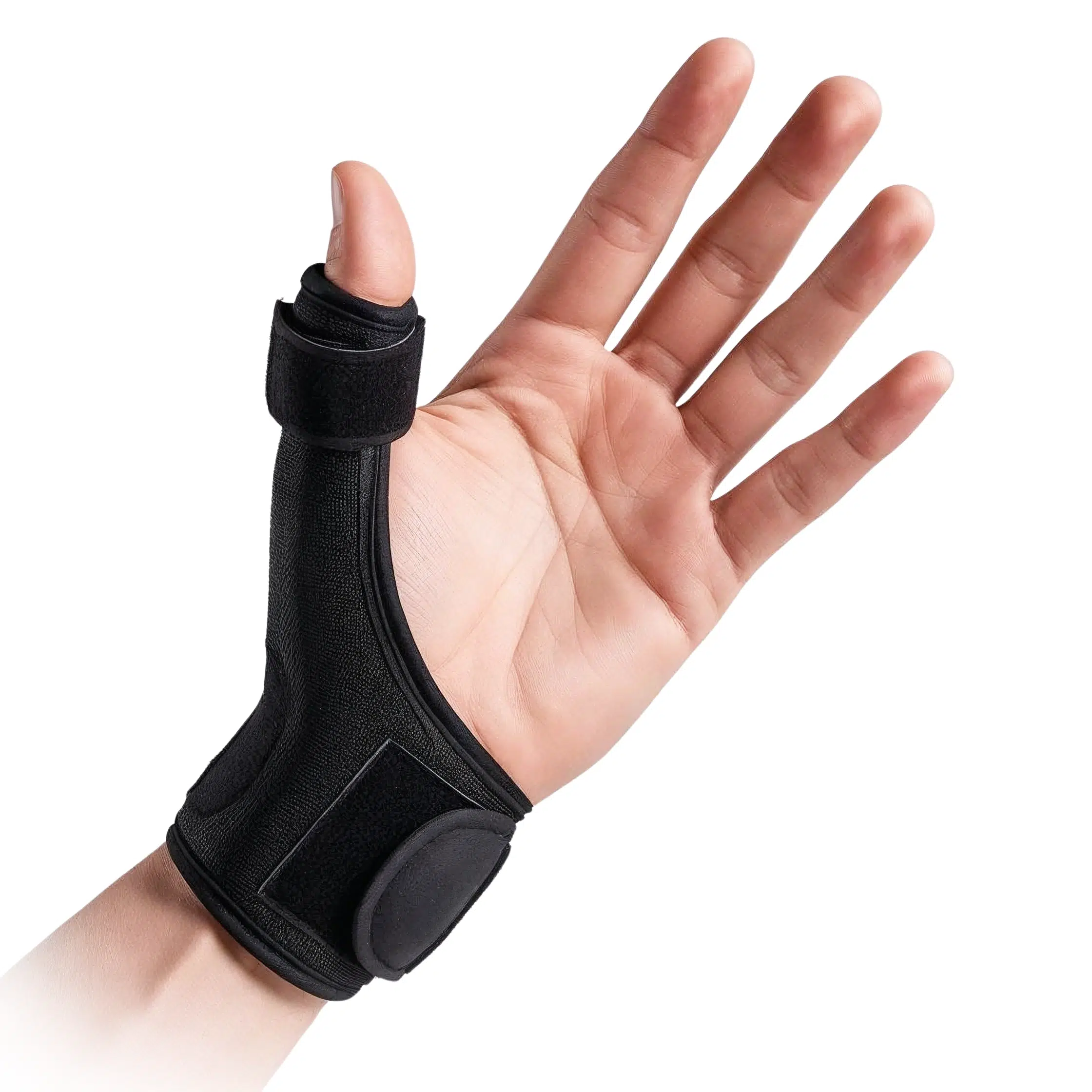
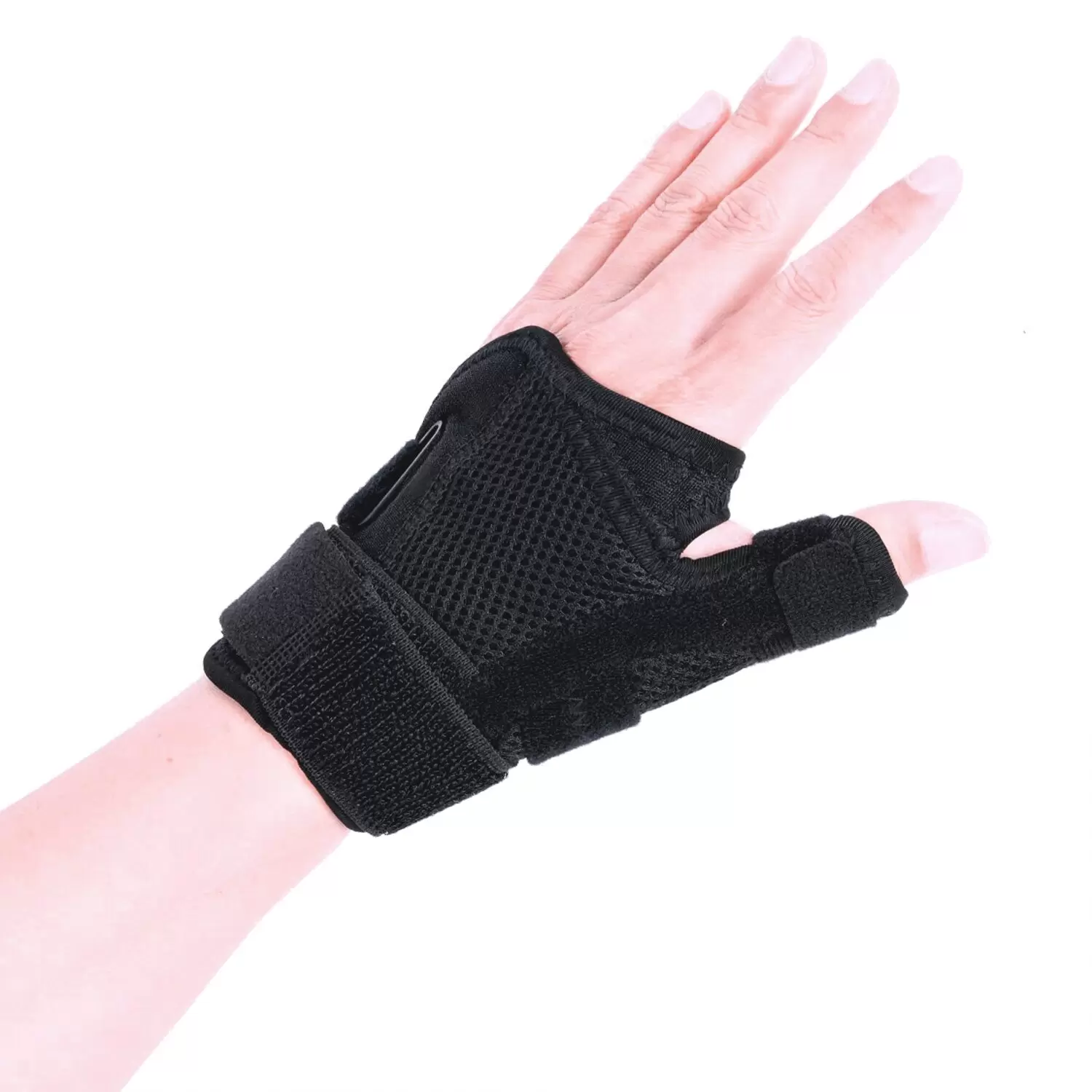
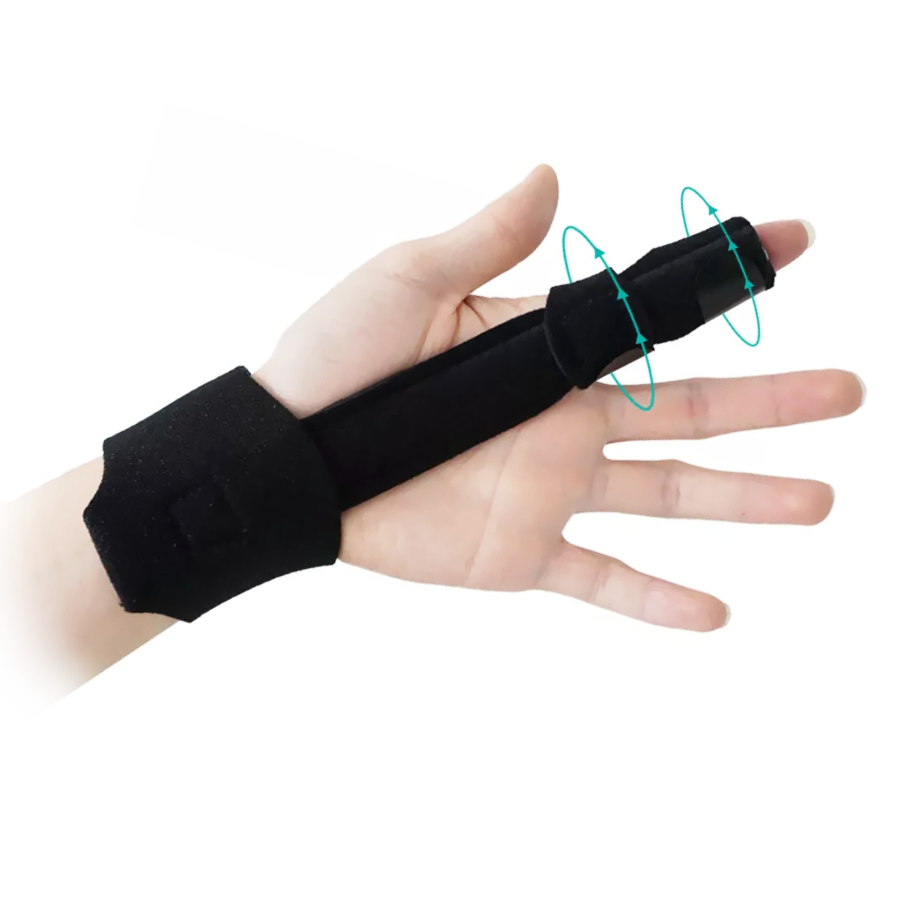
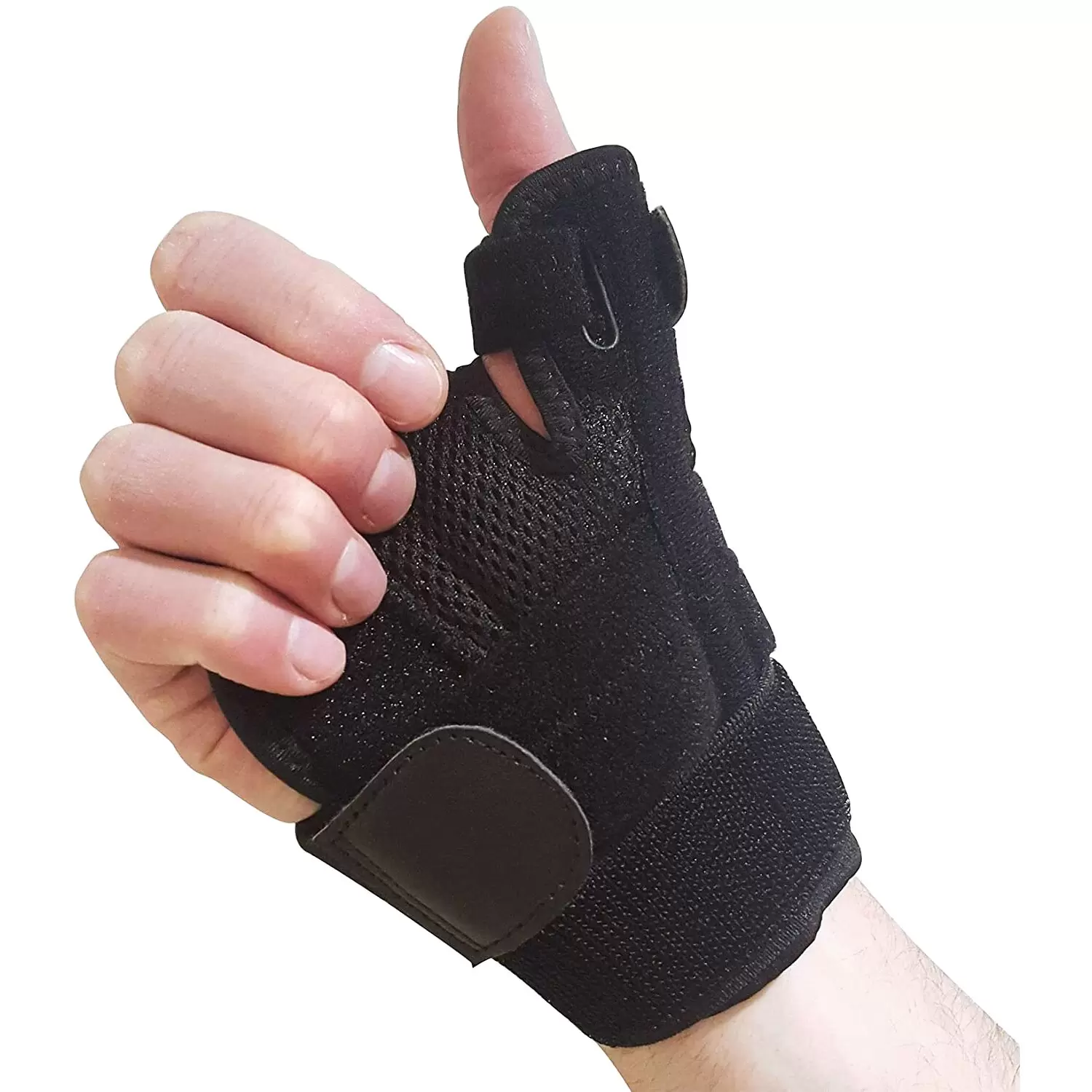
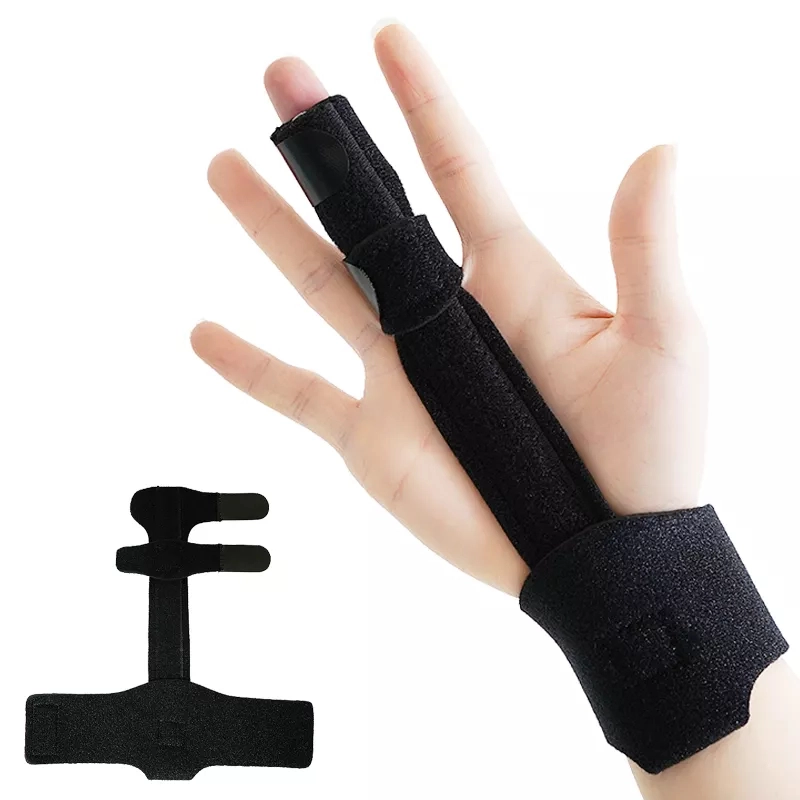
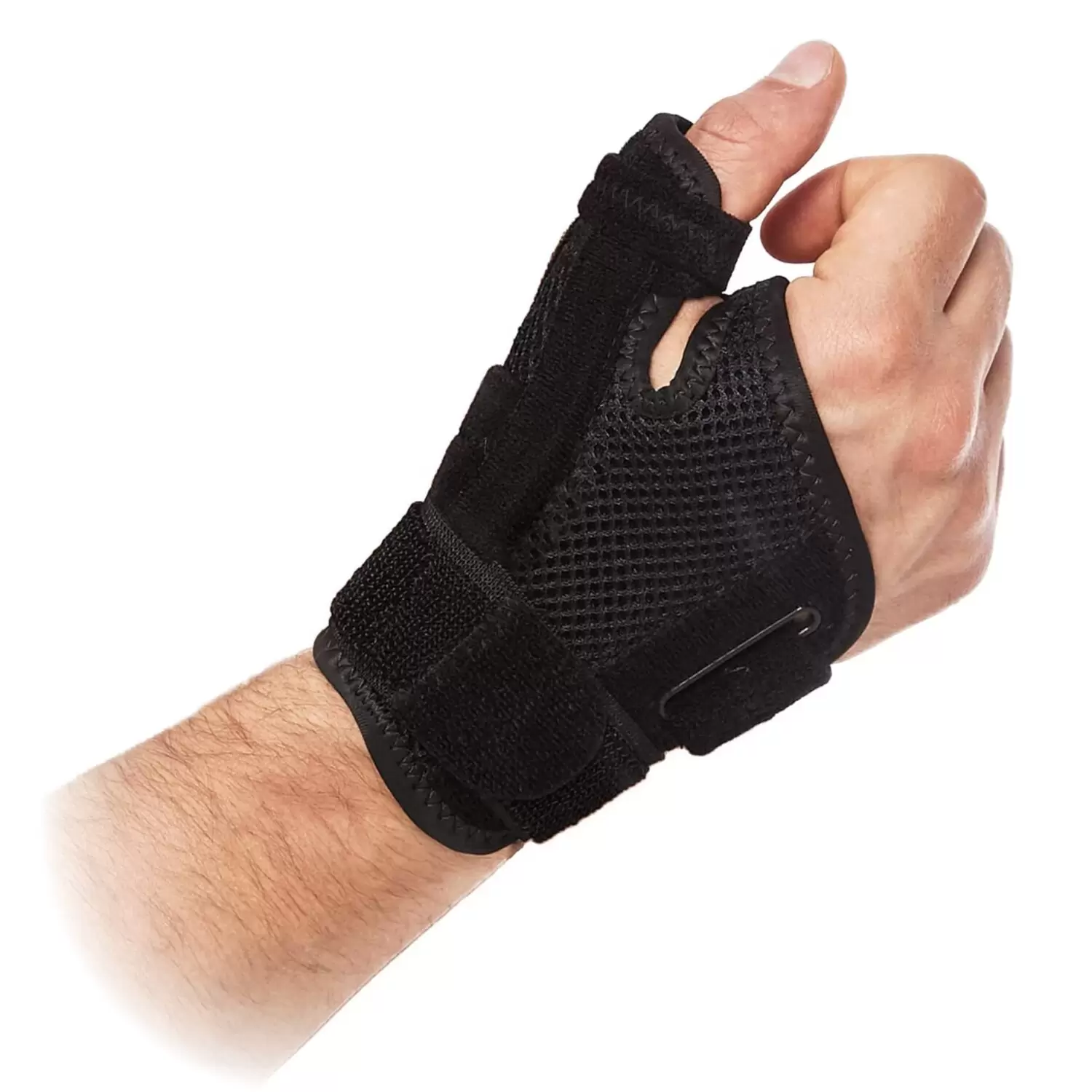
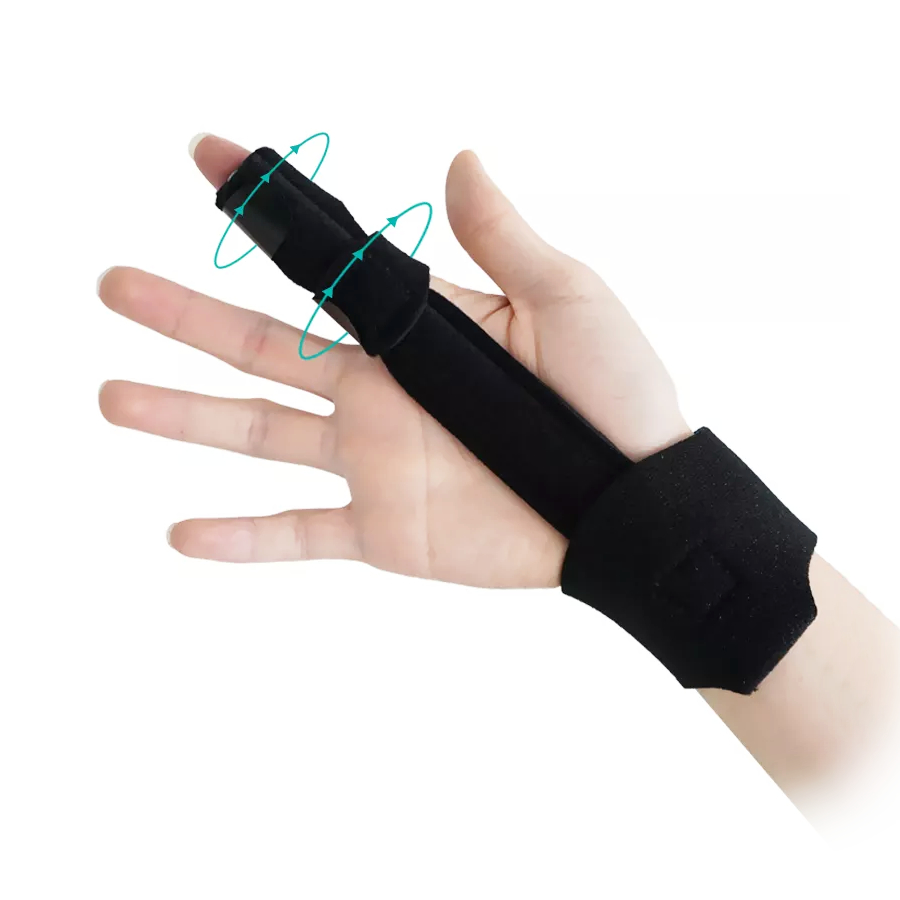
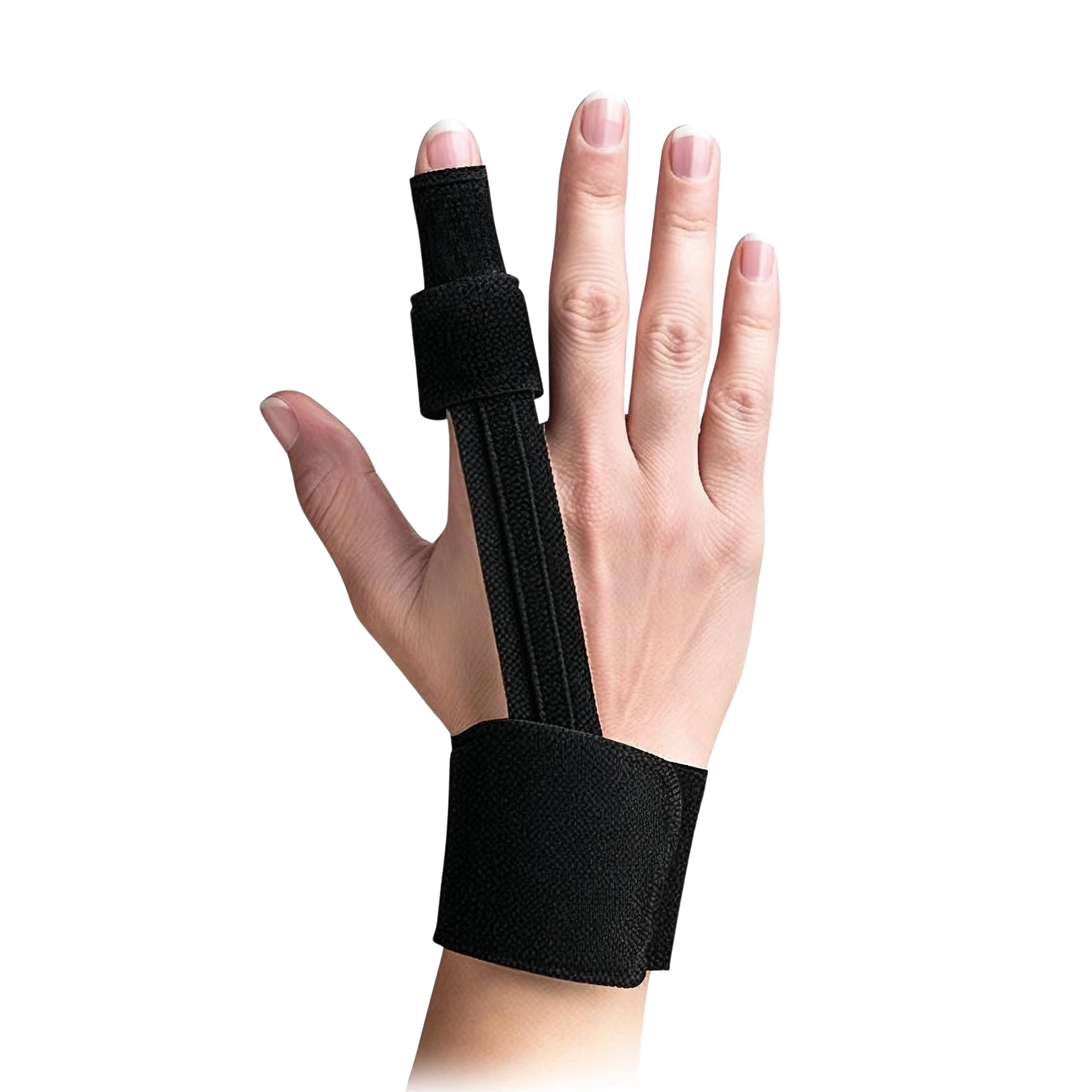
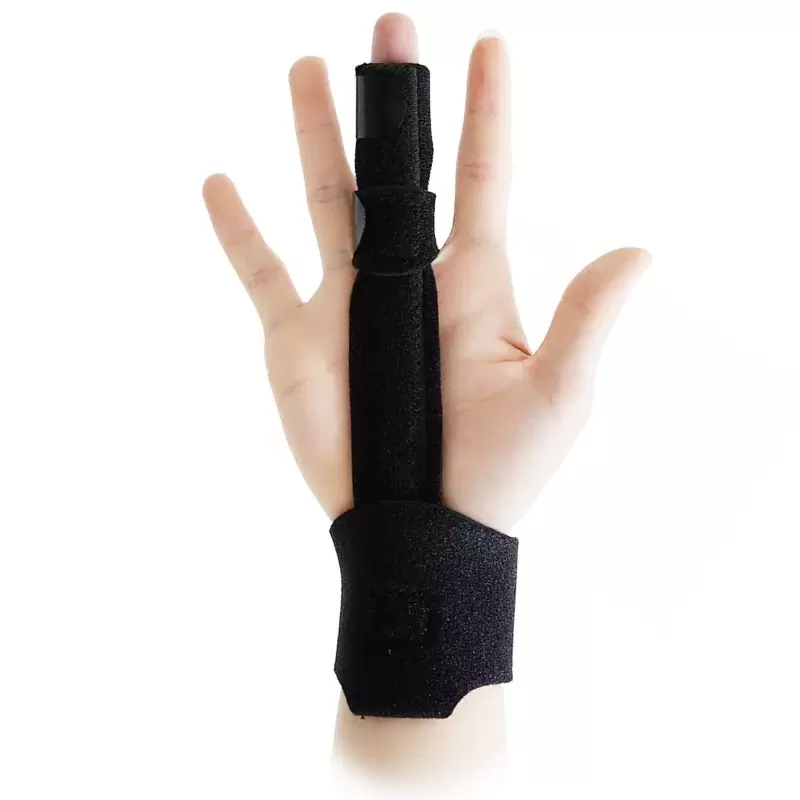
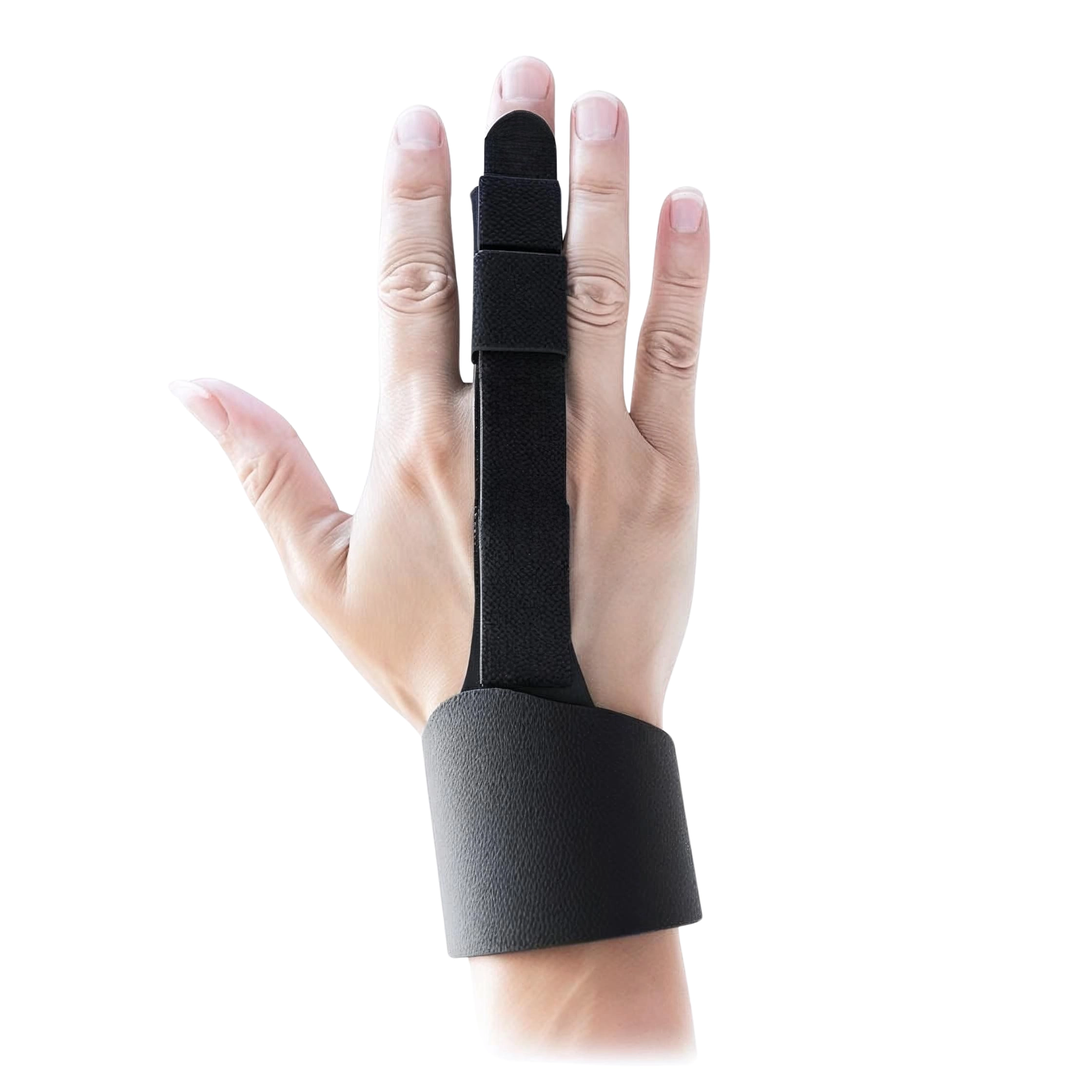
Finger Splint Straightener Brace for correcting bent & crooked fingers
$16.76
$24.3
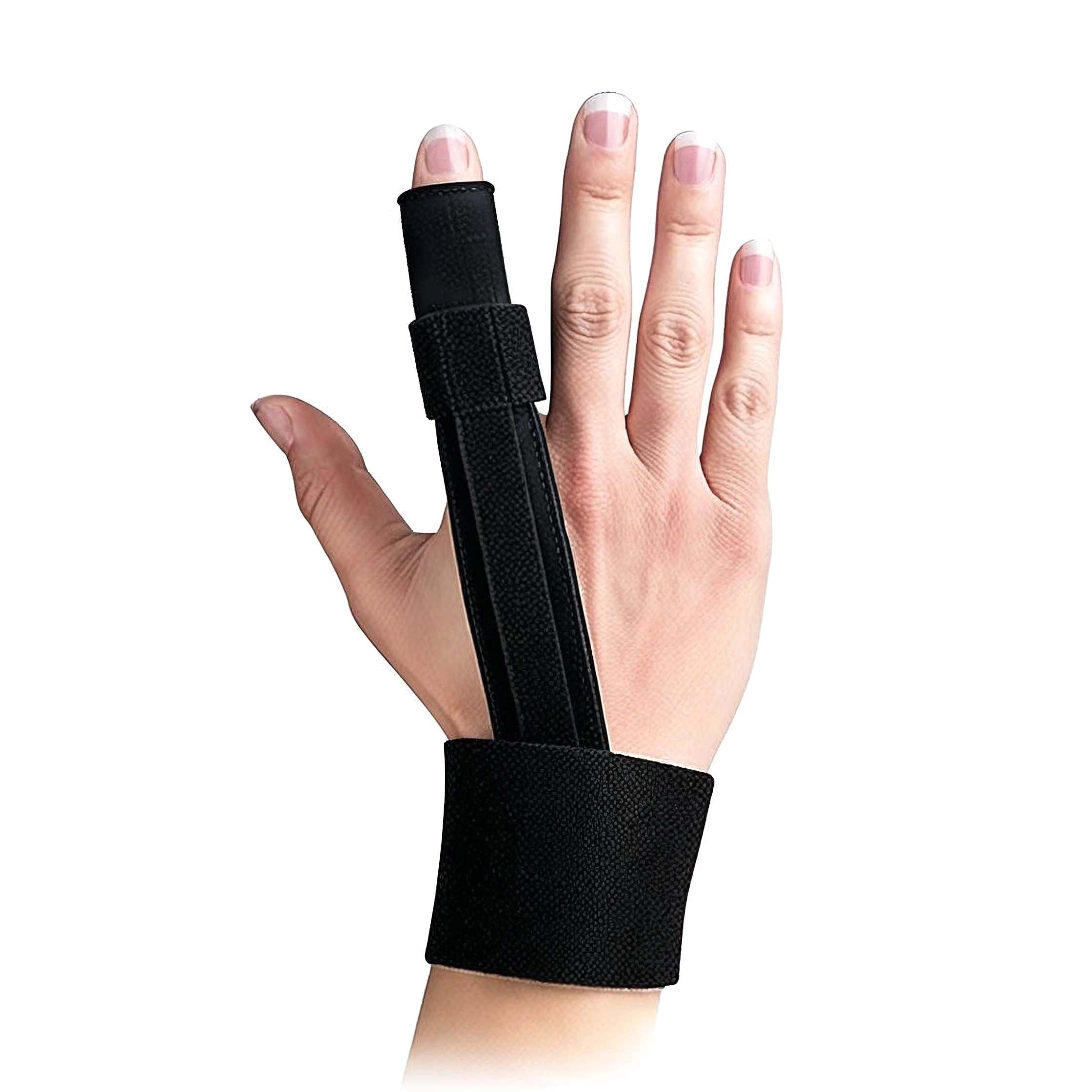
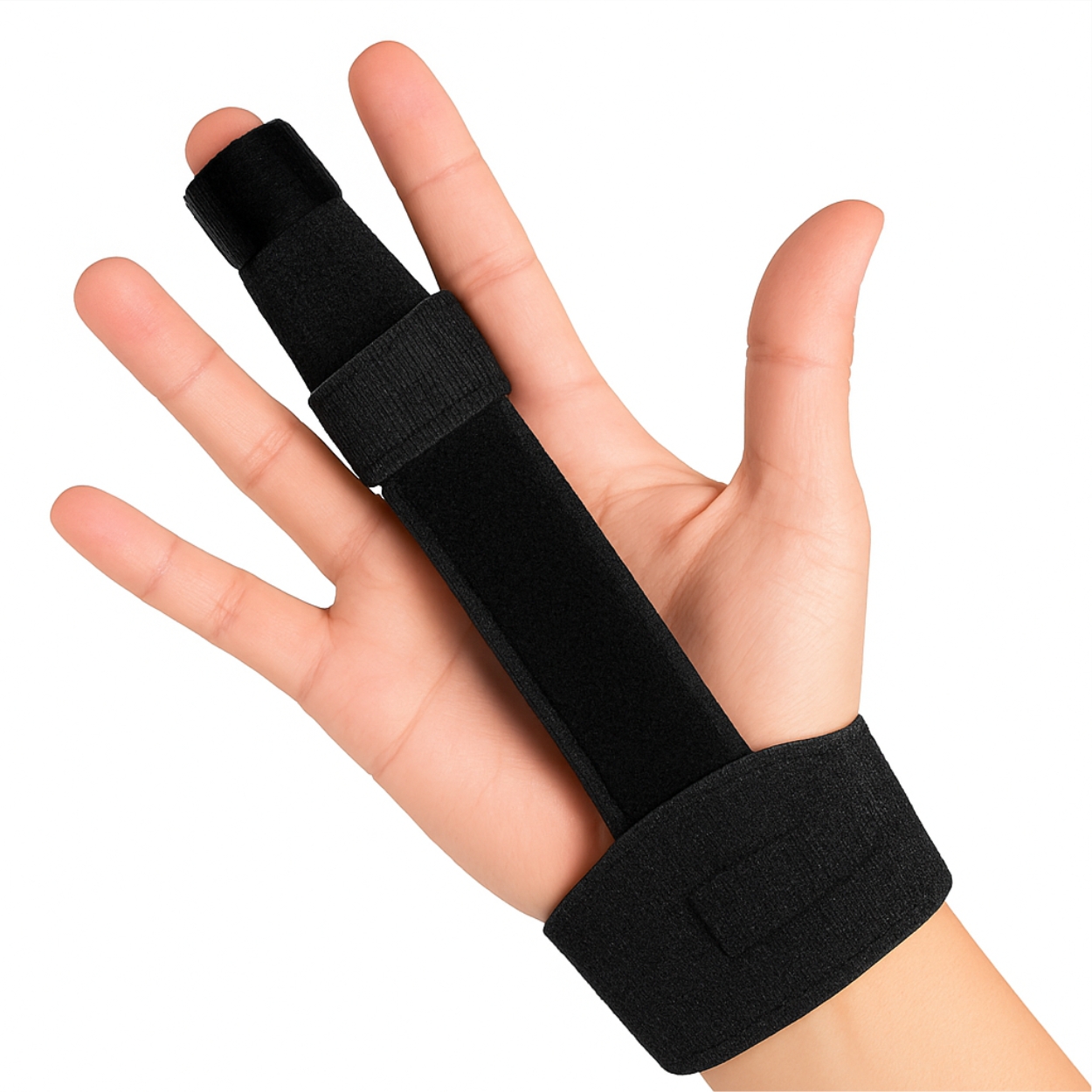
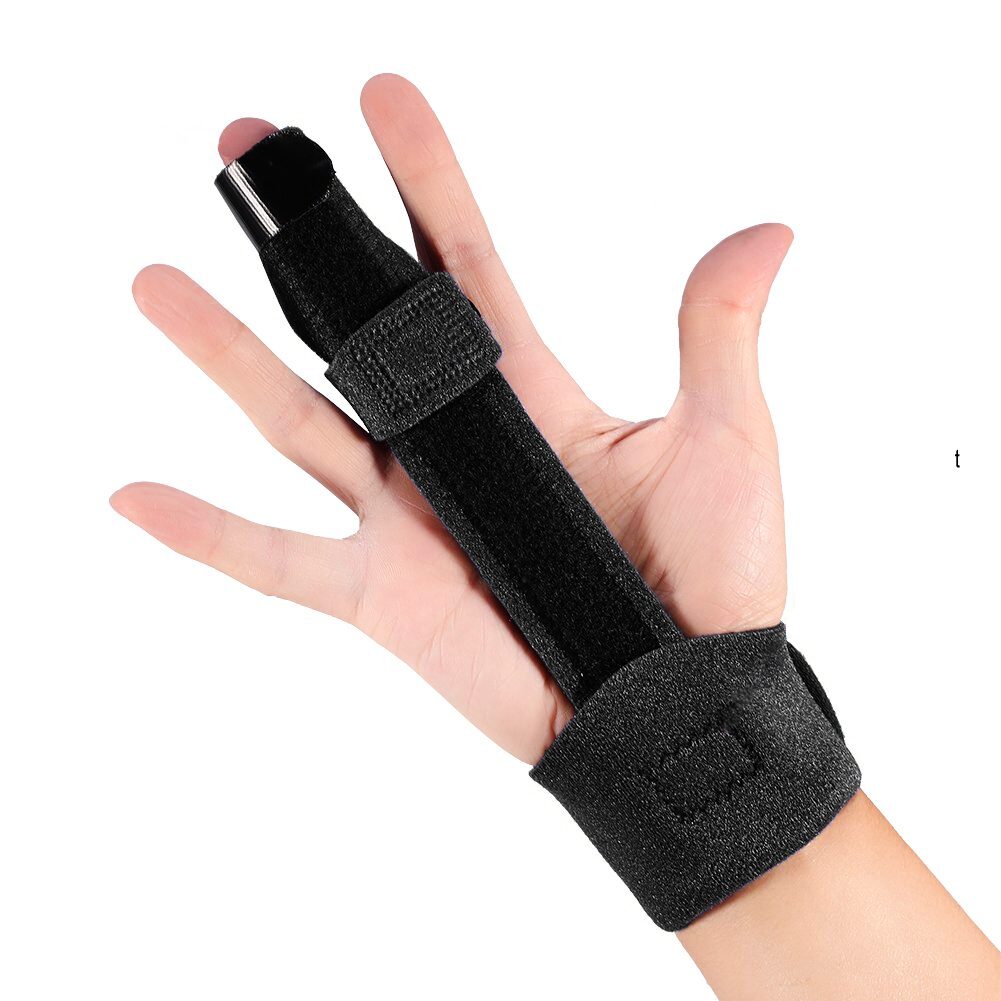
RevitaFit Finger Splint Straightener Brace for correcting bent and crooked fingersWhen a finger won’t straighten properly, keeps drooping at the tip, or hurts whenever you use your hand, it can be draining. Simple tasks like gripping, typing, turning door handles, or picking up light objects can start to feel like effort rather than instinct. A finger that drifts into a bent position can catch on clothing or bedding; a sore joint can ache for hours after a small knock, and a curled finger can press uncomfortably into the palm at night.You might notice a fingertip that hangs down after an injury, a middle joint that stays slightly bent and won’t fully straighten, or stiffness and swelling around the small joints that make them feel thick and awkward. Sometimes the finger gives a sharp jab of pain when you try to grip firmly, or feels unstable, as if it might give way. At night, a crooked or curling finger can make it difficult to find a comfortable position, and the worry of knocking it often disturbs sleep.These symptoms usually reflect what’s happening within the small finger joints and tendons, rather than how you’re using your hand. When the structures that bend and straighten the finger are injured, inflamed, or changing shape because of longer‑term conditions, each deep bend, forced straightening, or sudden knock keeps them irritated and stops them settling. A straightening brace changes how the affected finger moves and rests, so the joints and tendons spend less time in painful positions while they recover or while you manage an ongoing problem.The RevitaFit Finger Splint Straightener Brace is designed for adult hands and can be angled from the wrist to support any finger except the thumb, on either hand. It holds the affected finger closer to a comfortable straight line while allowing the rest of the hand to move freely. This helps you carry on with everyday tasks while reducing repeated strain on sensitive joints and tendons.What happens when a finger becomes crooked or soreEach finger is made up of three small bones (phalanges) joined by three main joints. The joint near the fingertip is the distal interphalangeal joint (DIP), the middle joint is the proximal interphalangeal joint (PIP), and the knuckle where the finger meets the hand is the metacarpophalangeal joint (MCP). These joints are moved by tendons – cords that link the muscles in the forearm to the finger bones. The tendons on the back of the finger straighten it (extensor tendons), while those on the palm side bend it (flexor tendons). Ligaments and a thin joint capsule – a sleeve of tough tissue around each joint – help hold everything in line and stop the joints slipping out of place.When a finger becomes bent, crooked, or persistently painful, it’s usually because one or more of these structures is damaged, inflamed, or gradually changing shape. The exact cause varies, but the symptoms people describe tend to follow a few recognisable patterns.After a direct blow or forced bend, small cracks can appear in the bones or a joint can be partly pushed out of position. For example, if the fingertip is driven suddenly into a hard surface, the tendon that normally lifts the tip can overstretch or tear where it attaches near the end bone. The bone itself may stay intact, but the “pulling cord” is weakened or detached. The tip then droops, and when you try to lift it there isn’t enough pull at the DIP joint to straighten it. Each time the tip drops or is knocked, the damaged tendon attachment is tugged again, which is why these injuries often feel sharply painful when you try to straighten the tip or if it’s bumped.If the force travels through the middle joint, the ligaments and capsule around the PIP joint can be strained. This is often called a “jammed” finger or a sprain. The joint may swell, feel hot, and lose some movement. Bending the PIP into a deep curl or forcing it fully straight puts the overstretched tissues under tension, so the joint can feel sharp or unstable right at the end of the bend or as you try to get it completely straight. Everyday actions like pushing yourself up from a chair or gripping a handle repeatedly take the PIP joint towards these painful end positions, keeping it sore. That’s why the joint can feel fine through most of its movement but suddenly painful at the limit.Tendons themselves can also become irritated. In trigger‑type problems, the flexor tendon on the palm side of the finger becomes inflamed or thickened where it passes through a tight tunnel of tissue (a pulley). The pulley normally keeps the tendon close to the bone so the finger bends smoothly. When the tendon or its sheath thickens, the opening becomes narrower. As you start to bend or straighten, the tendon tries to slide through this tight point and briefly sticks, then suddenly slips through with a snap. That catching and jerking movement irritates the tendon further. Repeated gripping, especially with force, increases friction at this tight spot. Mornings can be particularly stiff because the tendon and its lining fill with extra fluid overnight, which is why the first few bends of the affected finger can feel the most awkward.Some problems develop more gradually, often linked to arthritis in the small joints. In osteoarthritis, the smooth cartilage that normally lets the bones glide becomes rough and thinner. New bony bumps can form at the edges, and ligaments may slacken or erode. Load that once spread evenly now concentrates on smaller, more sensitive areas. When you grip, pinch, or straighten fully, these altered surfaces press against each other again and again, causing aching, sharp twinges, or a feeling of grinding. Over time, some joints drift out of alignment. Fingers may develop characteristic shapes, such as a bent middle joint with an over‑extended tip, or knobbly, twisted knuckles. Stiffness after rest and aching after activity are both common in these situations.In other cases, the joints themselves aren’t the starting point. After a stroke or another neurological event, the main problem often lies in how the muscles are controlled. Signals between the brain and the hand change. The muscles that bend the fingers (flexors) can become overactive or “stiff”, while the muscles that straighten them (extensors) are weaker or slower. Muscle tone refers to how much tension a muscle holds even when you’re not trying to move. As a result, the fingers of the affected hand are pulled into the palm and tend to stay there unless you or someone else actively opens them. If the fingers stay curled for long periods, the tissues on the palm side – muscles, tendons, ligaments, and skin – adapt to that short position. The joints then become progressively stiffer in bend, making it harder to open the hand, even if some strength and control return.Whatever the cause, the effect is similar: certain joints and tendons are repeatedly pushed into positions they no longer tolerate well. Each time the finger drops into a deep bend, the tip is jolted, or an arthritic joint is forced to its limit, the irritated structures are stressed again. Longer spells of typing, turning keys, gripping handles, or catching the finger as you reach into a pocket can all add up. If nothing changes in how the finger is positioned and moved, these repeated stresses can keep symptoms going for weeks or months and, in longer‑term conditions, can gradually alter the finger’s shape and function.Why a straight wrist‑to‑tip brace is often usedOnce a finger has been injured, irritated, or held in a bent position for a long time, the challenge is how to let the joints and tendons settle without stopping you from using your hand altogether. Total rest might sound appealing, but leaving the finger unused for too long can lead to stiffness, weaker grip, and difficulty regaining normal movement. Letting it move freely through its most painful angles all day has the opposite effect – it keeps reopening tiny areas of damage.A straight wrist‑to‑tip brace helps balance these needs. By running a firm support along one surface of the finger, from the wrist to the tip, it limits how often and how far the sore joints are driven into painful positions, while allowing the other fingers and thumb to move freely.For a fingertip tendon injury, limiting how much the tip can droop reduces the constant pulling and flicking at the damaged attachment on the back of the DIP joint. For a sprained middle joint, stopping the PIP joint from snapping into deep bends or being forced back into its last few degrees of straightening eases tension on strained ligaments and the joint capsule. In joints that are gradually changing, such as those affected by arthritis or deformity, holding the finger closer to a straighter, more central position reduces extra strain on already stressed joint surfaces.This kind of brace doesn’t treat the underlying condition, but it does reduce repeated stretching, compression, and knocking of irritated structures. That’s often why symptoms ease when the finger is held away from its sore angles. How the brace is used – whether for near‑continuous protection after an injury or selective support for longer‑term joint change – depends on the problem and the plan agreed with your clinician.How the RevitaFit Finger Splint Straightener Brace works in practiceRevitaFit designed this brace using the same principles therapists apply when prescribing full‑length finger splints in clinic. Its structure controls movement along the affected finger while allowing the rest of the hand to move naturally.Because the brace runs from the wrist to the fingertip, it can be angled and secured to support any finger except the thumb, on either hand. The firm stay can be positioned along the palm side or the back of the finger, depending on clinical advice and what feels most comfortable. Each feature works together to guide the finger into a supported and more stable position.Full‑length aluminium stay: guiding and limiting key finger jointsThe main support in the RevitaFit brace is a single, lightweight aluminium stay that runs from the wrist area to the fingertip. This stay sits along one surface of the affected finger – either on the palm side or the back – and acts as an external splint. When fitted, the finger rests against this straight support, which resists deep bending in that direction.This directly influences the joints most likely to cause discomfort. When the stay is placed on the back of the finger, it helps prevent the fingertip (DIP) and middle joint (PIP) from dropping into a deep bend. That’s particularly useful if the tendon that straightens the tip has been strained, or if the joints feel unstable after a sprain or dislocation. Each time you pick something up or rest your hand on a surface, the stay stops the supported finger from suddenly buckling into a bent shape, so the damaged tissues experience less stretching at their most painful angles. This is often when people notice less of the sudden “give‑way” feeling.When the stay is positioned on the palm side, it limits how far the finger can be pulled back into extension. This can help when pulling the finger fully straight causes pain – for example, after certain sprains or in deformity patterns where hyperextension is a problem. In both positions, the metacarpophalangeal joint (MCP) at the base of the affected finger is held away from its extreme limits of bending or straightening, because the entire finger is aligned in a straighter line with the wrist.When you type, hold objects, or rest your hand on a desk, the supported finger no longer swings freely through its full range. Instead, it moves in a smaller, more controlled arc along the stay. This reduces sudden drops, flicks, or over‑straightening that tend to aggravate tendons and ligaments, and helps keep irritated or arthritic joint surfaces away from the positions that hurt most.Shorter fingertip‑only splints are sometimes used when only the DIP joint needs support, and simple metal trough splints are used for some injuries. RevitaFit developed this full‑length wrist‑to‑tip stay for situations where more than one joint of the finger is affected, or where the whole line from the wrist to the fingertip tends to buckle or drift and needs guiding rather than simply holding one joint still.Adjustable wrist and finger straps: secure, adaptable fitThe brace uses three hook‑and‑loop straps to anchor the stay while allowing easy adjustment. One strap sits around the hand or wrist at the base of the stay. A second strap wraps around the base of the finger, just above the main knuckle (MCP joint). A third strap sits near the fingertip, around the top segment of the finger.The wrist strap prevents the base of the stay from shifting when you bend or straighten your other fingers. This anchoring keeps the supported finger resting along the straight support instead of the whole unit sliding up or down your hand. The strap at the base of the finger draws the finger in towards the stay just above the MCP joint, helping to keep the line of the finger straight and reducing the chance of twisting away from the support. The strap near the fingertip holds the top part of the finger against the stay, which is especially helpful when the fingertip tends to droop or catch on clothing or bedding.Together, the base‑of‑finger and fingertip straps draw the entire finger towards the stay, not just the tip. When you grip a handle or press your hand against a surface, these straps help keep the finger aligned along the brace, so the joints are less likely to buckle or rotate into painful positions.Padded, breathable RevitaFit sleeve: comfort for longer wearAround the aluminium stay, the RevitaFit brace uses neoprene‑style padding that cushions the metal against your skin. The padding spreads pressure evenly along the surface of the affected finger and hand, preventing single points from digging into bony areas such as the finger joints or the back of the hand. Softened edges reduce rubbing at the sides of the finger and around the wrist strap.The material is breathable and helps manage moisture, reducing heat and sweat build‑up under the brace. This is particularly important if you need to wear the splint for long periods during the day or overnight to rest a painful or curling finger. Keeping the skin dry and well ventilated reduces the risk of soft, over‑wet skin breaking down, making it easier to wear the brace for as long as your clinician recommends.In daily use, the padded construction means the brace is less likely to feel harsh or intrusive during longer wear. You can rest your hand on a table, steady yourself on a surface, or wear the brace while doing light tasks at a desk without the stay pressing sharply into the skin. Therapists often highlight this padding as the feature that makes longer daytime or night‑time wear more practical for adults with sensitive joints.Targeted contact and awareness where it mattersRather than enclosing the whole finger, the brace provides firm contact along one side and gentle support at key points. The padded stay lies along either the palm side or the back of the affected finger, giving linear support from wrist to fingertip. The two finger straps wrap around the base and top segment of the finger, and the wrist strap secures the stay at the base.Together, these features provide three main benefits. The stay and padding offer consistent contact along one side of the finger, helping to steady the joints and increase awareness of where that finger is in space. That added awareness often helps prevent flicking or catching. The strap at the base of the finger gives a gentle, even squeeze around the area just above the knuckle, keeping the finger close to the stay and reducing side‑to‑side wobble. The fingertip strap provides light, even contact around the tip, helping to keep a drooping or unstable fingertip aligned with the stay and reducing the chance of it catching on clothing or bedding. The wrist strap keeps the stay snug against the hand, reducing movement between the brace and the skin when you move.This gentle contact can also feel more comfortable where there’s mild puffiness. By providing an even squeeze around the fingertip and base of the finger, it may ease the sense of fullness that sometimes follows a day of use in injured or arthritic joints. At the same time, because the brace supports only one side of the finger and key anchor points, the unsplinted side remains free. This keeps bulk down in the palm and between fingers, so the brace interferes less with everyday gripping. It isn’t a medical compression garment and isn’t designed to treat circulation problems.Slim, lightweight and washable: designed for everyday routinesThe materials used in the RevitaFit brace are deliberately lightweight with a slim profile. The aluminium stay provides the stiffness needed to guide the affected finger without adding weight, and the neoprene‑style padding keeps the profile slim. This makes it easier to wear under looser sleeves or alongside other fingers without feeling that the splint takes over the whole hand.Because the brace is light, there’s minimal weight at the fingertip and less strain on the hand. That can make a noticeable difference if your fingers already ache after short periods of activity, or if you need to wear the brace while typing, driving, or doing other light tasks.The brace can be hand‑washed and air‑dried, so the padding and straps stay clean over time. Washing away sweat, skin oils, and dirt helps maintain skin condition under the brace and keeps the materials comfortable against the skin. Regular cleaning helps the brace keep its shape and comfort, ensuring consistent support.Conditions and situations this RevitaFit brace is often used forBroken or Fractured FingersA sudden knock or blow often leaves a finger sore, swollen, and bruised. Sometimes it’s obvious that a bone is broken because the finger looks misshapen or out of place. Other times, it may simply feel very tender and difficult to move, making it hard to tell whether it’s a sprain or a small fracture in one of the finger bones.A broken or fractured finger occurs when one or more of the phalanges – the small bones that form each finger – develops a crack or complete break. This often follows a direct blow, twisting injury, or crush between hard surfaces. Pain is usually sharp at the time and worsens when you try to move the finger, particularly when gripping, pressing on the bone, or catching it accidentally. Swelling and bruising often increase over the next few hours.A fracture alters how force travels through the bone, creating a weak point where load no longer passes evenly from joint to joint. Movement at nearby joints or everyday knocks can cause tiny shifts at the fracture site, irritating healing tissue and slowing recovery. If the joint surface is involved, even small movements can press broken bone edges against rough cartilage, causing deep aching pain and increasing the risk of stiffness over time.A thorough initial assessment is essential. A clinician will usually check bone and joint alignment, test tendon and ligament function, and may arrange imaging to assess stability. A stable fracture means the broken bone ends stay in good alignment and don’t shift with gentle movement. An unstable fracture is more likely to move out of place and usually needs firmer support or surgical fixation. Some fractures need gentle realignment or surgical fixation before any brace is applied. Others are well aligned and can be supported non‑operatively while they heal.Once properly diagnosed and aligned, a straightening brace such as the RevitaFit design can sometimes be used during immobilisation or later in recovery, as advised by a clinician. With the padded aluminium stay running from the wrist to the fingertip along one surface of the affected finger, bending at the joints near the break is limited. Keeping the finger straighter reduces the opening and closing forces across the crack when you move or lightly use your hand. For example, when resting your hand on a table or gently holding cutlery, the stay helps prevent the finger from bowing around the fracture site, so the healing bone experiences less shearing.The strap at the base of the finger and the strap near the fingertip hold the finger securely along the stay, which is particularly useful when the break is near the end joint or the fingertip tends to droop. The wrist or hand strap anchors the base of the stay so the brace does not slide or twist when you move the rest of your hand. The padded sleeve spreads pressure evenly along the finger and hand, reducing rubbing over tender or bruised areas.For some stable fractures, this controlled support allows gentle, low‑demand hand use within clear limits while the bone heals, followed by gradual return to movement as advised. For others, the brace is more useful later, once a rigid cast has been removed but the finger remains vulnerable and needs protection from knocks and deep bending. Most uncomplicated finger fractures heal within four to six weeks, though stiffness and tenderness can last longer as the tissues regain strength. After immobilisation, gentle movement and hand exercises are often needed to restore flexibility and prevent long‑term stiffness.A brace like this isn’t the first or only response to a suspected fracture. If your finger looks crooked, appears shorter than the same finger on the other hand, has an open wound, or you cannot move it at all after an injury, seek urgent medical attention. Persistent instability, spreading bruising, or severe pain may also suggest a more complex injury that needs further assessment. Certain unstable fractures or those involving the joint surface may require other forms of immobilisation or surgery before using this type of brace. Once the fracture has been properly diagnosed and treated, a RevitaFit straightening brace can help protect the healing area, reduce painful movement, and support confidence in using the hand again.Jammed FingersA “jammed” finger is a common way to describe when a finger is suddenly driven into something and becomes sore, stiff, and swollen around a joint. It often happens when the fingertip hits a solid object. At first, it can be difficult to tell whether anything serious has happened, as the finger may look mostly normal apart from some swelling or bruising. Over the next few days, though, the joint can still feel painful when you try to bend or straighten it fully.In many cases, the joint most affected is the proximal interphalangeal joint (PIP) – the middle joint of the finger. When the fingertip is pushed straight back towards the hand, the force travels along the finger bones into this joint. The ligaments at the front or back, and the fibrous capsule that surrounds the joint, can be overstretched or partly torn. This is known as a sprain of the PIP joint. The body reacts with inflammation and swelling, which is why the joint feels puffy, warm, and stiff.The sprained tissues are sensitive when stretched. Straightening the PIP joint pulls on the ligaments at the back, while bending it deeply tensions the tissues at the front. Everyday actions such as gripping a handle, typing, or pushing up from a chair repeatedly take the joint towards these painful end positions, keeping it irritated. At rest, the joint may ache dully; when you move it to its limits, the pain can be sharper.Once a fracture or dislocation has been ruled out or treated, a straightening brace such as the RevitaFit splint can help the joint settle. With the padded aluminium stay placed along the back of the affected finger, the brace helps stop the middle joint from dropping into a deep bend.The finger‑base strap holds the finger gently against the stay just above the knuckle, while the fingertip strap keeps the top of the finger aligned with the support. When you close your hand, the PIP joint meets light resistance before reaching its most painful angle. The wrist strap anchors the stay to the hand, preventing it from shifting as the other fingers move.This can make it easier to manage light daily tasks without repeatedly pushing the affected joint into its sore range. Some people are advised to use the brace mainly during activities that tend to trigger symptoms, such as longer periods of typing or light lifting, once this is allowed. Others may be advised to wear it for longer periods early on to let the joint calm down.If the affected finger remains very stiff, crooked, or unstable, or if useful movement does not return over time, further assessment is important to check for hidden fractures or more significant ligament injury.Finger Sprains & StrainsFinger sprains and strains are common injuries that can be more disruptive than they first appear. After an awkward twist, a sudden pull, or catching the finger on something, you may notice pain around a joint, swelling, and difficulty gripping or straightening fully. Sometimes the whole finger feels weak or unsteady, and everyday actions such as turning a key, lifting a mug, or typing for a while can quickly bring the pain back.A sprain occurs when the ligaments – the strong bands that stabilise each joint – are overstretched or partly torn. In the fingers, these ligaments surround each joint, including the proximal interphalangeal (PIP) and metacarpophalangeal (MCP) joints. A strain affects the muscles and tendons that move the finger, particularly the flexor tendons on the palm side, which bend the finger, and the extensor tendons on the back, which straighten it. Both types of injury cause small areas of tissue damage and irritation. Milder sprains and strains often settle within a couple of weeks, while more significant tears can take longer and may need structured rehabilitation.When ligaments are sprained, they become painful when stretched. Bending or straightening the finger to its limit pulls on different parts of the ligament and capsule, so those positions can feel sharp or unstable. If tendons are strained, strong gripping, repeated lifting, or holding objects for longer periods can cause a deep ache or pulling sensation along the tendon. The body reacts with inflammation, producing extra fluid, warmth, and tenderness around the injured area. Until this irritation settles, repeating the same stressful movements keeps reopening fibres that are trying to heal.During normal activities, the finger may feel fine at rest but become painful when gripping firmly, twisting a lid, or supporting weight through the hands. It may stiffen if used too much, then ease with gentle movement, only to become sore again with heavier tasks.A straightening brace such as the RevitaFit design can be useful once a clinician has confirmed that the injury is a sprain or strain and that no further immobilisation is needed. Placing the padded aluminium stay along the back of the affected finger helps prevent sudden deep bending at the PIP and distal interphalangeal (DIP) joints, which can be especially aggravating after a sprain. Positioning it along the palm side limits how far the finger is pulled back into full extension, which may be more comfortable if that direction is painful.The finger‑base strap and fingertip strap hold the finger gently along the stay so that, when you close your hand, the injured joints meet controlled resistance rather than snapping straight into a painful range. The wrist or hand strap secures the base of the stay, helping the brace stay aligned even when the other fingers move freely. The padded sleeve spreads pressure evenly, reducing rubbing over bruised or tender areas.Wearing the brace in this way helps protect the injured ligaments or tendons from repeated stretching or heavy movement while you continue using your hand for lighter tasks. Clinicians often recommend wearing the brace during activities that tend to trigger symptoms and removing it when the hand is at rest, following professional guidance. Over time, gentle, progressive movement and strengthening are usually needed alongside splinting to restore flexibility and reduce the risk of long‑term stiffness or weakness. If the finger remains unstable, bruising spreads into the hand, or movement is severely limited, this may suggest a more complex injury that needs further assessment. Severe pain, visible deformity, or an inability to move the affected finger should also prompt medical review rather than assuming it is a simple sprain.Finger Tendonitis (Trigger Finger)Finger tendonitis, often called trigger finger when it causes catching or locking, can be particularly frustrating. You may notice that one finger feels stiff in the morning, painful when gripping, and occasionally gets stuck in a bent position before suddenly straightening with a snap. Sometimes a small, tender lump can be felt at the base of that finger in the palm, and simple tasks like holding a handle or carrying a bag can quickly bring on discomfort.The flexor tendons on the palm side of each finger run through a series of narrow tunnels formed by ligament‑like bands called pulleys. These pulleys act as guides, keeping the tendon close to the bone so that when the muscle contracts, the finger bends smoothly and efficiently. In trigger‑type problems, the tendon or its surrounding sheath becomes inflamed or thickened where it passes through one of these pulleys, most often near the base of the affected finger in the palm. The space inside the pulley then becomes too tight for the swollen tendon to glide through freely, creating friction and irritation each time the finger moves.As you start to bend the affected finger, the flexor tendon tries to slide through the narrowed tunnel and meets resistance. Extra force may be needed, which suddenly overcomes the tight spot and causes the tendon to slip through with a snap. The same catch and release can happen when you try to straighten the finger again. The moment of release can feel sharp or jerky, and the finger may briefly lock in a bent position before freeing itself. Each episode adds further irritation to the tendon and pulley. Repeated gripping, tool use, or tasks that keep the finger bent for long periods increase how often the tendon has to push through this tight area, which can worsen swelling and stiffness over time.Managing this problem usually involves reducing how often the flexor tendon is forced to slide through the inflamed pulley while it is trying to settle. This can mean adjusting activities, breaking up long periods of gripping, and in some cases using a splint to hold the affected finger in a straighter position for parts of the day or night.A straightening brace such as the RevitaFit splint can help by limiting how much the affected finger bends during certain times. When the padded aluminium stay is positioned along the back of the finger, the brace helps prevent the finger from curling fully into the palm. The finger‑base strap holds the base of the finger close to the stay just above the knuckle, and the fingertip strap keeps the top part of the finger aligned with the support. As a result, the flexor tendon does not have to travel as far through the narrowed pulley with each movement and, in some positions, may not need to slide through it at all.Wearing the brace at night can reduce the number of hours the flexor tendon spends in a tightly bent position, which many people find helps with morning stiffness and locking. During the day – for example, when doing tasks that usually set off catching in the affected finger – it can help cut down the number of triggering episodes. The wrist strap keeps the base of the stay secure, so the brace does not shift when you move your other fingers. The padded, breathable RevitaFit sleeve makes longer wear more comfortable, which is important if the brace is used for several hours at a time.A brace will not reduce tendon thickening on its own, and more persistent cases may need other treatments discussed with a clinician. If the affected finger frequently locks in a bent position, cannot straighten at all, or pain and stiffness worsen despite rest and support, further assessment is needed. As part of a broader management plan, using a straightening brace to reduce repeated tendon gliding through an inflamed pulley can help calm irritation, protect the tendon during higher‑risk activities or rest periods, and support efforts to keep the affected finger as comfortable and functional as possible.Mallet FingerMallet finger describes an injury where the tip of a finger suddenly droops and will not straighten by itself. It usually happens when something strikes the end of the affected finger, forcing the distal interphalangeal (DIP) joint into a bent position while the rest of the finger stays straight. Following the injury, the fingertip may hang down even when you try to lift it, and the area often becomes painful, swollen, and tender to touch.On the back of the affected finger, a thin extensor tendon attaches near the base of the last bone (the distal phalanx) and is responsible for lifting the fingertip. In a mallet‑type injury, this tendon is overstretched, partly torn, or pulled away from its attachment, sometimes with a small fragment of bone. Once the extensor tendon can no longer lift the fingertip, the flexor tendon on the palm side continues to pull, drawing the tip into a bent position. Without the balancing pull from the extensor side, the DIP joint settles into this drooped posture and cannot actively straighten.Each time the affected fingertip bends downwards or is accidentally caught, small movements occur at the healing tendon or bony attachment. In the early phase, even slight drooping of the DIP joint can reopen the healing site and delay repair. Over time, if the fingertip remains bent, the tendon and surrounding tissues can shorten and adapt to that position, making it much harder to regain full straightening later. Treatment focuses on keeping the tendon ends in close contact so they can heal properly.To achieve this, clinicians usually aim to hold the DIP joint of the affected finger straight, or very close to straight, continuously for several weeks. The challenge is maintaining that position day and night while still allowing reasonable use of the rest of the hand.A straightening brace such as the RevitaFit splint can help achieve this controlled position when used under professional guidance. With the padded aluminium stay positioned along the back of the affected finger and carefully aligned with the fingertip, the brace acts as an external extension support. The fingertip strap wraps around the tip bone and gently draws the drooping tip up towards the stay, holding the DIP joint near extension. The finger‑base strap keeps the rest of the finger aligned along the stay, and the wrist strap anchors the base of the support to the hand so that, when you move your other fingers or rest your hand on a surface, the supported finger remains properly aligned along the brace.Wearing the brace limits how far the affected fingertip can drop into flexion and protects it from small knocks that would otherwise occur during everyday activities. Because the other fingers and thumb remain free, you can still carry out many light tasks while the injured fingertip is held in its healing position. The padded sleeve spreads contact pressure evenly, making longer wear more comfortable.Shorter fingertip‑only splints are often used for some mallet injuries. Clinicians may choose the RevitaFit full‑length design instead when there is concern about stability at more than one joint, or when they want the entire line of the finger supported from the wrist to the tip rather than just holding the DIP joint alone.For mallet‑type injuries, the exact angle at which the DIP joint is held, and how long continuous splinting should last, must be decided by a clinician after assessing the injury and, often, reviewing imaging. In some cases, especially where there is a large bony fragment or joint misalignment, other splints or surgery may be recommended. Removing the brace too early, or allowing the affected fingertip to bend repeatedly during the healing period, can interfere with recovery and limit the final outcome. If you suspect mallet finger after a direct blow to the fingertip, prompt assessment is advisable so that splinting can be planned and started correctly.Finger DislocationA dislocated finger usually happens suddenly. One moment you are catching a ball, catching your finger on something, or reaching out as you stumble to stop yourself falling; the next, a finger looks clearly out of place. The affected joint may appear crooked, shortened, or bent at an unusual angle. Pain is often sharp and immediate, and moving the joint can feel extremely difficult or impossible. Swelling and bruising tend to develop quickly after the injury.A dislocation occurs when the bones that meet at a joint are forced out of their normal alignment, so the smooth joint surfaces no longer touch. In the finger, this usually happens when a sudden force drives the fingertip backwards or sideways, levering the joint apart. It can occur at any of the finger joints but is most common at the middle joint (PIP) and, less often, the joint at the base of the finger (MCP). As the joint shifts, the capsule and supporting ligaments are stretched or torn, and small bone fragments can sometimes be pulled off where these tissues attach. Nearby tendons may also be strained or displaced from their normal track.The joint is not just bruised – it is disrupted. Leaving it out of place risks further damage to the smooth cartilage that covers the bone ends and can compress nearby nerves or blood vessels. The first priority with a suspected dislocation is prompt assessment and, if needed, reduction of the joint by a trained clinician. Trying to push a dislocated finger back into place yourself can cause additional injury.Once the joint has been realigned and checked for fractures or significant ligament damage, the focus shifts to protecting the healing tissues while restoring safe movement. A straightening brace such as the RevitaFit design can sometimes be used during this stage, following the plan set out by your clinician.Positioning the padded aluminium stay along either the back or palm side of the affected finger helps limit extreme bending or straightening that could strain the injured joint. For example, after a PIP dislocation that has been reduced, placing the stay along the back of the finger can prevent sudden deep bending that would pull on the healing capsule and ligaments. The finger‑base strap and fingertip strap keep the finger aligned along the stay, while the wrist or hand strap anchors the base of the brace to reduce twisting or sliding as you move.The padded sleeve spreads pressure evenly and reduces rubbing over sensitive areas, making the brace more comfortable to wear during the protection phase. The exact positioning, amount of permitted movement, and duration of splinting after a dislocation depend on which joint was affected and how stable it is after reduction. In some cases, other splints or taping methods are preferred, or surgery may be required. A brace like this should therefore only be used as part of an agreed treatment plan.If a finger remains visibly deformed after an incident, if pain and swelling are severe, or if you cannot move the affected joint, urgent assessment is needed before considering bracing. Even after a joint has been put back into place, increasing deformity, instability, or loss of movement over time should prompt review.Boutonnière DeformityBoutonnière deformity describes a change in finger shape where the middle joint bends downwards while the fingertip lifts back. Over time, this creates a recognisable posture: the proximal interphalangeal joint (PIP) stays bent, and the distal interphalangeal joint (DIP) is pulled into hyperextension. People often notice that the middle part of the affected finger will not straighten fully, making it harder to slip the hand into gloves or narrow spaces. There may also be a dull ache or stiffness around the PIP joint.This deformity can follow a direct injury to the back of the affected finger or develop gradually in certain inflammatory joint conditions. The tendon system that straightens the finger runs along the back and is made up of several connected parts. One key section, called the central slip, attaches to the middle bone and is responsible for straightening the PIP joint. If this central slip is torn or weakened, the pull from the extensor tendon no longer reaches the middle joint effectively. The balance of forces then shifts: the PIP joint bends downwards, while other parts of the tendon system pull the fingertip backwards into hyperextension. As the central slip fails, the lateral bands on either side of the finger drift downwards and towards the palm, reinforcing the bent position of the PIP joint and increasing the pull that lifts the fingertip backwards. In some cases, the deformity appears straight after injury; in others, it develops gradually as swelling and tendon imbalance increase.Once this altered position sets in, it tends to reinforce itself. The tissues on the palm side of the PIP joint, including the flexor tendon and surrounding structures, shorten and adapt to the bent position. On the back, the extensor mechanism becomes stretched and displaced. The longer the joint stays in this posture, the harder it becomes to restore a straight position, and the deformity can start to feel fixed rather than just stiff. Everyday actions such as pressing the fingers flat on a surface or sliding the hand into a pocket can become awkward or uncomfortable.Splinting for boutonnière deformity aims to hold the affected PIP joint in a straighter, more functional position for long enough to let the central slip heal or regain some mechanical advantage. It also helps prevent further tightening of tissues on the palm side. A straightening brace such as the RevitaFit splint can support this process, particularly in milder or earlier cases, or as part of ongoing management under the guidance of a hand specialist.When the padded aluminium stay is positioned along the back of the affected finger and aligned with the PIP joint, the brace resists the joint’s tendency to collapse into flexion. The fingertip strap keeps the tip in line with the stay, preventing the extensor mechanism from pulling the fingertip further backwards while the middle joint remains bent. The finger‑base strap maintains alignment along the support, and the wrist or hand strap anchors the base of the stay to reduce twisting or slipping during movement.This setup helps reduce constant bending stress at the affected PIP joint, encourages a straighter posture over time, and protects the joint from small knocks that could worsen pain or deformity. The padded, breathable RevitaFit sleeve is designed for comfort during longer wear, which is often necessary, as splinting for boutonnière‑type deformities usually continues for several weeks or months.Boutonnière deformity is complex and often needs close input from a hand therapist or specialist. Treatment may include medical management of any underlying inflammatory condition, targeted exercises, manual therapy, and sometimes surgery. A brace alone is unlikely to correct a long‑standing or severe deformity, but as part of a tailored plan it can help hold the affected PIP joint in a better position, protect it during daily activities, and support efforts to maintain or regain useful hand function.ArthritisArthritis in the fingers often shows itself through stiffness, aching, and a sense that the joints are “not as smooth as they used to be”. It’s often most noticeable first thing in the morning or after sitting still for a while, when the fingers feel stiff and sore until they ease with gentle movement. Tasks that involve gripping, pinching, typing, or using small tools can bring on aching that lingers afterwards. Over time, small bony swellings may appear around the joints, and some fingers may start to drift or twist slightly out of line.Several types of arthritis can affect the small finger joints. Osteoarthritis develops gradually as the joint surfaces and nearby bone change with wear. Inflammatory joint diseases can cause swelling, pain, and later changes in the supporting tissues. Previous injuries that damaged the joint surface can also lead to arthritis in that area later on. Osteoarthritis most often affects the joints nearest the fingertips (DIP) and the middle joints (PIP), while inflammatory types such as rheumatoid arthritis more commonly involve the knuckle joints (MCP). Whatever the cause, the result is that the normally smooth cartilage and well‑aligned joint surfaces become uneven or altered.Small bony enlargements known as Heberden’s or Bouchard’s nodes can form around the affected joints as new bone develops at the edges where cartilage has worn away. Mechanically, this means that when you move an affected finger, the load is no longer spread evenly through the joint. Areas of thinned cartilage, small bony outgrowths, and stretched or weakened ligaments cause some parts of the joint to take more strain than others. Each time the finger bends or straightens fully, these uneven joint surfaces press against one another, irritating already sensitive areas. In inflammatory arthritis, swelling inside the joint capsule increases pressure, adding to stiffness and pain. Many people find that stiffness after rest, followed by aching with use, is a familiar pattern.Over time, these mechanical stresses contribute to structural change. As arthritis progresses, the balance of forces across the affected joint can shift. Some fingers may begin to drift sideways or develop a combination of bending at one joint and hyperextension at another. Once the soft tissues and bone adapt to these new positions, some of the change may become permanent. Management then focuses on easing pain, protecting the joints, maintaining movement and function, and slowing further deterioration.A straightening brace such as the RevitaFit design can play a role within this broader approach, usually under the guidance of a clinician. During painful flare‑ups, it can act as a resting splint for a particularly irritable finger. Positioning the padded aluminium stay along the back or palm side of the affected finger and securing it with the finger‑base and fingertip straps limits how far the joints move into their most painful positions. This gives inflamed tissues a period of relative rest, especially overnight or during tasks that would otherwise involve repeated bending and gripping.For fingers that are starting to drift or develop deformity, a straightening brace can help hold the affected joint closer to a straighter, more functional position during key parts of the day. The stay provides a steady external guide, encouraging the finger to follow it rather than collapsing further into a crooked posture when at rest or during light activity. The padding cushions tender joints when you hold everyday objects such as cutlery, pens, or steering wheels, so sensitive areas are not pressed directly against hard surfaces.A brace does not treat the underlying arthritis, and other approaches such as exercises, joint protection techniques, and medical treatments are often central. Sudden changes in symptoms – for example, a finger becoming much more swollen, hot, or deformed over a short period, or new severe pain in one joint – should prompt review to rule out other problems. Within a comprehensive arthritis management plan, however, a RevitaFit straightening brace can be a useful option. By resting painful or drifting fingers, limiting extreme positions, and protecting the joints during daily tasks, it helps keep your hands working as comfortably as possible.Post-stroke Finger CurlingAfter a stroke or other neurological event, it is common for the hand to change in the way it rests and moves. For many people, the fingers of the affected hand curl into the palm and become difficult to open fully. You may notice that the hand tends to close up when you are relaxed, that the fingernails press into the skin of the palm, or that it becomes difficult to clean and dry the hand properly. Sometimes the fingertips catch on clothing or bedding, and the hand may feel tight or clenched.These changes are often due to altered muscle tone and weakness rather than a direct injury to the finger joints. Signals from the nervous system to the muscles and reflex pathways change, so the balance between bending and straightening is disturbed. The muscles that bend the fingers (flexors) may become overactive or “stiff”, while the muscles that straighten them (extensors) are weaker or have less control. Muscle tone here refers to how firmly the muscles hold tension even when you are not trying to move. As a result, the fingers of the affected hand are pulled into a flexed posture and tend to stay there unless you or someone else actively opens them.If the affected fingers remain in a tightly bent position for long periods, the soft tissues on the palm side of the hand – including muscles, tendons, ligaments, and skin – can shorten and adapt to that posture. The joints may also begin to stiffen in the bent position. This can make it increasingly difficult to open the hand, even if some active movement returns. Constant fingertip pressure against the palm can cause sore areas and make hygiene more difficult.Splinting is often used as part of a wider rehabilitation plan for post‑stroke hands. The goal is not to force the fingers straight, but to support them in a more open, relaxed posture for certain periods of the day or night. By holding the fingers in this supported position, a splint helps reduce constant pressure in the palm, protect the skin, and maintain as much movement as possible for later exercises. In these cases, the difficulty usually stems from changes in muscle control rather than joint damage, although the joints can gradually stiffen into a bent position if left that way for long periods.A straightening brace such as the RevitaFit splint can sometimes be used as a positioning aid for one or more curled fingers, under professional guidance. By placing the padded aluminium stay along the back of an affected finger and securing it with the finger‑base and fingertip straps, the brace can hold that finger closer to a straight line while the rest of the hand is supported appropriately. This may reduce how far that finger curls into the palm, ease the pressure of the nail against the skin, and create a small gap that makes it easier to clean and dry between the fingers.In practical use, because the stay is on one side of the hand and the design is relatively slim, it can often be combined with other soft supports or resting positions recommended by a therapist. The padding helps protect the back of the finger from rubbing, and the adjustable straps allow some adaptation to changes in swelling or tone. The angle of the stay at the wrist can be adjusted, allowing a clinician to choose which finger or fingers to support at any given time.Post‑stroke hand problems are complex and can change over time. Incorrect use — such as pulling too tightly against strong flexor tone or forcing a very stiff joint straight — can cause pain or skin damage. Decisions about whether to use a splint, which joints to support, how straight to hold them, and how long to keep the brace on are best made by a physiotherapist, occupational therapist, or other clinician experienced in neurological rehabilitation.While you are wearing the brace, changes that should prompt review include the affected hand or fingers becoming much colder than the other side, marked colour changes, significant pain when gently moving or opening the fingers, or skin breakdown in the palm or over bony points. Any sudden change in the way your affected hand moves or feels should also prompt reassessment. When used as directed by your therapist, a RevitaFit straightening brace can be one of several options to help position curled fingers more comfortably after a stroke, supporting hygiene, skin care, and a more open hand posture during rest periods.Splinting should always form part of a broader rehabilitation plan aimed at maintaining comfort, hygiene, and long‑term hand function.Post‑Surgery or Post‑Cast StiffnessAfter surgery or a period in a cast, it is common for a finger to feel stiff, weak, or slightly crooked. The joints and soft tissues adapt quickly to being held still, and when movement is allowed again, the finger may not straighten or bend as easily as before. Swelling, scar tissue, and protective muscle tension can all contribute to this stiffness. Even when the bone or tendon has healed, the surrounding tissues may still resist movement, making the finger feel tight or heavy.When a finger has been immobilised for several weeks, the ligaments and joint capsule shorten slightly, and the small muscles that control fine movement lose strength. The result is a finger that does not move smoothly through its full range. Trying to force it straight or into a deep bend too quickly can cause pain and renewed inflammation, which in turn makes the tissues tighten further. This cycle can be frustrating and slow recovery.A straightening brace such as this RevitaFit design can be used in some rehabilitation plans to help restore alignment and controlled movement. When the padded aluminium stay is placed along the back of the finger, it gently supports the finger in a straighter position, reducing the tendency for it to droop or curl. The finger‑base strap and fingertip strap hold the finger comfortably against the stay, while the wrist strap anchors the base so the brace stays in place as you move the rest of your hand. The padded sleeve spreads pressure evenly, helping to avoid irritation over sensitive post‑surgical areas.In early recovery, the brace may be used to maintain a corrected position between exercises, preventing the finger from collapsing back into a bent posture. Later, it can be worn during light activity to protect the healing tissues from overstretching or accidental knocks. The controlled support helps the finger move within a safe range, allowing gradual improvement in flexibility and strength without excessive strain on the healing structures.For some people, the brace is used intermittently throughout the day, alternating with gentle movement exercises prescribed by a clinician. For others, it may be worn mainly at night to keep the finger comfortably straight while resting. The exact schedule depends on the stage of recovery and the type of surgery or injury involved.Persistent stiffness, swelling, or pain after surgery or casting should always be reviewed by a healthcare professional. Once the underlying structures are stable, a RevitaFit straightening brace can assist in maintaining alignment, reducing strain during early hand use, and supporting a smoother return to normal movement.When this RevitaFit brace may be suitable – and when to be cautiousThis type of straightening brace is most often used when one finger has become difficult to control, painful, or noticeably out of line, while the rest of the hand still needs to move freely. It is designed for adults and can be adjusted to support any finger except the thumb.Clinicians often recommend this full‑length wrist‑to‑tip RevitaFit brace after assessing an injury or ongoing problem and advising some form of resting or immobilising support. It is commonly used when a fingertip no longer straightens properly after a blow, when the middle joint remains slightly bent and sore after a “jammed” injury, or when a finger gradually drifts into a crooked position because of arthritis or tendon changes. In these situations, keeping the finger closer to a straight line for parts of the day, or overnight, can help tissues settle and make everyday tasks easier to manage.In tendon‑related problems such as trigger finger, a brace can sometimes be used to rest the affected finger in a straighter position, particularly at times when you would otherwise be bending and gripping repeatedly. For some people recovering from a stroke or similar event, holding one or more fingers of the affected hand out of a tightly curled position can help with hygiene, skin care, and maintaining some openness in the hand. In these cases, splinting should always follow the specific advice of a therapist or doctor familiar with your overall condition.There are also times when caution, or a different approach, is needed. A new injury with obvious deformity, severe pain, heavy bruising, or an open wound needs prompt assessment rather than relying on a brace alone. A joint that appears out of place may need to be repositioned by a professional before any splint is used. Certain unstable fractures or ligament injuries may require other forms of immobilisation or surgery instead of, or before, using this kind of brace. This product is intended for adult fingers and is not shaped for thumbs.If you are unsure whether your symptoms are suitable for this type of support, or if your pain is changing quickly, spreading, or accompanied by numbness, weakness, or changes in finger colour or temperature, it is best to speak to a GP, physiotherapist, hand therapist, or another relevant clinician before deciding how to use a splint.How to fit and wear the brace day to dayFitting the braceIf you and your clinician decide that this RevitaFit brace is suitable, it’s easiest to fit it while sitting with your forearm supported and your hand relaxed. Choose the finger you want to support, then position the padded aluminium stay so it runs from the wrist area towards that finger. The stay can lie along either the back or the palm side of the finger, depending on what has been recommended and which position feels most comfortable and effective for your particular problem.Slide the chosen finger into place so it rests along the padded side of the stay. The fingertip should sit close to the end of the brace with light contact, but not be pressed firmly against it to the point of discomfort.Begin by fastening the strap near the fingertip around the top segment of the finger. It should be snug enough to keep the tip aligned with the stay, but not so tight that it digs into the skin or causes tingling. Next, fasten the strap at the base of the finger, just above the main knuckle where the finger starts above the web space. This draws the base of the finger towards the stay so the finger sits in a straighter line above the knuckle. Finally, wrap the lower strap around the hand or wrist at the base of the stay and secure it. This wrist strap anchors the brace so it doesn’t slide up or down when you move.Once all three straps are secured, check the fit. The supported finger should feel gently held along the brace without any sharp pressure points. The fingertip, the skin under the finger straps, and the skin under the wrist strap should look their normal colour and feel warm, not cold or pale.Move your hand and finger gently within the limits of the brace to make sure nothing rubs and that it stays in place during small everyday movements. A mild awareness of the brace is normal, but sharp, burning, or throbbing pain under the straps means it needs adjusting. Avoid forcing a stiff or obviously deformed joint into line to match the brace – if the affected finger cannot rest comfortably along the stay, seek advice before using it.When and how long to wear itThe ideal wearing routine depends on the underlying condition, how recently it started, and what your clinician has advised. For some tendon or fracture‑related problems, near‑continuous wear may be recommended for a set period, removing the brace only briefly for hygiene and skin checks. In conditions such as arthritis or trigger‑type irritation, the brace may be used mainly during painful flare‑ups, for specific activities that usually trigger pain, or overnight to rest the affected finger in a more neutral position.Clinicians often suggest wearing the brace during tasks that repeatedly bring on symptoms, such as long periods of typing, using handles, or any activity where the affected finger is likely to be bumped or strained. In these moments, the brace limits how far and how quickly the finger moves into its painful angles, so irritated tissues experience fewer sharp stretches or jolts. Some people find it more helpful at night, when the finger may curl or bend without control, and holding it straighter can make it easier to rest.Whichever approach you and your clinician decide on, it’s usually best to build up wear time gradually over a few days rather than wearing the brace for many hours straight away. This helps you notice any rubbing, irritation, or change in symptoms early. A brace is only one part of managing finger problems. Movement exercises, gentle strengthening, and spreading hand‑intensive tasks more evenly through the day rather than doing them all at once are often important too. Long periods of unnecessary immobilisation in joints that don’t need it, or avoiding all movement once healing has progressed, can lead to stiffness. If you haven’t been given specific guidance on how long to wear it, or if you’re unsure how to combine splinting with other parts of your care, it’s worth checking with a GP, physiotherapist, or hand therapist.Caring for the braceKeeping the brace clean and in good condition helps protect the skin and maintain comfortable support. The padded RevitaFit sleeve and straps can usually be hand‑washed in lukewarm water with a small amount of mild soap. After washing, rinse thoroughly to remove any residue that could irritate the skin, then gently squeeze out excess water and leave the brace to air‑dry away from direct heat.Before each use, check the straps and padding. Make sure the hook‑and‑loop fastenings still grip firmly and that the foam and fabric are intact, without tears or areas that have become thin or worn. Check that the aluminium stay remains straight or in its intended gentle curve and hasn’t been bent into an awkward angle during use or washing. If the padding has flattened so much that you can feel the metal sharply through it, or if the straps no longer hold securely, the brace may no longer provide comfortable, reliable support and could need replacing.It’s just as important to keep an eye on the skin under the brace. Even with breathable materials, wearing it for long periods can sometimes cause redness or mild irritation, especially in warm conditions. Briefly removing the brace at suitable times, as advised by your clinician, to wash and dry the skin and check for any rubbing or sore spots helps you spot problems early and adjust the fit if needed.Safety: when to loosen, stop, or seek further adviceA well‑fitted brace should feel supportive and reasonably comfortable, even if the underlying finger problem remains sore. Certain changes, however, are clear signs to adjust, pause use, or seek further advice.If, while wearing the brace, you notice that the supported finger becomes numb, tingles persistently, or changes colour — for example, turning very pale, red, or bluish — loosen or remove the straps straight away. The same applies if the finger or hand feels unusually cold compared with the other side. These changes can suggest that the brace is too tight or that circulation or nerve function is being affected. If normal feeling, colour, and warmth do not return within a few minutes after loosening or removing the brace, contact a clinician promptly and avoid putting it back on until you’ve been advised it’s safe.Keep an eye on the skin under and around the brace. If you notice blisters, broken skin, or persistent soreness at pressure points, stop using the brace until you’ve cleaned and dried the area and, ideally, had advice on how to adjust or modify the fit. Continuing to wear the brace over damaged skin can lead to further irritation or infection, especially if it’s worn for long periods.Be cautious if new or worsening symptoms appear. A finger that suddenly looks more deformed, becomes much more painful than before, or develops new swelling, bruising, or loss of movement after another incident should be assessed by a GP or urgent care service. A dislocated joint or unstable fracture needs professional repositioning and stabilisation — a brace like this is not a substitute for that process at the time of injury. Likewise, if you develop new weakness, spreading numbness up the hand or arm, or unexplained difficulty using the hand, seek medical advice promptly and remove the brace until you’ve been reviewed.This RevitaFit brace is designed for adult use on fingers only and is not suitable for thumbs. It works best when used alongside professional advice and treatment, rather than as the only response to severe, changing, or unexplained finger problems.Bringing it together and deciding your next stepBent, crooked, or painful fingers can quickly make everyday tasks awkward and tiring. Often, this happens because the small joints and tendons are repeatedly taken into angles or loads they can no longer manage comfortably. Each extra bend, droop, or sharp knock keeps those irritated structures under strain, slowing recovery or worsening long‑term changes.The RevitaFit Finger Splint Straightener Brace is designed to reduce that repeated stress on the affected finger. Its firm, padded stay runs from the wrist to the fingertip and is secured by three adjustable straps at the wrist, base of the finger, and fingertip. This design holds the finger closer to a comfortable straight line, limiting the most provocative movements at the fingertip (DIP) and middle (PIP) joints. It helps reduce sudden drops or flicks that strain damaged tendons and provides a more stable resting position for arthritic or deformed joints. The slim, breathable construction makes this level of support practical for everyday use — whether worn mainly during the day, at night, or for specific tasks that usually trigger symptoms.Whether this brace is right for you depends on how closely your experience matches the situations described and on any advice you’ve already received from a clinician. If your main difficulty is a drooping fingertip after an injury, a persistently sore and slightly bent middle joint, an arthritic finger that’s painful at the end of its movement, or one or more fingers curling into the palm after a neurological event, a straightening brace of this RevitaFit design is often considered. If your hand problems are more widespread, or if you’re dealing with a new or severe injury, other supports or treatments may be more appropriate.If you recognise your own symptoms in these descriptions, it’s reasonable to consider this brace and discuss it with your clinician. When you speak to them, you can show them this RevitaFit full‑length brace, explain which finger is causing difficulty and which tasks are most affected, and ask whether this wrist‑to‑tip style fits your current treatment plan. If your clinician agrees it’s suitable and your symptoms match the situations described here, this full‑length RevitaFit design is a sensible next step to consider. Used in this way, it can help protect sensitive finger structures, support healing where possible, and make everyday tasks such as gripping, typing, and using handles feel more secure and less painful.DisclaimerThe information on this page is general guidance for adults with finger problems and is not a substitute for individual medical advice, diagnosis, or treatment. It cannot take account of all the details of your medical history or current condition. If you are unsure whether this RevitaFit brace is suitable for you, or if you have new, complex, or changing symptoms, you should speak to a GP, physiotherapist, hand therapist, or other appropriate clinician for personalised advice. No specific outcome can be guaranteed from using this product.
Thumb & Finger Supports