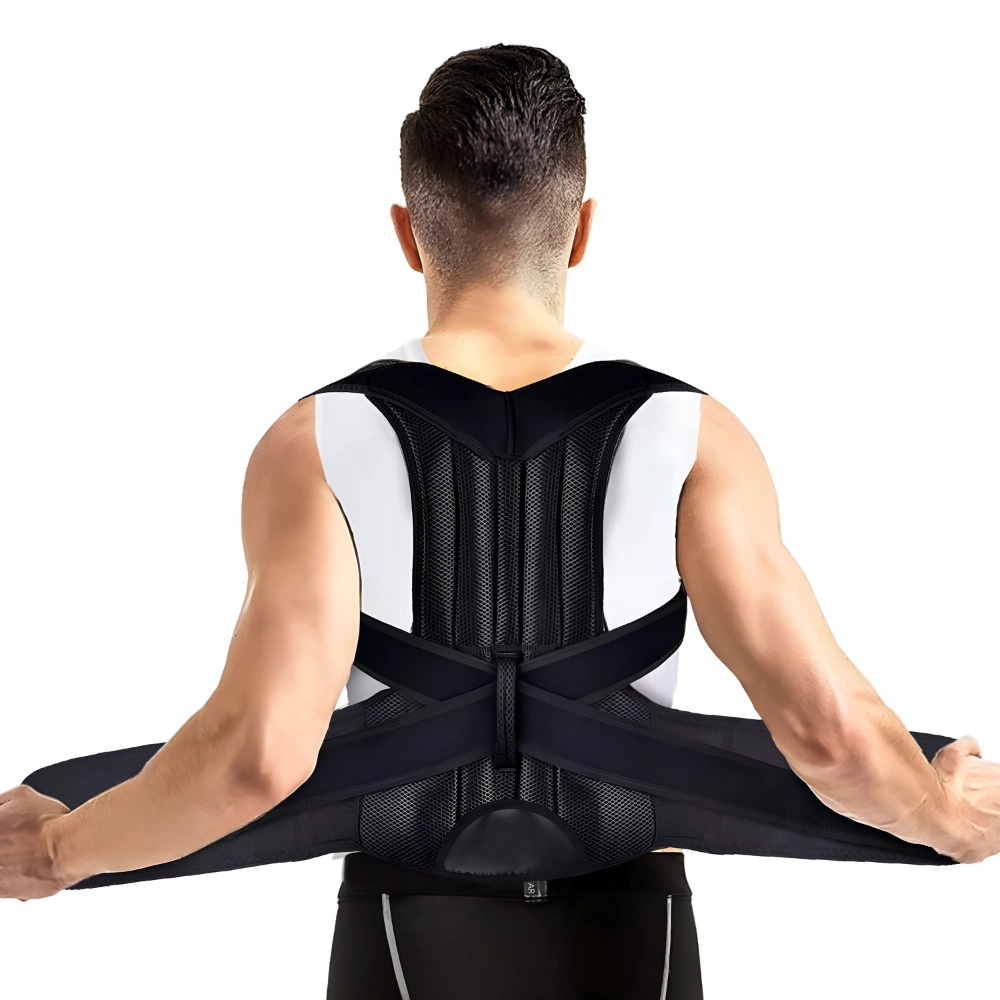
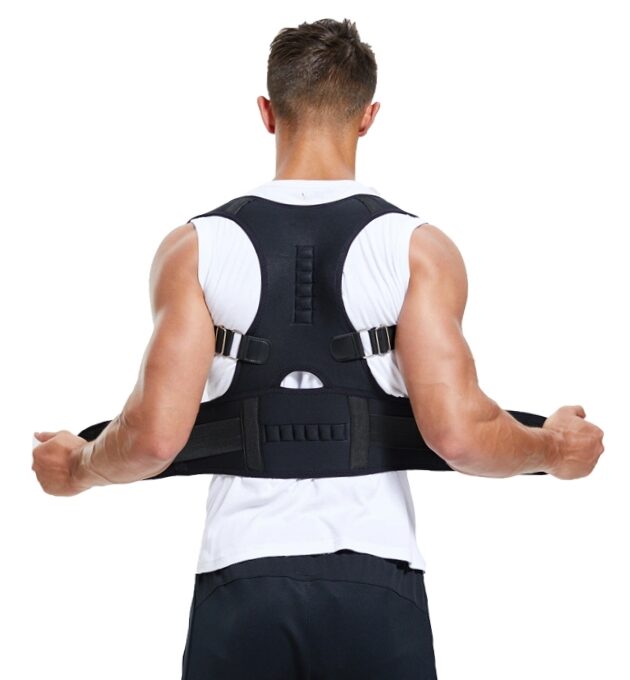
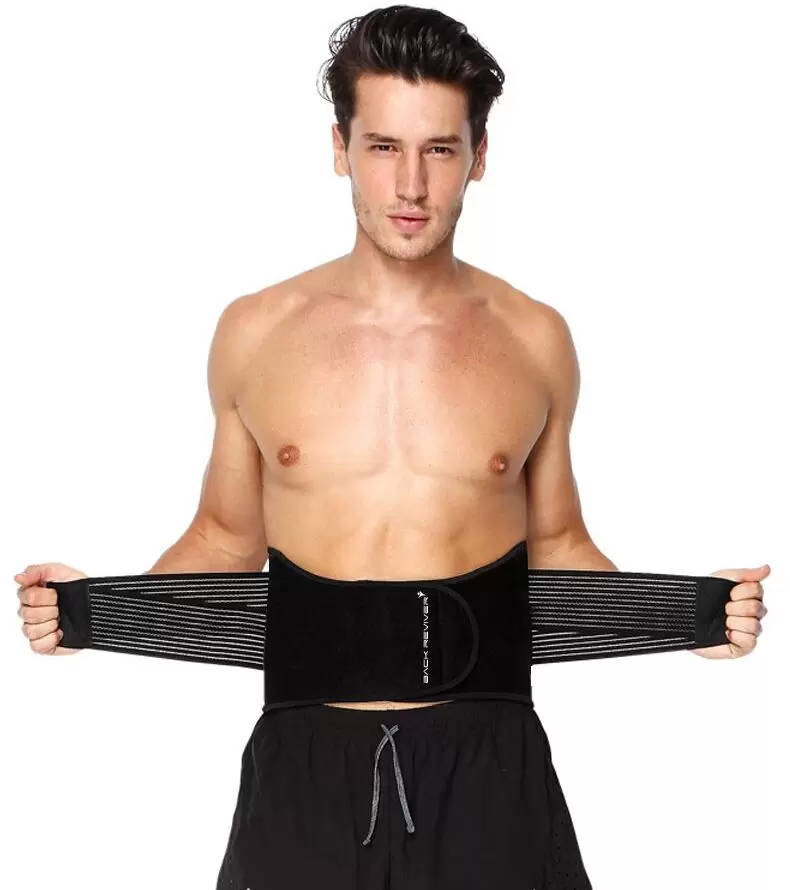
Posture Corrector Back Support
$30.75
$42.13
Why your upper back and neck feel like thisIf you find that, as the day goes on, your shoulders creep forwards, your head drifts in front of your body and a spreading ache settles between your shoulder blades, you are not alone. Many adults who spend long spells at a desk, driving or standing in one place notice the same pattern.When you are comfortably upright, with your head roughly above your shoulders and your chest open, the upper‑back part of your spine (the thoracic spine), your neck, and the muscles and ligaments around them share the work of supporting you. No single part works too hard for too long.When you slump – leaning towards a screen, looking down at a phone, or standing with the chest dropped forwards – that balance changes. The thoracic spine bends more forwards, the shoulder blades slide away from the spine, and the head often sits further in front of the body. Muscles between the shoulder blades and at the back of the neck are then held long and working constantly to stop you folding further forwards. Ligaments and the small joints at the back of the spine are held pulled tight. At the same time, muscles at the front of the chest and upper abdomen tighten and shorten, pulling the shoulders forwards and slightly closing the chest.Over hours, this can turn into the familiar dull ache between the shoulder blades, tightness across the tops of the shoulders, and the sense that sitting up straight takes real effort. You may straighten up for a while, only to feel your body slide back into a rounded, forward‑head posture without you noticing.These sensations are not a sign that you are failing or doing something wrong. They are the body’s natural response to being held in the same forward‑bent positions for long periods. In the short term, getting up, walking around or gently stretching often helps as blood flow improves and muscles change length. If your day‑to‑day routine keeps pulling you into the same slumped positions, though, the discomfort can become more persistent.Over time, the nervous system gets used to the rounded posture and starts to treat it as normal. A genuinely upright position can feel odd or even slightly over‑arched at first. Muscles that should help hold you upright do not have much endurance, because they have not been asked to do that job for long spells. That is why simply deciding to sit up straight rarely lasts without some extra help.As posture drifts forwards, you may also feel less confident in how you carry yourself. When the head sits further in front of the shoulders and the chest is more collapsed, people often describe feeling and looking more tired or withdrawn. In contrast, when you can bring your head back over your shoulders and gently lift the chest, you usually appear more upright, and many people feel more self‑assured as well as more comfortable.What is happening in your upper back and neckIn a comfortable, upright posture, the thoracic spine keeps a gentle forward curve. The neck has a soft inward curve. From the side, your ear sits roughly above your shoulder rather than in front of it. The shoulder blades rest fairly flat on the ribcage with their inner edges not too far from the spine.In this position:Weight is shared between the bones, discs, small joints, ligaments and muscles.The spine has enough room to move a little in all directions.No single structure is pushed close to its limits for long.Muscles work at lengths where they can generate force reasonably easily and are less likely to tire quickly.In a more rounded posture, the thoracic spine bends further forwards than ideal. The shoulder blades slide outwards and tip so that their inner borders move away from the spine. The head drifts in front of the shoulders. Even a small forward shift means the muscles at the back of the neck must work much harder to hold the head up, because the weight is now further in front of the body.Muscles between the shoulder blades and at the back of the neck are kept in a lengthened, constantly working position. Muscles at the front of the chest and shoulders shorten and tighten. Over time, this can produce:dull, nagging pain or burning between the shoulder blades,tension in the tops of the shoulders and at the base of the skull,stiffness when trying to draw the shoulders back or lift the chest,a sense of fatigue and “collapse” through the mid‑back after long sitting or standing.Because the chest and ribs are slightly compressed in a slouched position, some people also feel that taking a deep breath towards the end of the day is more effortful, as the ribcage has to move against tight front‑of‑chest tissues and stiffer joints at the back.When you first try to change this and sit taller, muscles between the shoulder blades and along the back of the neck that have been under‑used suddenly have to do more work. They may not yet have the endurance to hold this position for long, so fatigue builds quickly and slumping returns. Meanwhile, your nervous system is still very familiar with the rounded posture. For a long time, signals from joints, muscles and skin have told your brain that this rounded position is normal. So, at first, a truly upright position can feel more effortful or even slightly unfamiliar, even though it is easier on your joints and muscles.Changing this usually comes down to three things:strengthening and endurance work for the muscles that support upright posture,stretching and mobilising tight tissues at the front of the chest and across the upper back,practising better posture during the exact tasks that previously encouraged slumping, such as desk work or long periods of standing.A posture corrector can support this process by gently altering how your upper back and shoulders sit while you are actually doing those tasks, giving your body a physical guide that makes the better position easier to find and keep.When your posture starts to slip – how it actually feelsLong periods at a desk or on your feet tend to bring out certain familiar sensations. As the upper back rounds and the head and shoulders creep forwards, the muscles that span between the shoulder blades and up into the neck are kept under constant low‑level tension. They are holding the weight of the head and upper trunk slightly in front of the body’s centre, rather than directly over it.At first this may just feel like mild effort. As hours pass, blood flow to those working muscle fibres is reduced by the continuous contraction, and waste products build up more quickly than they can be cleared. This often turns into:a spreading ache across the mid‑back,tight bands or knots along the inner edge of the shoulder blades,a heavy, tired sensation at the base of the neck.Tightness and tension across the tops of the shoulders may spread towards the base of the skull. Sitting up straight can feel like hard work, and without thinking about it, the body folds back into a rounded, chest‑collapsed shape.This is a common response to being held in the same positions for too long, rather than a reflection of lack of effort. If it carries on for long periods, the soft tissues and joints can gradually adapt in less helpful ways. Muscles at the front of the chest can shorten further. Joints in the thoracic spine can become stiffer when you try to straighten up. The nervous system can become more sensitive to strain in those tired tissues, so symptoms crop up sooner and more easily.Making changes earlier – by varying how long you spend in one position, bringing the screen up towards eye level, keeping mouse and keyboard close, using the chair backrest properly, strengthening key muscles and using simple supports when needed – can help stop a relatively reversible pattern of stiffness and ache from becoming long‑term and harder to shift.Show moreShow lessPosture, confidence and how you are perceivedBeyond pain and fatigue, many adults want to improve their posture because of how it makes them feel about themselves and how they appear to others. When your head sits more in line with your shoulders, your chest is less collapsed and your upper back is not slumped forwards, you often look a little taller and more upright. Many people describe feeling more confident and more assured when they can stand or sit in this shape, rather than feeling as if they are folding in on themselves.Others may also read this change in posture as a sign that you are more confident and more assured in how you carry yourself. That can matter in everyday situations such as conversations at work, meeting new people or simply seeing your reflection and feeling that your posture matches how you would like to present yourself.The main reason to work on posture is to reduce strain on the spine and surrounding muscles, improve comfort and make everyday tasks easier. For many people, though, the combination of less physical discomfort and a more upright, better‑aligned posture also brings a welcome boost in confidence and in how they feel they come across to others.How the BackReviver Posture Corrector is designed to helpThe BackReviver Posture Corrector is a soft, adjustable brace for adults who notice upper‑back and neck fatigue, rounded shoulders or a forward‑head posture during everyday tasks such as desk work, driving and longer periods of standing.It focuses on three areas that commonly take the strain when posture slips:the upper thoracic spine, where excessive rounding often develops,the shoulder girdle and shoulder blades, which tend to roll and drift forwards,the base of the neck, where the weight of the head is transmitted down into the upper back.Rather than forcing the body into a rigid, fixed position, it acts as a gentle harness and reminder.Key features include:a supportive Y‑shaped panel over the upper back,backpack‑style padded shoulder straps that wrap around the shoulders and under the arms,adjustable buckles and fastening points to personalise the amount of guidance.When you begin to slump or allow the shoulders to roll forwards, gentle tension develops through the panel and straps. This nudges the shoulder blades towards a more central position on the ribs and encourages the upper thoracic spine away from its most rounded posture. The aim is not a forced, military‑style stance, but a small shift back towards a more comfortable alignment that your muscles and joints can tolerate more easily over time.In daily use, this can:reduce the time your upper back is held in a deeply rounded position when you sit or stand for long periods,share some of the continuous work of holding the shoulders and upper back up, so overworked muscles between the shoulder blades and at the back of the neck do not fatigue as quickly,give continuous, gentle feedback when posture is drifting, helping you notice and adjust slumping earlier, before discomfort builds.The BackReviver Posture Corrector is a training and support brace. It does not diagnose or cure underlying conditions, and it does not replace exercises, movement or professional treatment where they are needed. For many people, though, having this steady physical guide makes it more achievable to maintain healthier posture during the real‑world tasks that challenge them most.Key design features and why they matterY‑shaped upper‑back panel – guiding the thoracic spine and shoulder bladesAt the centre of the design is a Y‑shaped panel that lies over the upper back. The two upper arms of the “Y” sit between and just above the shoulder blades, while the lower stem runs down towards the middle of the upper‑mid back. This places the panel over the part of the thoracic spine that most often rounds forwards when you slump.As you start to round further forwards in sitting or standing, the panel is gently tensioned. This creates a mild straightening effect at the upper thoracic spine and encourages the shoulder blades to remain a little closer to the spine, instead of drifting further out and forwards. It does not hold the spine rigidly; you can still bend, straighten and rotate. It simply reduces how far and how long you tend to stay in your most slumped posture.For many people this means that the heavy, collapsing feeling in the upper‑mid back when tired is less intense, because the panel shares part of the work of resisting gravity. There is a clearer physical sense of where a more upright position is, as contact from the panel across the back changes when you begin to slump. The muscles that lie between the shoulder blades are not held on such prolonged stretch, which can make end‑of‑day fatigue more manageable.The panel uses supportive, padded material that sits flat against clothing. It is firm enough to provide direction and feedback, but flexible enough to move with you through normal daily tasks rather than locking the spine.Backpack‑style, padded straps – supporting shoulder position comfortablyInstead of thin straps that cross the front of the chest, the BackReviver Posture Corrector uses broad, padded straps that follow the line of a well‑fitting backpack.Each strap:starts from the upper part of the Y‑panel near the top of the back,runs over the top of the shoulder,then passes under the arm to meet the lower part of the back panel through an adjustable buckle.This design allows the straps to apply a gentle backward‑guiding force to the shoulders when you begin to round forwards. This helps to open the chest slightly and keeps the shoulders from collapsing in.Because the straps are extra‑wide, softly padded and edged with rounded material, the load is spread over the top and side of the shoulder rather than concentrated in a narrow band under the arm. This reduces the risk of localised pressure on soft tissues, nerves or blood vessels. The strap shape is designed to follow the curve of the shoulder and upper chest, helping the straps move with your body as you reach forwards for your keyboard, steer a car or reach for light objects within a comfortable range, without digging in or shifting excessively. They are intended for everyday low‑to‑moderate arm movements, not for heavy overhead lifting or vigorous sport.Adjustable buckles and fastening points – finding the right amount of guidanceFor a posture corrector to work well, it needs to sit closely enough to move with you, but not so tight that it forces the shoulders unnaturally back or interferes with breathing and circulation. The BackReviver Posture Corrector combines buckles beneath the arms with fastening areas on the straps and panel to allow this fine control.The basic loop size under each arm is set using the buckles. This determines how the strap runs under the arm and how snug the overall fit is. Fastening points on the front of the straps and on the back panel then allow small adjustments in tension and help secure any loose ends.The aim is that, when you are in your usual good posture, the brace feels present but not restrictive. As you start to slump or let the shoulders roll forwards, you should feel a gradually increasing, but still gentle, pull from the straps and panel reminding you to correct.As a guide:you should be able to slide a couple of fingers under the straps without difficulty,you should not feel sharp pressure, pins and needles, throbbing, or a sense that your shoulders are being forced backwards.Over‑tightening can strain tissues at the front of the shoulders and create undue pressure on soft tissues under the arms and around the side of the chest, where important nerves and blood vessels pass.Finding the right setting may take a few small adjustments over the first few days. It is generally better to start with a slightly looser, more comfortable fit and gradually increase tension to a clear but gentle reminder level.Breathable, padded material – comfort during everyday wearThe BackReviver Posture Corrector uses a soft, supportive material with a neoprene‑type core and padding at key contact points. The aim is to be firm enough to guide posture, but padded enough to stay comfortable against clothing and skin.Perforations and fabric channels allow air to circulate around the upper back and shoulders, helping reduce overheating. The inner surface is designed to draw moisture away from the skin, which can make longer wear under clothing more comfortable. Rounded edges and padding at the base of the neck and around the shoulder straps help reduce rubbing and pressure points.When worn over or under non‑bulky clothing such as T‑shirts or shirts, the brace is less likely to feel clammy or abrasive. The firmness of the material maintains enough structure to guide posture, while the padded surfaces make those corrective forces easier to tolerate during typical desk work, standing or walking.You can wear the BackReviver Posture Corrector over the top of close‑fitting garments like T‑shirts or shirts, or underneath lightweight outer clothing. Wearing it over non‑slippery, not overly bulky clothing usually helps it stay in place and maintain consistent support.Gentle contact and awareness around the shoulder bladesBecause of the way the Y‑panel and straps encircle the upper back, the BackReviver Posture Corrector gives light, even contact around the shoulder blades. This has two main effects:a small degree of compression of the soft tissues around the shoulder blades, which can make it easier to feel how that area is sitting and moving,a modest sharing of the work needed to hold the shoulder blades close to the ribcage, helping muscles such as the rhomboids and middle trapezius that are often stretched and tired in rounded postures.The aim is not to fix the shoulder blades in place. You should still be able to move your arms through your usual comfortable range for everyday tasks such as typing, driving, light lifting and other routine activities. Instead, the brace encourages the shoulder blades to rest in a slightly more central position when you are relaxed, and makes it less likely that they will drift far outwards and upwards into the positions that often provoke discomfort over time.Many people find that this combination of light compression and positional guidance leads to a clearer sense of where their shoulder blades are sitting and how they are moving. This can make it easier to use exercise techniques and posture cues such as drawing the shoulder blades gently down and back or opening the chest, because the body already has a small mechanical bias towards those positions.Low‑profile design that fits under everyday clothingMany people prefer posture support that can be worn discreetly. The BackReviver Posture Corrector is shaped to follow the contours of the upper back and shoulders, with a slim Y‑panel that lies relatively flat between the shoulder blades, straps that trace the natural line of the shoulders and upper chest, and seams and fastening points arranged to minimise bulk under light outer layers.When worn under a shirt, blouse or jumper that is not excessively tight or sheer, it tends to resemble the outline of a light backpack harness rather than a bulky brace. Because the straps do not cross the front of the chest, there is less interference with clothing at the front.This makes it practical to use at work during desk‑based tasks or meetings, during day‑to‑day outings or travel, and in situations where you prefer posture assistance to be as unobtrusive as possible. For best stability and comfort, it is usually easiest to wear the brace over a close‑fitting top rather than directly on the skin or over very loose, slippery fabrics.Durable construction for repeated daily useA posture brace that is worn regularly will be taken on and off, adjusted and washed many times. The BackReviver Posture Corrector uses reinforced stitching around areas where straps join the panel, materials chosen to maintain their shape and firmness rather than quickly stretching out, and fastening components designed to tolerate frequent adjustment without losing their hold.The guidance the brace provides depends on the panel and straps keeping their tension. If the material becomes too stretchy or the fastening points slip easily, the gentle corrective pull that helps support your posture will fade. A more durable construction helps ensure that, over time, the brace continues to provide a similar level of feedback and support, rather than gradually losing its supportive effect.Who it is designed for – and when to be cautiousThis posture corrector is designed for adults who recognise patterns like these:upper‑back or shoulder‑blade aching that clearly links with long spells of sitting or standing,shoulders rounding forwards or the head drifting in front of the body, particularly during desk work, reading, driving or using handheld devices,a slouched or “compressed” feeling by the end of the day, with standing or sitting upright taking noticeable effort.It is unisex and adjustable, so it can be fitted to most adults with an average build within the size range. It can be particularly useful for people who:do desk‑based or clinic‑based work for much of the day,spend long periods driving or travelling while seated,stand for extended periods in relatively fixed positions, such as at a workstation, counter or treatment couch,are using posture retraining as part of physiotherapy or rehabilitation on the advice of a clinician.In these situations, the corrector is usually worn during the times of day when posture is most challenged – for example, while working at a desk, during longer meetings, or on extended journeys. At other times, such as when walking for exercise or relaxing at home, many people prefer to rely on their own active posture control.Most people with posture‑related discomfort can use a posture corrector safely, but some situations call for specific guidance before you start:recent significant injury to the neck, upper back, shoulder or collarbone,a suspected or confirmed fracture in areas the brace would cover,recent surgery to the neck, upper back, shoulder or collarbone,known conditions that significantly affect bone strength, such as diagnosed osteoporosis,inflammatory or other serious spinal conditions already under specialist care,ongoing or unexplained weakness, numbness, tingling or coordination problems in your arms or hands,severe pain that is getting worse quickly, or pain associated with general symptoms such as fever or unexplained weight loss.If any of the above apply to you, it is important to speak to a GP, physiotherapist or another appropriate clinician before using a posture corrector, so they can advise whether it is appropriate and how it should be used as part of your care.The BackReviver Posture Corrector is designed for adults and is not suitable during pregnancy. Changes in body shape, ligament flexibility and circulation during pregnancy mean extra pressure around the chest and shoulders is best avoided unless specifically recommended by a clinician.Everyday use – when people tend to wear itThe BackReviver Posture Corrector is aimed at everyday postures and tasks where upper‑back and neck strain often build, rather than at heavy lifting or contact sport.Typical situations where people choose to wear it include:Sitting at a desk or table for work, where the natural tendency is to lean towards a screen or documents, rounding the thoracic spine and letting the head creep forwards.Driving or travelling for longer periods, where the upper back may sag away from the seat back and the shoulders roll forwards towards the steering wheel.Standing for extended periods in relatively fixed positions, such as at a workstation, counter or in a clinic, where fatigue encourages chest collapse and shoulder rounding.In these contexts, the brace helps keep the thoracic spine closer to a comfortable upright position, rather than in deep forward bending, so joints and discs are not under constant strain at their furthest bend. It guides the shoulder blades into a position where the muscles that support them can work at a more effective length and do not have to fight continuous forward pull. It also reduces how far the head drifts forward, lightening the load on the muscles and joints at the back of the neck.Many people who use computers, consult with clients, treat patients, work at benches or drive for a living notice that, when they wear the brace during their longest or most static tasks, the familiar ache between the shoulder blades and across the tops of the shoulders either takes longer to appear or feels less intense.Some people also choose to wear the brace for short, planned periods during exercise and training, especially when they want extra help keeping good posture as they start to tire. The design allows normal arm movement for many forms of exercise, while still giving a gentle reminder if the upper back and shoulders start to collapse forwards. It is generally suitable for activities where the arms stay mostly below shoulder height and where posture and form are important. Typical examples include:walking or running as part of your usual training,using a static bike, cross‑trainer or rowing machine,strength and conditioning workouts with light to moderate loads, such as many weight‑training machines or free‑weight exercises performed close to the body.In these situations, the brace can help you keep the chest lifted, the shoulders more open and the head better aligned with the body, which many people find useful when they are working on running or gym form. If you try wearing it during training, it is sensible to:start with short periods to see how it feels,avoid exercises that demand full overhead arm movement, fast changes of direction or very heavy lifts,stop if you notice rubbing, restricted arm swing, breathlessness or any sense that you cannot move or breathe freely.The BackReviver Posture Corrector is not designed for heavy manual handling, powerlifting, contact sports or very energetic activities that rely on a completely unrestricted shoulder and trunk. In those settings, normal muscular control and task‑specific supports are more appropriate.How to fit the BackReviver Posture CorrectorA good fit is essential for both comfort and effectiveness. The brace is designed to go on like a backpack.Step 1 – Loosen the strapsBefore putting it on, loosen the loops by adjusting the buckles under the arms so there is plenty of space to slip your arms through.Step 2 – Slip your arms through like a backpackHold the Y‑panel against your upper back. Slip one arm at a time through the padded shoulder loops, as you would with a backpack, so that the panel rests between your shoulder blades.Step 3 – Position the back panelAdjust the panel so that the upper arms of the “Y” sit between the shoulder blades, not directly on the neck, and not so low that they rest on the lower ribs. The lower part of the panel should sit roughly over the upper‑mid back.Step 4 – Adjust buckles under the armsGently tighten the buckles beneath each arm until the loops feel snug but not tight. You should not feel cutting or pinching under the arms, and your shoulders should not be dragged sharply backwards.Step 5 – Use fastening points for fine‑tuningUse the fastening areas on the straps and back panel to secure any loose sections and make small adjustments. The aim is for the brace to give a gentle reminder when you start to slump or let the shoulders round, not to hold you rigidly.Once fitted, check that:you can slip a couple of fingers under the straps at the shoulder and underarm,you can take a deep breath without feeling restricted across the chest,your arms can move freely enough for usual tasks such as typing, reaching the steering wheel, or lifting light objects to a comfortable height.If you feel numbness, tingling, throbbing, or any sense of circulation being cut off in the arms or hands, loosen the brace and reassess the fit. If these sensations persist even with a looser fit, stop using the brace and seek advice.How long to wear it and what to expectWhen first using the BackReviver Posture Corrector, it helps to give your body time to adapt.A practical approach is to:Start with short sessions – around 15–30 minutes once or twice a day, during activities where you know your posture tends to slip, such as concentrated desk work, longer standing periods or longer drives. Notice how your body responds both while wearing it and after taking it off. Mild awareness or a gentle, exercise‑like fatigue between the shoulder blades or at the base of the neck can be normal in the first days as previously under‑used muscles begin to work differently.Build up gradually – if you remain comfortable, you can gradually increase total wear time over several days or weeks. Many people find that wearing the brace for one to a few hours spread across the day, rather than continuously, is enough to provide consistent reminders without over‑reliance. Splitting wear into shorter blocks with breaks usually works better than wearing it from morning to night.Know when to stop and seek advice – you should not feel sharp pain, a marked increase in your usual symptoms, pins and needles, numbness, unusual weakness, or any sense of breathing or circulation being restricted. If any of these occur, remove the brace. If they do not settle, or if they recur each time you wear it even when fitted more loosely, seek advice from a healthcare professional.The BackReviver Posture Corrector is not designed to be worn during sleep. When lying down, the spine is generally supported by the bed rather than having to work against gravity in the same way. The brace does not offer useful support in that position and, because movements are unconscious during sleep, straps can move into awkward positions. There is also a risk that straps could shift around the neck or throat area during the night, which is unsafe. For these reasons, it should always be removed before going to bed.Over time, many people find that as their posture awareness and muscle endurance improve, they rely less on the brace. It can then be used more as an occasional reminder during days when you expect to be sitting or standing for long periods, rather than as a constant support.Safety – when to pause and speak to a professionalMost people with posture‑related aches and fatigue can use a posture corrector safely as part of broader self‑management. There are, however, clear situations where professional guidance is important.Consider speaking to a GP, physiotherapist or another appropriate clinician before using the BackReviver Posture Corrector if you:have had a recent significant injury to your neck, upper back, shoulders or collarbone,suspect a fracture or have been told that you have one in these regions,have recently undergone surgery around your neck, upper back, shoulder blades or collarbone,have a known diagnosis affecting the bones or joints in your spine or shoulders, such as marked age‑related changes, a fixed spinal curve or reduced bone strength,have ongoing or unexplained weakness, numbness, tingling or coordination problems in your arms or hands,or your pain is severe, is getting worse quickly, or is associated with general symptoms such as fever or unexplained weight loss.Stop using the BackReviver Posture Corrector and seek advice if you:notice new or clearly worsening pain that does not settle reasonably soon after removing it,experience numbness, tingling, unusual coldness, or colour change in the arms or hands while wearing it,feel short of breath, faint, or unusually restricted across the chest,or the skin under the brace becomes very sore, blistered or broken.In rare cases, serious problems affecting the spinal cord can cause more widespread changes in strength and sensation. If, alongside neck or back symptoms, you notice new problems such as marked difficulty walking, loss of balance, or changes in bladder or bowel control, do not try to manage this yourself with a posture brace. It is important to seek urgent medical assessment.The BackReviver Posture Corrector is designed for adults only and is not suitable during pregnancy. It should not be worn during sleep.How this posture corrector sits alongside common diagnosesRounded shoulders, a forward head and a rounded upper back often sit alongside recognised clinical problems such as an increased thoracic curve, neck strain and shoulder‑blade control issues. These usually develop over time from repeated positions and day‑to‑day demands, rather than from a single injury.In many of these situations, muscles at the front of the chest and neck become tight and do too much of the work, muscles between the shoulder blades and at the front of the neck become relatively weaker and do too little, and the upper back and shoulder blades adopt new defaults that are harder to change without consistent help.The BackReviver Posture Corrector is designed to work with these issues by gently guiding the shoulders back, bringing the shoulder blades into a more supported position, and encouraging a more open chest and more upright upper‑back posture. It does not fix underlying bone or joint changes on its own, but it can offer useful support for many people with posture‑related discomfort.The sections below look at specific posture‑related problems in more detail. They outline what you might feel day to day, what is happening in the body, who is more at risk, and how an upper‑back support like the BackReviver Posture Corrector may fit alongside exercises, movement and other treatment.For Thoracic KyphosisThoracic kyphosisThoracic kyphosis refers to an exaggerated forward curve in the upper‑back part of the spine (the thoracic spine). A gentle forward curve here is normal and helps absorb everyday forces. It becomes more of a concern when the curve is more pronounced and the upper back sits in a rounded shape most of the time.The thoracic spine runs from the base of the neck down to where the ribs end. In thoracic kyphosis, these vertebrae are bent forwards more than usual. The shoulder blades tend to sit further away from the spine, and the head often sits further in front of the body.If your thoracic curve is increased, you might notice:a persistent ache or tiredness across the mid‑back, especially between the shoulder blades, after sitting or standing for long periods,difficulty or stiffness when straightening up fully from a slouched position,a sense that the chest is a little compressed or closed in by the end of the day.A more pronounced thoracic curve can develop due to long‑term posture habits, age‑related changes in the vertebrae and discs, reduced bone strength, or a mixture of these. When the upper back is held in a rounded position for much of the day, the joints and discs in the thoracic spine spend more time in a strongly bent‑forward shape. Ligaments at the back of the spine are held on stretch, and the small joints between the ribs and vertebrae become used to bending forwards rather than straightening. Some muscles are forced to work at a lengthened position, which is less efficient and more tiring.If this continues, the spine, joints and soft tissues can adapt in a way that makes it harder to straighten up. Muscles along the back of the spine may weaken, chest and upper‑abdominal muscles can shorten, and joints at the back of the thoracic spine may stiffen when you try to straighten. Over time, this can lead to persistent mid‑back ache, stiffness, and difficulty holding an upright posture for long.The BackReviver Posture Corrector is not a corrective brace for fixed spinal curves and cannot reshape bones. In mild to moderate posture‑related thoracic rounding without worrying symptoms, it may help by:encouraging the upper thoracic spine away from its most bent‑forward position through the Y‑panel,helping the shoulder blades rest closer to the spine, which gives the upper‑back muscles a more effective working length,making it easier to practise upright posture during tasks that usually increase rounding, such as desk work or standing in one place.It should sit alongside exercises and stretches prescribed to improve strength and mobility. Anyone with a significant or rapidly changing spinal curve, recent loss of height, or new, unexplained symptoms should seek assessment before using any brace.For Thoracic Kyphotic PostureThoracic kyphotic postureThoracic kyphotic posture describes a strongly rounded upper‑back posture that is mainly driven by how you sit and stand and by muscle imbalance, rather than by fixed changes in the shape of the vertebrae. The upper back curves forwards more than ideal when relaxed, but when you lie down or consciously straighten, you can usually reduce the curve.In everyday life, this often looks and feels like:the upper back rounding and the shoulders rolling in whenever you relax in sitting or standing,the head sitting in front of the shoulders, with a sense of “craning” forwards towards your work,a dull ache or burning between the shoulder blades and across the mid‑back after sitting, driving or standing for a while,relief when you get up, walk around or stretch, but a tendency to drift back into the rounded posture soon afterwards.Tighter muscles at the front of the chest and upper abdomen pull the shoulders and upper ribcage forwards, while weaker or less endurance‑trained muscles between the shoulder blades and along the spine struggle to hold the upper back upright for long. The spinal joints and discs still have the ability to move back towards a more comfortable curve, but they spend most of the day in a rounded position. Your nervous system becomes used to this as your “normal”, so a more upright posture feels unfamiliar or even slightly over‑arched at first.If this posture continues for months or years without change, the tissues can start to adapt in ways that make it harder to move out of it. Chest muscles may shorten further, and some upper‑back joints may lose a little extension range. That is why it is worth addressing before it becomes more fixed.Working on thoracic kyphotic posture usually involves:stretches and mobility exercises to open the front of the chest and upper abdomen and to gently extend the upper back,strength and endurance work for the muscles between the shoulder blades and along the back of the spine,changes to daily positions so you are not pulled into your deepest slouch for hours at a time.The BackReviver Posture Corrector can be particularly helpful with this habit‑driven posture, because it provides a consistent physical cue whenever you begin to sink back into your familiar rounded shape. It can:gently resist further rounding at the upper back through the Y‑shaped panel,guide the shoulders back from their most rolled‑in position, so the chest does not collapse as easily,remind you when you drift forwards towards your work, before discomfort builds.Wearing the brace for selected parts of the day – for example, during your longest desk sessions, clinic lists, meetings or standing duties – helps you spend more time in the sort of posture you are aiming to build with your exercises. Over time, this can make it easier for the supporting muscles to gain strength and endurance in a better alignment, and for your nervous system to accept the more upright posture as normal. The brace should be used as a training tool, not something you depend on all day, every day.For Forward Head PostureForward head postureForward head posture is a pattern where the head is carried in front of the shoulders rather than roughly above them. From the side, the chin may appear to jut forwards and the upper neck often tilts back slightly so the eyes stay level.If this is you, you may notice:aching or tightness in the muscles at the back of the neck and across the tops of the shoulders, especially after long periods of sitting or standing,stiffness when turning your head or looking up after spending a long time looking down,headaches that start at the base of the skull and spread forwards.In simple terms, your head has slid in front of your body and your upper back has rounded. When the head sits directly above the shoulders, its weight is carried more vertically and front‑ and back‑of‑neck muscles share the work. When the head moves forwards, the muscles at the back of the neck have to work much harder to keep it from dropping further forward. The small joints and soft tissues at the top of the neck can also become compressed and irritated.Improving forward head posture usually involves strengthening the deeper muscles at the front of the neck that help draw the head back over the shoulders, stretching tight muscles at the back of the neck and across the chest, and reducing how far your upper back rounds forwards in day‑to‑day positions.The BackReviver Posture Corrector does not hold the neck itself and does not directly change the natural curve of the neck. Its role is to improve the base your neck sits on – the upper‑back and shoulder area. It can:support the upper back in a less rounded position,help the shoulders sit a little further back instead of fully rolled forwards,give a clear physical cue when you lean too far towards your work surface.Worn during the parts of the day when your head usually creeps forwards – for example, during focused computer work or long drives – the brace can reduce how far the head moves in front of the body and ease some of the background tension that feeds into neck pain and headaches. It works best alongside exercises, stretches and workspace adjustments. If you have significant neck pain, persistent symptoms in the arms such as numbness, tingling or weakness, or if you are under specialist care, seek individual advice before relying on any posture support.For Cervical LordosisCervical lordosisThe neck normally has a gentle inward curve when viewed from the side, called cervical lordosis. This curve helps the neck absorb forces and allows smooth movement. Problems can arise when this curve becomes either exaggerated or flattened, altering how the joints and discs in the neck share strain.If your neck curve is altered, you may notice:ongoing neck ache or stiffness,pain that spreads into the shoulders or upper back,headaches that originate at the back of the head,a feeling of pressure or fatigue in the neck when holding the head up for long spells.Symptoms often worsen after long periods in one posture and improve with gentle movement.If the inward curve of the neck is exaggerated, the joints at the back of the cervical spine may be compressed and muscles at the back of the neck may be shortened and tight. If the curve is flattened or reversed, discs and ligaments at the back of the neck can be under tension, and muscles at the front of the neck may be working harder to keep the head from falling forwards. These patterns are influenced by posture habits, previous injuries and age‑related changes.Cervical curve changes often develop gradually. Over time, stiffness and sensitivity in the neck may make it less tolerant of prolonged positions. In some cases, altered cervical lordosis is associated with nerve root irritation, with symptoms such as pain, tingling, numbness or weakness in the arms or hands. These features require medical assessment.The BackReviver Posture Corrector does not directly reshape the neck curve or reverse age‑related changes in discs or joints. However, because neck alignment is closely tied to what happens lower down, improving posture in the upper back and shoulders can reduce some of the strain that contributes to discomfort. Supporting the upper thoracic spine so it sits in a more comfortable curve and encouraging the shoulders to sit a little further back provides a more stable base for the neck and can indirectly reduce forward head posture.For people whose neck discomfort is strongly linked with poor upper‑back and shoulder posture – for example, symptoms that are clearly worse after slouched desk work – using the BackReviver Posture Corrector during those tasks can be one element of symptom management. It should be combined with exercises to improve neck stability and maintain mobility, as prescribed by a clinician. Pain or neurological symptoms that are severe or progressive should always be assessed.For Upper Crossed SyndromeUpper crossed syndromeUpper crossed syndrome is a way clinicians describe a very common muscle imbalance around the neck, shoulders and upper back. Instead of one single disease, it refers to a “crossed” imbalance:muscles at the front of the chest and the back of the neck tend to be tighter and do too much of the work,deeper muscles at the front of the neck and between the shoulder blades tend to be weaker and do too little.From the outside, this often shows up as:a head that sits forwards of the shoulders,rounded shoulders and a slightly hunched upper back,a sense that the chest is slightly closed in.From the inside, people with this imbalance commonly describe:a dull ache or tired feeling across the upper back, especially between the shoulder blades, after sitting or standing for a while,tightness or “ropey” tension across the tops of the shoulders and into the base of the skull,heaviness or fatigue when they try to sit or stand upright for more than a short spell,sometimes, headaches that build from the neck or back of the head after a long day at a desk or on their feet.This develops slowly from the way you sit, stand and use your arms day after day. Tasks that keep your arms in front of you and your head leaning forwards – typing at a computer, using handheld devices, reading, fine manual work – encourage the tight muscle groups to dominate and the supporting ones to switch off.Treatment usually focuses on two things:stretching and relaxing tight muscles at the front of the chest and the back of the neck,strengthening and re‑training the deeper muscles at the front of the neck and between the shoulder blades so they can hold you in a more balanced posture for longer.A posture corrector such as the BackReviver Posture Corrector does not replace that work, but it can make it easier to do it in real life. It can:gently guide the shoulders back from their most rounded position, which places tight chest muscles under a mild stretch rather than allowing them to shorten further,bring the shoulder blades a little closer to the spine so the mid‑back muscles are working at a more effective length,support the upper back in a less slumped posture so the head does not drift as far forwards in the first place.Wearing the brace when you do the things that usually make this imbalance worse – for example, long spells of typing at a computer, reading or standing in one place – can make it easier to keep a more balanced posture without having to think about it all the time. The brace is best seen as one part of how you keep symptoms under control, not as the whole answer.For Scapular DyskinesisScapular dyskinesisScapular dyskinesis means the shoulder blade (scapula) is not moving smoothly or in a well‑controlled way as you move your arm. Normally, the shoulder blade glides on the ribcage when you lift, reach or lower the arm. With dyskinesis, it may hitch, tilt awkwardly, move too much or too little, or feel out of sync.If you have scapular dyskinesis, you may notice:a sense of catching, clunking or uneven movement around the shoulder blade when raising or lowering the arm,ache or fatigue around the upper back or shoulder after repetitive reaching or work at or above shoulder height,reduced power or control when lifting or holding objects at arm’s length or overhead.The shoulder blade is held against the ribcage and guided by muscles such as serratus anterior and different parts of the trapezius and rhomboids. In scapular dyskinesis, some of these muscles may be weak, slow to switch on or poorly coordinated, while others are tight and doing more than their fair share. A history of neck, shoulder or upper‑back injury, or long‑standing rounded posture with the shoulders rolled forwards, can all change the way the shoulder blade sits and moves.Management usually focuses on:a careful assessment to identify which muscles are involved,specific strengthening and control exercises for the shoulder‑blade stabilising muscles,stretching or releasing tight structures that are pulling the shoulder blade into less ideal positions,improving upper‑back posture so the shoulder blade sits in a better position to start with.The BackReviver Posture Corrector is not a replacement for the specific shoulder‑blade exercises your clinician may give you, but it can make those exercises – and everyday arm use – more effective by improving how your upper back and shoulders are positioned when you are sitting or standing still. For people whose dyskinesis clearly goes hand‑in‑hand with a rounded upper back and shoulders that sit forwards, it offers a more stable, better‑aligned base during lighter, everyday tasks.It can:encourage the upper back into a less rounded posture,help the shoulders rest slightly further back instead of hanging forwards,support the shoulder blades in a more central, slightly flatter position on the ribcage when you are relaxed.This can make it easier for the stabilising muscles to do their job and for you to feel where your shoulder blades are as you work on control exercises. Worn during lighter activities such as desk‑based work, consultations, note‑taking, driving or day‑to‑day standing and walking, the brace can support the posture side of your rehabilitation. For more demanding overhead activity, throwing or heavy lifting, specific exercise programmes and, in some cases, sport‑ or job‑specific supports are more appropriate.For Rounded ShouldersRounded shouldersRounded shoulders are easy to recognise. From the side, the tops of your shoulders sit in front of your chest, your upper back looks slightly hunched, and the shoulder blades rest further away from the spine than ideal. The chest can look and feel a little closed in.If your shoulders are rounded, you may notice:a dull ache between the shoulder blades and across the upper back after long periods of sitting or standing,tightness or pulling across the front of the chest and at the front of the shoulders,a tendency to slump forward when you relax, with upright posture feeling like hard work,sometimes, discomfort at the front of the shoulder, especially when taking the arm behind you or lifting it at shoulder height.This posture usually develops over time from the way you sit, stand and use your arms. It often involves:tight, shortened chest muscles and front‑of‑shoulder tissues that draw the shoulders forwards and inwards,lengthened and often tired muscles between the shoulder blades that are supposed to pull the shoulder blades back towards the spine,an upper back that spends a lot of the day in a rounded position.Working on rounded shoulders usually combines stretches for the chest and front of the shoulders, strengthening of the muscles between the shoulder blades, and small, steady changes in how you sit, stand and position your work.The BackReviver Posture Corrector is designed with this in mind. It gently guides the shoulders back from their most forward position so they rest in a slightly more open alignment, and helps the shoulder blades sit closer to the spine at a distance where the mid‑back muscles can generate force more effectively. By reducing upper‑back slumping, it supports efforts to open the chest and lift the upper back.When you wear the brace during activities that usually bring out rounded shoulders – such as working at a computer, reading, working at a bench or standing talking to people – you get a clear physical reminder each time your shoulders roll too far forwards. Over time, this combination of specific exercises plus a brace that quietly nudges your shoulders into a better resting position can help reduce the feeling of tightness, make it less of a struggle to hold a comfortable upright posture, and improve how broad and open your chest looks and feels.For Shoulder Impingement SyndromeShoulder impingement syndromeShoulder impingement syndrome is a pattern where lifting the arm – especially out to the side or overhead – produces pain in the shoulder, often felt on the outer side of the shoulder and upper arm. Everyday tasks such as getting dressed, reaching overhead or lifting objects to or above shoulder height can become uncomfortable.Inside the shoulder, the tendons of the rotator cuff and a small fluid‑filled sac (bursa) pass through a narrow space under a bony part of the shoulder blade called the acromion. In shoulder impingement, this space can become too tight when the arm is lifted, so these tendons or the bursa are pinched or rubbed, leading to irritation and pain.You may notice:pain when raising the arm out to the side, forwards or overhead,discomfort when reaching into cupboards, putting on a jacket or lifting objects to shoulder height,pain that is worse with repeated overhead activity and may ease with rest,sometimes, night pain when you lie on the affected shoulder.Common reasons include weakness or poor coordination of the rotator cuff and shoulder‑blade stabilising muscles, stiffness in shoulder joint tissues, shapes or age‑related changes that reduce the space under the acromion, and rounded upper‑back posture with shoulders that sit forwards.Treatment usually focuses on changing how much and how you use the shoulder for a period, strengthening and coordination exercises for the rotator cuff and shoulder‑blade muscles, stretching or mobilising any stiff parts of the shoulder and upper back, and in some cases, injections or other medical procedures.The BackReviver Posture Corrector does not treat the rotator cuff or bursa directly and cannot address a naturally smaller space under the bone. However, for people whose symptoms are clearly made worse by rounded posture when sitting or standing, it can help improve how the upper back and shoulders are positioned during lighter daily tasks.It can:support the upper back so it does not slump as much,gently bring the shoulders back from their most forward‑rolled posture,encourage the shoulder blades to rest in a slightly more centred position on the ribcage.By changing this positioning, the space under the acromion may be a little less narrowed at rest, which can make repeated light use of the arm – such as working at a desk, driving, performing examinations or reaching for items at chest height – more comfortable. It is not designed to stabilise the shoulder during heavy lifting, overhead sport or contact activities, where specific advice from your clinician is more appropriate.For Rotator Cuff InjuriesRotator cuff strains and injuriesThe rotator cuff is a group of four muscles and their tendons that surround the shoulder joint. They help keep the ball of the upper arm bone centred in the socket and control the shoulder when you lift, reach or rotate your arm.Rotator cuff problems range from mild tendon irritation through to partial or full‑thickness tears. You may notice:pain around the shoulder, usually felt on the outer side of the shoulder and upper arm,discomfort or weakness when lifting the arm above shoulder height or rotating it outwards,difficulty lifting or holding objects at arm’s length,sometimes, pain when lying on the affected side at night.These tendons can be irritated or injured by repeated overhead activity, heavy lifting, gradual age‑related wear, or changes in how the shoulder blade moves. Rounded posture that rolls the shoulders forwards and rounds the upper back can also reduce the space the rotator cuff tendons pass through, increasing day‑to‑day compression, especially when the arm is lifted.Management is guided by a clinician and usually includes changing how much and how you use the shoulder for a period, specific strengthening and control exercises for the rotator cuff and shoulder‑blade muscles, stretching or mobilisation if stiffness is present, and, in some cases, medical or surgical treatments when indicated.The BackReviver Posture Corrector cannot repair a torn tendon and does not replace medical care. Where it can contribute is in reducing posture‑related strain on the rotator cuff during day‑to‑day life, particularly if your shoulder symptoms clearly flare when you spend long spells with your shoulders rounded and upper back slumped.It can:support the upper back so it does not collapse forwards as much in sitting and standing,encourage the shoulders to rest slightly further back instead of hanging forwards,help the shoulder blades sit in a more neutral position on the ribcage at rest.By improving this positioning, the space the rotator cuff tendons occupy when your arm is down may be a little less narrowed, and the tendons may be under less continuous low‑grade compression during lighter activities. The brace is not intended to stabilise the shoulder during heavy lifting, overhead sport or manual work that requires full freedom of movement. If you have significant weakness, a feeling of giving way, sudden onset of shoulder pain, or symptoms that are not improving as expected, you should seek assessment from a clinician.For Clavicle FracturesClavicle fracturesThe clavicle (collarbone) connects the breastbone at the front of the chest to the shoulder blade. It helps hold the shoulder out from the body and allows free arm movement. Clavicle fractures usually result from falls onto the shoulder or outstretched hand, or from a direct blow.A recent clavicle fracture typically causes:sharp pain over the collarbone straight after the injury,swelling, bruising and marked tenderness along the bone,difficulty lifting the arm or moving the shoulder without pain.This is an acute injury that needs medical assessment. Treatment is guided by a doctor or specialist and may involve a sling or a specific clavicle brace to hold the bone in a good position while it heals. During this period, the priority is to protect the fracture and allow the bone to unite properly.A general upper‑back posture corrector is not an appropriate replacement for medical supports or specific clavicle braces in the early healing stages. Pulling the shoulders back too strongly or applying pressure over the fracture area could disrupt healing or increase pain.As healing progresses and, under clinical guidance, movement is gradually increased, posture becomes important again. Poor posture – particularly rounded shoulders and a slumped upper back – can increase muscle strain around the healing bone and put extra load on neighbouring muscles and joints as the body tries to protect the area.In the later stages of recovery, and only when your treating clinician is happy with how the fracture is healing, a posture aid may have a limited role by:reducing additional forward rounding of the upper back and shoulders when you are tired,encouraging a more open chest and gently drawn‑back shoulder position during lighter tasks such as desk work or standing,helping to ease general upper‑back and neck fatigue as you return to more normal activity.If your clinician agrees, you might use the BackReviver Posture Corrector for short, selected periods during the day – for example, while working at a desk or standing for longer spells – to support posture around the healing area. Any increase in pain at the fracture site, change in the appearance of the collarbone, new clicking or a feeling that the area is unstable when wearing the brace are signals to remove it and seek advice promptly.For Trapezius InjuriesTrapezius injuries and overloadThe trapezius is a large, flat muscle that runs from the base of the skull, across the tops of the shoulders and down to the mid‑back. It helps support the head and neck, move and stabilise the shoulder blades, and assist with lifting and turning the shoulders.Problems in this muscle can arise from a specific strain, but more often they come from long‑term overuse and tension. People commonly describe:aches, tightness or burning sensations across the tops of the shoulders and into the neck,localised tender spots or “knots” along the upper border of the shoulder,pain or fatigue when holding the shoulders up for long periods – for example, when working at a computer, treating patients, cutting hair or driving,in some cases, headaches that begin at the base of the skull.In posture‑related trapezius overload, the upper fibres of the muscle work almost constantly to support the weight of the head and hold the shoulders in a slightly elevated, forward position. When the head sits in front of the shoulders and the upper back rounds, these fibres have to work even harder against gravity. Constant low‑level contraction reduces blood flow in parts of the muscle and can lead to fatigue, soreness and the feeling of “tight bands”.Managing this pattern usually involves:reducing long, unbroken periods in the postures that provoke symptoms,stretching and relaxation work for the upper trapezius and neck muscles,strengthening deeper neck and upper‑back muscles so they can share more of the load,small changes to work positions, such as bringing screens and documents to eye level, keeping the mouse and notes close, and using the chair backrest instead of hovering forwards.The BackReviver Posture Corrector is not a treatment for a fresh tear after a sudden injury, but it can help reduce posture‑related overload during everyday tasks. It can:support the upper‑back part of the spine so it does not round as much when you are tired,help the shoulders rest in a more neutral position rather than creeping forwards and upwards,indirectly reduce how far the head drifts in front of the body during common tasks.By improving how your upper back and shoulders are positioned while you work, the upper trapezius does not have to do quite as much continuous work just to hold the head and shoulders up. Many people find that, when they wear the brace during the parts of the day when their trapezius usually tightens, the familiar burning or tightness across the tops of the shoulders takes longer to appear or feels less intense.For Cervical SpondylosisCervical spondylosisCervical spondylosis is the term used for age‑related wear and tear affecting the discs and joints in the neck. Over time, the discs between the neck bones can lose some height and flexibility, small bony spurs can form, and the joints at the back of the neck can become stiffer and a bit arthritic.Not everyone with these changes has symptoms, but when they do cause trouble you may notice:ongoing neck pain and stiffness,ache or tightness into the shoulders and upper back,headaches that start at the back of the head,in some people, pain, tingling or numbness that spreads into the arms or hands.Scans often show some degree of cervical spondylosis from middle age onwards, but the amount of change on a scan and the level of pain do not always match. The discs lose some of their shock‑absorbing ability and height, and the small joints at the back of the neck can become less smooth and more irritated. This makes the neck less tolerant of long periods in positions that push it towards the end of its comfortable range, such as a sustained forward‑head posture.Cervical spondylosis cannot be reversed, but many people do well with keeping the neck and upper back moving within a comfortable range, strengthening the muscles that support the neck, shoulders and upper back, and reducing long spells in positions that clearly stir symptoms up.The BackReviver Posture Corrector does not treat cervical spondylosis itself and cannot change the shape of the bones or discs. For adults whose symptoms clearly worsen when they slump forwards or let the head creep ahead of the shoulders, it can help by:supporting the upper‑back part of the spine so it sits in a gentler, more comfortable curve,encouraging the shoulders to rest a little further back instead of hanging forwards,reducing how far the head drifts in front of the body during sitting and standing.By improving how your upper back and shoulders are positioned while you sit, stand or drive, the neck does not have to work as hard to support the head, and the joints at the top of the spine may be under less constant forward‑bending stress. Any decision to use the BackReviver Posture Corrector alongside a diagnosis of cervical spondylosis should be made with input from the clinician overseeing your care, particularly if you have nerve symptoms such as numbness, tingling, weakness, changes in hand function, difficulty walking or changes in bladder or bowel control.For ScoliosisScoliosisScoliosis is a condition in which the spine curves sideways, often with some rotation, so that when viewed from behind it can resemble an “S” or “C” shape rather than a straight line. Curves in the upper‑back (thoracic) region can affect ribcage, shoulder and shoulder‑blade position.People with scoliosis may notice:uneven shoulders or shoulder blades,one side of the ribcage appearing more prominent,a visible curve when bending forwards,back pain or fatigue, especially after prolonged standing or sitting.In scoliosis, the spine curves sideways and rotates, so the vertebrae are not stacked neatly above one another. Ribs on one side may be pushed further outwards and backwards. Muscles and ligaments on one side may be stretched, while those on the other side may be shorter and tighter.Scoliosis is linked to the shape and alignment of the spine itself, not just how you hold yourself. Better posture can improve how it looks and feels to some extent, but does not remove the underlying curve. Management is usually led by clinicians familiar with scoliosis and may include monitoring, exercise programmes, bracing or, in some cases, surgery.The BackReviver Posture Corrector is not a scoliosis brace and is not designed to control curve progression or reshape the spine. In adults with mild to moderate scoliosis who mainly struggle with posture‑related fatigue and upper‑back aching on top of their underlying curve, it may still have a role.In that situation, extra forward rounding of the upper back and shoulders can add unnecessary strain. A posture corrector may help by:reducing additional slumping on top of the existing curve during sitting and standing,encouraging a more open chest and less rounded upper‑back posture,supporting tired upper‑back and shoulder‑blade muscles during long spells of desk work or standing.This can make it easier to hold the best posture you comfortably can, which may improve comfort and reduce some secondary muscular fatigue. Any decision to use the BackReviver Posture Corrector in scoliosis should be made with input from a clinician who knows your spine.For Thoracic Outlet SyndromeThoracic outlet syndromeThoracic outlet syndrome (TOS) describes a group of problems where nerves or blood vessels supplying the arm are compressed or irritated as they pass from the neck into the upper chest through a space called the thoracic outlet. This outlet is bordered by the first rib, collarbone and surrounding muscles.Depending on which structures are affected, people with TOS may experience:pain, aching or a heavy feeling in the shoulder, arm or hand,numbness or tingling in parts of the hand or fingers,weakness or fatigue in the arm, especially with overhead or sustained use,in some forms, changes in colour or temperature of the hand.Symptoms are often brought on by certain arm positions or by prolonged postures that reduce the space in the outlet – for example, holding the arms overhead, carrying heavy loads, or sitting with the shoulders dropped and rolled forwards.Because TOS involves nerves and/or blood vessels, ongoing compression can lead to persistent pain, weakness or vascular changes, and some forms may require specialist intervention. It is important not to self‑diagnose or self‑manage suspected TOS without professional input.A general upper‑back posture corrector is not a primary treatment for TOS and must not be used as a stand‑alone solution. In some people, gently improving upper‑back and shoulder posture can help reduce one contributing factor – very slumped, forward‑rolled shoulders that clearly aggravate their symptoms. In others, pulling the shoulders too far back or down can actually make things worse.If a clinician familiar with your TOS feels that a posture aid could be helpful, the BackReviver Posture Corrector may contribute by:discouraging deep slumping of the upper back and shoulders during sitting or standing,encouraging a more open chest and moderate shoulder position (neither fully slumped nor pulled rigidly back),giving a gentle reminder when you sink into positions that your symptoms are known to dislike.Any increase in arm pain, numbness, tingling, colour change or swelling while wearing the brace means you should remove it and seek advice promptly.For Neck StrainNeck strainNeck strain is a broad term for irritation or overuse of muscles and soft tissues in the neck region. It can follow a specific movement, such as a sudden awkward turn, or build up gradually from holding the neck in the same position for long spells.If you have neck strain, you may notice:localised aching, stiffness or tightness in the neck muscles,pain when turning your head, looking up, or bending forwards – particularly after sitting or standing still for a long time,tightness or dragging across the tops of the shoulders,in some cases, headaches that begin at the base of the skull.In posture‑related neck strain, certain muscles are asked to work hard at an awkward length for much of the day. If your head sits in front of your shoulders or you spend a long time looking down, the muscles at the back of the neck have to hold the weight of the head in a stretched position, hour after hour. Constant mild tension can reduce blood flow, which makes muscles fatigue and become sore more easily.Short‑term neck strains after a clear event often settle within days to weeks as tissues heal. But if the same unhelpful positions are repeated day after day, breaks are limited and there is no gradual build‑up of neck and upper‑back strength, the strain can feel as though it never quite goes away.Managing posture‑related neck strain usually involves:reducing long spells in positions that provoke symptoms, such as deep forward head posture,taking regular movement breaks to let muscles fully contract and relax,strengthening the supporting muscles of the neck and upper back so they cope better with day‑to‑day demands.The BackReviver Posture Corrector is not suitable where there has been recent major trauma or suspected serious injury to the neck. For people whose neck discomfort clearly links with posture – for example, symptoms that build after an hour at a screen with a forward‑carried head and rounded shoulders – the brace can help by changing how the upper back and shoulders are positioned while you work.It can:support the upper‑back part of the spine in a less slumped position,gently bring the shoulders back from their most rounded posture,indirectly reduce how far the head drifts forwards during common tasks.By reducing how hard the neck muscles have to work to hold your head up, the brace can ease some of the constant strain that feeds into neck pain. It should sit alongside regular movement breaks, stretching and strengthening, not replace them. If you notice new or worsening pain, numbness, tingling, weakness, or any feeling that your neck is becoming less stable, it is important to seek assessment from a clinician rather than managing it alone with a support.For Tension HeadachesTension headaches linked with poor postureTension‑type headaches are often described as a dull, tight band of pain across the forehead, around the sides of the head, or at the back of the skull. When they are linked to posture and muscle tension, they typically build up gradually over the course of the day.If your headaches are posture‑related, you may notice:pain that starts in the neck or at the base of the skull and then spreads forwards,a dull, pressing or tightening sensation rather than a strong throbbing,worsening symptoms after long spells of sitting, driving or screen use,a feeling of tightness or ache in the neck and shoulders that goes along with the headache.Forward head posture and rounded shoulders increase the load on the muscles and joints at the top of the neck and base of the skull. These muscles can become tight and develop very tender spots, and the small joints at the top of the neck can become irritated. Pain from these muscles and joints is often felt as a headache, even though the tissues causing the pain are in the upper neck and upper back.When neck and shoulder tension and posture have been identified as important triggers, the focus is usually on improving upper‑back and neck posture during the tasks that bring headaches on, reducing long unbroken periods in the same position, relaxation and stretching for neck and shoulder muscles, and in some cases, specific strengthening.The BackReviver Posture Corrector can support this by changing how your upper back, shoulders and head sit during the parts of the day when headaches usually build. It can:reduce how far the head drifts forward in sitting and standing,support the upper back so that the shoulders and head are not constantly slumped forwards,help you keep the chest more open and the upper back a little more upright.By easing some of the continuous strain on the muscles and joints at the base of the skull and top of the neck, the brace can reduce one of the common drivers of posture‑related tension headaches. It should sit alongside any exercises, stretches, relaxation techniques and workplace adjustments your clinician has recommended. New, very severe, sudden or “different from your usual” headaches must always be assessed promptly by a clinician.For Thoracic Spine PainThoracic spine painThoracic spine pain refers to discomfort in the mid‑back between the base of the neck and the lower ribs. You might feel it as a spreading ache across the back, a sharp spot between the shoulder blades, or a sense of stiffness and fatigue after sitting or standing for a long time.People often describe patterns such as:a dull, nagging ache across the mid‑back after a morning at the computer or after driving,a sharp or catching pain in one small area between the shoulder blades when twisting or taking a deep breath,stiffness when trying to straighten up fully after being bent forwards over a desk or workbench.The thoracic spine forms the middle section of your spine and anchors the ribcage. In healthy movement, the joints between the thoracic vertebrae and ribs move a little with breathing and trunk movements, and the discs and small joints share the weight as you bend and straighten. When you slouch for long periods, the upper back is kept in a bent‑forward position. The joints and ligaments at the back are held pulled tight, and some rib joints can become stiff when you try to straighten or rotate. The muscles that support the area are held long and have to work harder than ideal.Managing thoracic spine pain linked to posture usually involves breaking up long spells of sitting or standing, simple mobility exercises that take the upper back gently into extension and rotation, strengthening work for the muscles between the shoulder blades and around the trunk, and practical adjustments such as bringing the screen to eye level, keeping mouse and keyboard close enough to avoid reaching, and using the chair backrest for support rather than perching forwards.The BackReviver Posture Corrector is designed to support the area of the upper back where many posture‑related thoracic symptoms arise. It can:keep the upper‑mid back closer to a comfortable upright position, rather than allowing it to sag into deep forward bending for long periods,share some of the work of holding the shoulders and trunk up with the muscles between the shoulder blades,reduce the constant forward pull from rounded shoulders on the joints and ligaments in the mid‑back.Worn during activities that most often trigger thoracic pain – such as long computer sessions, clinic lists or prolonged standing – the brace can reduce the time your spine spends at its most strained angles and may lessen the build‑up of stiffness and ache by the end of the day. Pain that is sudden, severe, associated with trauma, chest pain, breathlessness, unexplained general symptoms or neurological changes requires prompt medical assessment.For Shoulder Blade PainShoulder blade painShoulder blade pain (interscapular pain) refers to discomfort around or between the shoulder blades. It may feel like a sharp, catching pain in a particular spot or a broader, burning ache across the upper back.Common descriptions include:a sharp or stabbing pain along the inner edge of one shoulder blade that catches with certain movements,a burning or tired feeling across the upper back that builds as the day goes on when sitting, driving or standing,a sense of “knots” or tight bands along the inner border of the shoulder blades.Several structures can contribute:muscles that attach to the shoulder blades, such as rhomboids and parts of the trapezius, can develop tight, tender bands under repeated strain,joints between the ribs and spine can become irritated,pain from the neck or shoulder joint can be felt between the shoulder blades.Rounded shoulders and a slumped upper back move the shoulder blades further away from the spine and tip them forwards. The muscles that sit between the spine and the inner edge of the shoulder blades are then held long and have to work harder just to keep the shoulder blades against the ribcage.Managing shoulder blade pain related to posture often involves improving how the shoulder blades rest on the ribcage at baseline, strengthening the muscles that pull the shoulder blades back and down, stretching tight tissues at the front of the shoulders and chest, and reducing long spells of reaching forwards – for example, by bringing the keyboard and mouse closer and using the chair backrest properly.The BackReviver Posture Corrector is designed with this region in mind. It can:encourage the shoulder blades to rest a little closer to the spine, so the muscles along their inner border are not held at full stretch all day,reduce forward rounding of the upper back during sitting and standing, improving the angle at which the shoulder blades sit on the ribs,provide light, even contact across the upper‑back and shoulder‑blade area, which can increase awareness of when you start to slump.Worn during tasks that usually bring on shoulder‑blade pain – such as typing at a computer, note‑taking, driving or fine manual work with the arms in front of the body – the brace can help reduce how quickly symptoms build and how intense they feel. It should be used alongside exercises and regular movement breaks. Severe, sudden or unexplained pain between the shoulder blades, especially if associated with chest pain, breathlessness, trauma, sweating or neurological symptoms, must be assessed promptly by a clinician.For Frozen ShoulderFrozen shoulderFrozen shoulder (adhesive capsulitis) is a condition in which the capsule of the shoulder joint – the sleeve of tissue that surrounds it – becomes thicker, tighter and less elastic. This reduces the space inside the joint and makes movement painful and limited.Frozen shoulder usually develops gradually and often passes through three phases:a “freezing” phase, with increasing shoulder pain, often worse at night and with movement,a “frozen” phase, where pain may ease somewhat but the shoulder becomes very stiff, especially when lifting the arm or rotating it outwards,a “thawing” phase, where movement slowly improves over months.It can make reaching overhead or out to the side, reaching behind your back and many everyday tasks difficult. Frozen shoulder often takes many months to settle, even with good care.The underlying problem is in the joint capsule itself, not the muscles or posture alone. The capsule becomes thicker and tighter, reducing how far the ball of the upper arm can move in the socket. The exact cause is not always clear. It is more common in some medical conditions and can follow a period where the shoulder was held still after injury or surgery.Management is best guided by a clinician and often includes pain relief strategies, carefully graded exercises to maintain and then gradually regain movement, advice on which movements to respect in the short term and which to keep working on, and in some cases, injections or other procedures.The BackReviver Posture Corrector does not loosen a tight joint capsule and is not designed to hold the shoulder joint still or to force it into a particular position. Its potential role is more indirect. Once the very painful early phase has settled and, with your clinician’s agreement, you are working on movement and function again, it can help support the upper‑back and shoulder‑girdle posture around the frozen shoulder during tasks that do not require large arm movements.It can:encourage the upper back into a more upright position so you are not combining a stiff, sore shoulder with a very slumped posture,help the shoulders rest in a more open, less rounded position during sitting and standing,reduce extra fatigue and tightness in the neck and upper‑back muscles that often try to compensate for the stiff shoulder.Many people with frozen shoulder experience more general neck and upper‑back tension because they unconsciously hitch and protect the affected side. Using a posture corrector for limited periods during desk‑based work, meetings or driving can make it easier to keep the surrounding posture comfortable while you concentrate on the specific shoulder exercises you have been given.For Scapular WingingScapular wingingScapular winging is when part of the shoulder blade (scapula) stands out more than usual from the ribcage. It can look as though the inner border or lower corner of the shoulder blade is sticking out, especially when you push your arms forwards or raise them.If you have scapular winging, you may notice:one shoulder blade looking more prominent than the other, particularly when pushing against a wall or when your arms are outstretched,weakness or lack of control when lifting the arm, especially above shoulder height,fatigue or aching around the shoulder girdle with relatively light activity.Winging can occur when muscles that hold the shoulder blade against the ribs are weak or not working at the right time, when a nerve supplying them is affected, or after trauma or surgery. Rounded upper‑back posture and shoulders that sit forwards can also make winging more obvious by tipping the shoulder blade away from the ribs.Management depends on the cause and usually includes a careful assessment to identify which muscles and nerves are involved, specific exercises to strengthen and coordinate the muscles that hold the shoulder blade against the ribs, and posture work to give the shoulder blade a better position to start from.The BackReviver Posture Corrector cannot correct nerve palsy and does not by itself normalise shoulder‑blade movement. Its role is to improve the background posture around the shoulder blade when this is part of the problem. In people whose winging is clearly more pronounced when the upper back is rounded and the shoulders sit forwards, it can:encourage the upper back into a less rounded position,help the shoulders rest in a slightly more central, open posture instead of hanging forwards,provide light, even contact around the upper back and shoulder‑blade area, which can increase awareness of how the shoulder blades are sitting.Worn during lighter tasks such as desk‑based work, note‑taking, driving or day‑to‑day standing and walking, the brace can support the posture part of your rehabilitation without restricting movement too much. For more demanding activities – such as overhead sport, manual work or lifting – your exercise programme and any specific supports recommended by your clinician are more important than a general upper‑back posture brace.For Myofascial Pain SyndromeMyofascial pain syndromeMyofascial pain syndrome involves pain and tenderness arising from muscles and the fascia (the connective tissue) around them. In the neck, shoulder and upper‑back region, this often shows up as tight, tender areas or knots (trigger points) that can refer pain to other nearby regions.If you have myofascial pain in this region, you may describe:deep, aching pain in specific muscle areas, such as between the shoulder blades or across the tops of the shoulders,firm, tender nodules in muscles that hurt when pressed and may send pain to a broader area,pain that is worse with certain positions or after repetitive activity.These symptoms can be quite persistent and may flare with stress, poor sleep or increased strain on the affected muscles.Trigger points and myofascial pain are thought to involve local areas where muscle fibres and surrounding fascia become tightly contracted, reduced blood flow and oxygen delivery in these areas, and increased sensitivity of local nerves. Prolonged poor posture – such as holding the head and shoulders forwards for long periods – and repetitive low‑level muscle use are common contributors, as muscles are kept under constant mild contraction without the normal cycles of tension and relaxation that help maintain healthy circulation and tissue tone.The BackReviver Posture Corrector does not directly release trigger points or treat all causes of myofascial pain. Techniques such as manual therapy, stretching, and specific exercises usually form the core of treatment. However, it can help with one important aggravating factor: sustained poor posture that keeps the same muscles under continuous tension. By:supporting the upper back so it spends less time in deep slouching,bringing the shoulders into a more neutral position,providing gentle compression and awareness around the upper‑back muscles,it can reduce low‑grade strain on muscles that are already prone to trigger points and help share the load between more muscles. Worn during activities that typically provoke symptoms – such as long desk sessions or extended standing – the brace can support the changes in posture and loading that are often recommended as part of myofascial pain management.Is the BackReviver Posture Corrector a good fit for you?If this sounds familiar – your shoulders gradually rounding forwards, your head drifting ahead of your body during tasks, a spreading ache between the shoulder blades and across the tops of the shoulders after long spells of sitting or standing – then working on posture can often make a meaningful difference to daily comfort and function.For most adults with posture‑related upper‑back and neck pain, improving things usually comes down to three linked steps:understanding what is happening in your upper back and neck,changing the positions you spend most of your day in,building strength and endurance in the muscles that hold you comfortably upright.The BackReviver Posture Corrector is designed to support those changes in your day‑to‑day routine, not replace them. Its Y‑shaped upper‑back panel and backpack‑style padded straps gently guide the upper thoracic spine and shoulder blades away from their most rounded, slumped positions. Instead of trying to hold yourself bolt‑upright by willpower alone, you have a physical guide that makes a better position easier to find and keep while you get on with your work.In practice, that can mean:your upper back spends less time in its deepest slouch during long desk sessions, meetings or clinics,the muscles between your shoulder blades and at the back of your neck do not have to work quite as hard all day to hold you up,you notice earlier when you are sliding forwards again, because the feel of the brace changes slightly as you slump.If you mainly struggle with posture‑related upper‑back and neck fatigue, rounded shoulders or a forward‑carried head, you may find that, over time, it becomes easier to sit or stand a little taller without constant effort, that the familiar end‑of‑day ache between the shoulder blades is slower to build or less intense, and that you are more aware when your posture is drifting so you can correct it earlier. As your posture becomes easier to hold with your head more in line with your shoulders, your chest less collapsed and your upper back less rounded, you often look a little taller and more upright. Many people find they feel more confident in how they stand and move, and some notice that others see them as more confident and more assured in how they carry themselves.A practical way to start is a short trial: wear the brace for 20–40 minutes during the part of the day when your posture usually slips most – for example, mid‑morning at your desk or on a longer journey – and notice how your back and neck feel both during and after. You do not need to wear it all day; a few well‑chosen periods often work better than constant use.If what you have read here matches the way your upper back and neck behave through the day and you are looking for a posture corrector for upper‑back and neck pain, this brace is worth considering as part of a plan that also includes movement and strengthening. If you are unsure how this type of support might interact with your specific condition, or if you have more complex neck or back symptoms, it is worth discussing it with a GP, physiotherapist or another appropriate clinician so they can help you decide whether this kind of posture corrector has a place in your treatment and self‑care plan.DisclaimerThe information on this page is general guidance for adults in the UK about posture‑related upper‑back and neck discomfort and the use of the BackReviver Posture Corrector. It is not a substitute for individual medical advice, diagnosis or treatment.If you have worrying, severe or changing symptoms, or if you are unsure whether this product is suitable for you, speak to a GP, physiotherapist or another appropriate clinician for personalised assessment and recommendations.No specific results or outcomes can be guaranteed; people respond differently to any support or exercise programme.
Back Supports