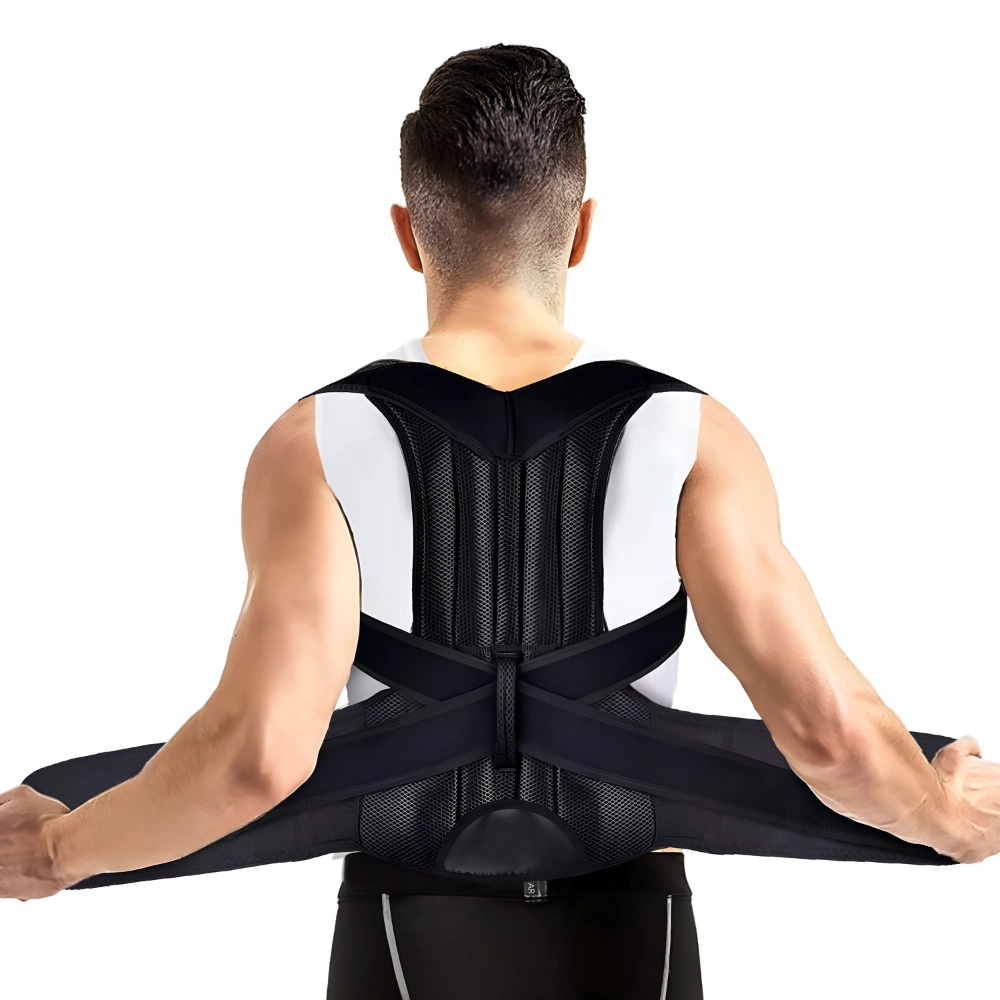
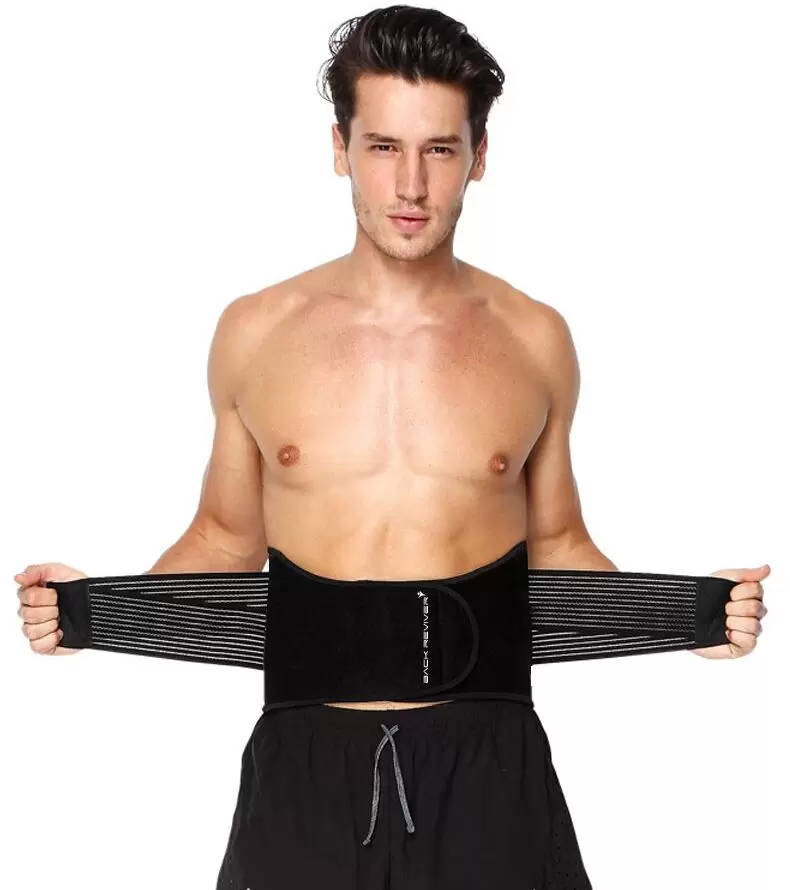
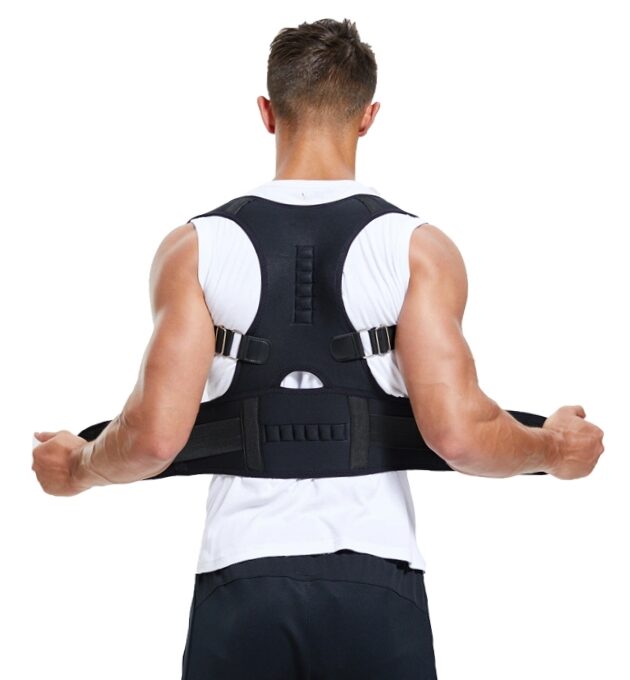
Upper Back Support
$11.69
$14.73
Upper back pain, posture, and how a support can helpAre you dealing with persistent upper back pain, shoulder strain, or a nagging ache in your neck that builds as the day goes on? Many adults notice that by mid‑afternoon their shoulders are heavy, the area between the shoulder blades is sore, and sitting or standing upright feels harder and harder.Most of the time this is closely linked to how the upper spine, shoulders and neck are held for long periods: shoulders drifting forwards, the head sitting in front of the body, and the upper back rounding into a slouch. If that sounds familiar, you are not alone.In that rounded position, your body weight sits further in front of your spine. The vertebrae and discs in the upper back and lower neck have to manage a longer lever arm, and the muscles at the back of the neck and between the shoulder blades are forced to work much harder just to stop you drooping forwards. Over hours, this extra effort and uneven loading can lead to a deep, dull ache and a sense of fatigue.An upper back support is a specialised brace that sits across the upper part of the spine and around the shoulders. The BackReviver Upper Back Support is designed specifically for this area. It gently guides the shoulder blades and upper spine towards a more neutral, upright position. Neutral here simply means the head roughly over the shoulders, the shoulders over the chest, and a gentle, natural curve in the upper back rather than a deep bend. By changing how the shoulders rest on the ribcage and how the head is balanced over the chest, it can reduce the constant, low‑grade strain that builds in muscles, joints and other soft tissues.When these structures are better supported and closer to mid‑range, individual joints and discs are not pushed as hard into full bend or twist, and postural muscles are not held at their longest length all day. Many adults notice that:The deep ache between the shoulder blades that usually appears by late afternoon is less intense or starts later.The heavy, dragging feeling across the tops of the shoulders eases.Sitting or standing upright feels more natural and less like a constant effort.Many also notice that they stand and move in a more open, upright way.Good posture is not about forcing yourself rigidly upright. It is about keeping joints and muscles in a comfortable middle position. In those mid‑range positions, joint capsules and ligaments are not being pulled to their limits, discs are not being squeezed unevenly at one edge, and muscles can share the work more evenly instead of being pinned in a shortened or lengthened position. A well‑designed upper back support can help you find and maintain that healthier mid‑range, especially during tasks that otherwise make you slouch or lean forwards.How the BackReviver Upper Back Support can helpThe BackReviver Upper Back Support from NuovaHealth is designed for adults who recognise that their upper‑back, shoulder or neck discomfort reliably worsens with poor posture or long periods in one position.You might recognise patterns such as:A tight band of pain across the shoulder blades after a day at a desk.Tension at the base of the neck and across the tops of the shoulders after driving or using devices.A visible rounding of the upper back and shoulders that creeps in as you tire.These patterns usually reflect the same forward‑head, rounded‑shoulder posture and prolonged slumping described above, where muscles and joints are under more strain for longer.The BackReviver Upper Back Support is intended to support a healthier mid‑range posture rather than holding you artificially straight. In this mid‑range, your joints are not pushed into full slouch or full arch; they sit between those extremes, where the forces through discs, facet joints and muscles are generally more manageable. Holding the thoracic spine and shoulder girdle closer to this zone means less uneven disc pressure, less shear on small joints, and less constant stretch of postural muscles.Specific design choices support this:A distinctive X‑shaped neoprene back panel spans the upper thoracic spine and shoulder‑blade region, with the centre of the “X” lying over the middle of your upper back where the shoulder blades almost meet.From each arm of the X, a padded strap runs forwards over or under the shoulder in a simple, backpack‑style path and fastens on the same side at the front, gently guiding the shoulders back towards the ribcage.Adjustable buckles and hook‑and‑loop fastenings let you set a level of guidance that reminds you to correct without feeling as if you are strapped rigid.By guiding you into this mid‑range and helping you stay there, the support reduces the time your upper spine and shoulders spend in the extreme positions that most often provoke pain. Those extremes are the deep ends of bend or twist where ligaments and joint capsules are near their limits and discs and small joints are under more compression or sliding strain. Spending fewer hours in those end positions can make it easier for irritated structures to settle.What happens to your upper back and neck when posture driftsWhen you sit or stand with rounded shoulders and your head pushed forwards, several things happen at once.The joints and discs in the upper back and lower neck are held in more bent positions. The front of each vertebra and disc is compressed, while the structures at the back are stretched. The small facet joints at the back of the neck can be pinched or compressed, particularly at the base of the neck, which often feels like an ache or sharp twinge when looking up or turning the head. The discs and the capsule tissue around those joints contain pain‑sensitive fibres, so prolonged pressure or stretch there can send persistent ache or stiffness signals.The muscles that hold you upright at the back of the neck and between the shoulder blades are kept in a lengthened, working position for long periods. They fatigue and become tender, creating the familiar dull, burning ache between the shoulder blades and at the base of the skull. When muscles work at a long length for long periods, blood flow and removal of waste products can be reduced, so they tire more quickly and feel sore.At the same time, the chest muscles at the front shorten and pull the shoulders inwards, reinforcing the slouch. The shoulder blades slide outwards and tip forwards on the ribcage, which reduces their stability and changes how the arm bone moves in the shoulder socket. This tipping forwards also narrows the space between the acromion and the structures underneath, making it easier for rotator cuff tendons and the bursa to be pinched when you lift the arm.These changes build gradually with months or years of repeated habits. Many adults notice patterns such as:The deep ache between the shoulder blades builds slowly during the day as the spinal extensor muscles tire.Tightness at the base of the neck and across the tops of the shoulders appears after long periods looking down or leaning forwards.Trying to “straighten up” quickly after being slouched feels stiff or even painful, because joints, ligaments and muscles have adapted to the rounded position.Over time, some muscles physically shorten, others weaken, and joint capsules and ligaments can stiffen in those angles, making upright positions feel unfamiliar and effortful. If you recognise that by a certain time of day you always have to shuffle in your chair or lean back over the top of it just to get some relief, this pattern will be very familiar.An upper back support like the BackReviver Upper Back Support directly changes how your upper spine and shoulder girdle are being loaded. It sits along the upper thoracic spine and around the shoulders, guiding the shoulder blades back towards the ribcage. This reduces the constant forward pull from tight chest muscles and lets the muscles between the shoulder blades work closer to their comfortable mid‑range instead of at full stretch. Bringing the shoulder girdle closer to the body’s centre also shortens the lever arm between the arms and the spine, so less force passes through the upper vertebrae and discs with each forward lean.By encouraging a more upright thoracic posture, the support reduces how much the upper back collapses forwards. This lessens the compression at the front of the discs and joints and the stretching at the back, which can make the deep, mid‑back ache less intense. It also provides an extra layer of support, sharing some of the work normally carried by your postural muscles. They no longer have to grip as hard for as long just to keep you from slumping, which can reduce fatigue across the upper back and neck.The BackReviver Upper Back Support also acts as a steady reminder. When you start to lean forwards or round your shoulders, you feel a gentle increase in strap tension or pressure from the back panel. This feedback prompts you to correct your posture before you drop fully into the deep slouch that aggravates your symptoms. Many adults describe that familiar moment where they realise they have “ended up on the edge of the chair, nose towards the screen”. With the BackReviver Upper Back Support on, the back panel and straps give a noticeable but comfortable cue as this starts to happen, helping you re‑align your head over your shoulders and your shoulders over your trunk.Over time, these repeated corrections help your body relearn what an upright posture feels like, so you can find that position more easily even without the brace. The support is there to guide and assist, not to replace your own muscle control.Design features that make the BackReviver Upper Back Support differentSupport focused on the upper back and shoulder girdleThe BackReviver Upper Back Support is shaped to follow the natural contours of the upper thoracic spine and shoulder girdle, with particular attention to where people commonly feel strain.A distinctive X‑shaped neoprene back panel sits over the mid–upper back, spanning the upper thoracic spine and shoulder‑blade region. The centre of the “X” lies over the middle of your upper back, where the shoulder blades almost meet. From each arm of the X, a padded strap runs forwards over or under the shoulder in a simple, backpack‑style path and fastens on the same side at the front. This design focuses support on the area many adults point to when they talk about a deep, late‑day ache, while gently guiding the shoulders back towards the ribcage.This strap design gently draws the shoulders back and slightly down, helping the shoulder blades sit flatter against the ribcage instead of tipping forwards and outwards. The X‑panel supports the upper spine closer to its natural curve, so it is less likely to sag into a deep C‑shaped curve during sitting or standing. This gives the muscles between the shoulder blades a more effective starting position. Muscles generate force and control most comfortably from a mid‑length, rather than being fully stretched or fully shortened, so this mid‑range position helps them cope better with long days.When you stand, sit or walk with the BackReviver Upper Back Support fitted correctly, the extra pull of the shoulders and arms sitting in front of the body is reduced. The shoulder blades stay better anchored on the ribs, which improves the base from which the arm moves and reduces the long‑lever strain on the upper vertebrae and discs. Everyday front‑of‑body activities such as desk work or standing to prepare meals can then feel less tiring on the upper back.Controls unhelpful extremes but lets you moveThe BackReviver Upper Back Support is designed to control the unhelpful extremes of posture without locking you rigid. It focuses on limiting sustained, end‑range positions while preserving free movement through the middle part of your range. End‑range positions are the very limit of what your spine can do – the deep slouches or large twists where ligaments and joint capsules are on maximum stretch and discs and facet joints can experience higher compression and side‑to‑side sliding forces. Mid‑range positions are the more moderate postures you use for most comfortable everyday movements.The brace reduces the time your upper back spends in its most rounded or sharply twisted positions, where joints, discs and ligaments are most stressed, while still allowing normal mid‑range movements needed for daily life, such as reaching forwards to a keyboard, turning to talk to someone next to you, or gently twisting to look over your shoulder.The shoulder joints can still move through the ranges typically needed for light daily activities, because the straps influence the shoulder girdle (the shoulder blades and collarbones) rather than clamping the ball‑and‑socket joints. You should still be able to raise your arms for usual tasks like dressing, using a keyboard, steering a vehicle or reaching to shoulder height, and turn your upper body modestly for routine tasks, while the brace helps reduce sudden, large twists that might aggravate sensitive structures.The aim is not to block movement, but to reduce how often and how long you stay in the extremes that your joints and discs find most provocative. That balance helps protect irritated tissues from the worst positions while keeping your muscles and joints moving through healthy, functional ranges. Many physiotherapists and other clinicians look for supports that limit deep slouching without fixing people in one position; the BackReviver Upper Back Support is built around that principle.Gentle compression and postural awarenessThe BackReviver Upper Back Support provides gentle, even compression across the upper back and around the shoulder strap regions. This improves contact between your skin and the support, making it easier to feel when your shoulders and upper back are starting to slump or twist. It can also limit some of the small, repeated sliding movements at structures such as the facet joints and costovertebral joints (where ribs meet the spine) that can irritate sensitive areas, especially around the base of the neck and between the shoulder blades.The neoprene compression works together with the material’s slight warmth to keep the covered muscles at a comfortable temperature. Warm muscles and soft tissues resist stretch less, so they move more easily when you first get up after rest and can feel less stiff, particularly in cooler environments. Instead of your muscles having to brace constantly to hold you upright against gravity, the brace shares some of that work. Over a day, many adults find this means less late‑day fatigue across the upper back and neck. It does not replace muscle function, but supports it, especially when used alongside strengthening and mobility exercises.Adjustable fit and targeted support zonesDifferent adults need different levels of support and reassurance. The BackReviver Upper Back Support includes adjustable straps and side buckles so you can fine‑tune the level of guidance.Tightening the shoulder straps increases the cue to bring the shoulders back and down, strengthening the reminder against rounding.Adjusting the side buckles alters how firmly the back panel hugs the upper spine, changing how much general support you feel there.Certain regions of the brace are structured to provide more focused contact over common sore areas, such as:The band of muscles between the shoulder blades, where many adults feel deep, end‑of‑day aching.The upper shoulder area near the base of the neck, where heaviness and tightness often build.Firm but comfortable pressure in these zones can give the nervous system a sense of support, which can reduce the need for local muscles to grip as hard. By improving alignment and providing steady feedback in these areas, the support can help those muscles feel less tense and fatigued during long periods of sitting or standing.Conditions and posture patterns this support can help withFor KyphosisUnderstanding kyphosis in adultsKyphosis means the upper back has curved forwards more than usual, so the posture looks hunched from the side. Instead of a gentle, even arc through the mid‑back, the upper part of the spine bends forwards more sharply and the shoulders and head tend to sit in front of the body.In a balanced spine, the front of each vertebra and disc shares some of the pressure and the muscles and ligaments at the back help support you without being on a constant stretch. With kyphosis, this balance changes. The front of the vertebrae and discs are compressed more, the soft tissues at the back are held long for much of the day, and the head often shifts forwards to keep your eyes looking straight ahead. That combination puts extra load on the mid‑back and on the base of the neck.Kyphosis can be driven by long years of slouched sitting, reduced strength in the muscles that straighten the upper back, and age‑related changes in the vertebrae themselves. These changes are common in mid‑ and later adulthood, so mild kyphosis is a frequent finding in this age group.How kyphosis feels in daily lifeAdults with kyphosis often describe:A dull, dragging ache between or just below the shoulder blades.A sense of fatigue when trying to stand or sit “up straight” for more than a short time.You may feel that:Standing still in queues or talking to someone face‑to‑face makes your upper back gradually sag and feel heavy.Walking for a while leaves you wanting to lean forwards over a trolley, rail or counter for relief, because that takes some of the weight off the back muscles.Looking straight ahead without lifting the chin is harder than it should be, so you find yourself tilting your head back on the neck to keep your gaze level.Many people notice that if they have been bent forwards for a while – for example, reading, cooking, or working at a surface – trying to pull themselves upright suddenly feels stiff, or even sharp, across the mid‑back. This is not usually a sign of serious damage; it reflects how the joints and soft tissues have adapted to the rounded position and lost some tolerance for more upright postures. If this pattern continues for years without change, standing tall can feel steadily harder and more tiring, and discomfort may become more constant.Standing, sitting and breathing with kyphosisKyphosis does not just affect how your back looks; it also changes how it behaves in different positions:When standing, you may only be able to hold a taller posture for short spells before the upper back “gives way” and rounds again. The muscles at the back of the spine and between the shoulder blades work hard at a stretched length to hold the curve, which is a tiring position to maintain.When sitting, especially without good support, the back often slumps into its curved shape quickly. Leaning back into a chair may feel easier than sitting upright over the sit‑bones, but can still leave the mid‑back aching by the end of the day.With breathing, a strongly rounded upper back can limit how freely the ribs at the back move. Some adults notice they feel a bit short of breath or “compressed” in the chest when they try to take a very deep breath in a hunched position, even though their lungs themselves are healthy.You might also find that the neck and lower back start to complain, because they try to compensate. You may over‑arch the neck to keep the gaze level, or over‑arch the lower back to “pull” yourself more upright, which can lead to extra strain at those levels.How the BackReviver Upper Back Support can help in kyphosisIn kyphosis mainly related to posture, where the curve can still be partly straightened, the BackReviver Upper Back Support can make it easier to hold a more comfortable, open posture without feeling you are fighting gravity all day.The BackReviver Upper Back Support:Sits across the upper thoracic spine and around the shoulders, gently lifting the chest and guiding the shoulder blades back towards the ribcage.Limits how far the upper spine can collapse into its most rounded position, so you spend more time in a middle curve rather than at the extreme.Shares some of the effort of holding you more upright, so the long, tired extensor muscles at the back do not have to take most of the load alone.Because the X‑shaped panel is centred over the part of the upper back that often feels most uncomfortable, it supports the exact area that typically tires first. In practice, that can change how common tasks feel. For example, when you are standing to prepare a meal or chatting to someone, you may usually feel your upper back gradually sag and your head creep forwards. With the BackReviver Upper Back Support fitted, you feel a gentle check from the back panel and straps as you start to sag. That reminder, combined with the physical support, helps you stay a little more open through the chest without constant conscious effort.By improving alignment in this way, the support can:Reduce the sense of drag and stretching across the back of the spine that feeds the persistent ache between the shoulder blades.Help the head sit more directly over the chest instead of far in front, lightening the load at the base of the neck.Make it easier to do the upright exercises and stretches your clinician may have recommended, because your everyday posture is no longer working against that training.The BackReviver Upper Back Support will not reverse a fixed bony deformity, and it is not a replacement for targeted exercise. However, for many adults with posture‑related kyphosis it offers realistic, day‑to‑day help: it makes a more upright alignment feel easier to maintain for longer, and it reduces the amount of time the spine spends in the most hunched positions that tend to provoke pain and fatigue.For Rounded ShouldersUnderstanding rounded shouldersRounded shoulders describe a posture where the shoulder joints sit further forwards than the middle of the body when viewed from the side. Instead of the shoulders resting comfortably over the ribcage with the shoulder blades lying flat on the back, the shoulders drift inwards and the blades slide outwards and tip forwards.This is mainly about the shoulder girdle – the shoulder blades, collarbones, and the muscles around them – rather than the spine alone. In a balanced posture:The chest muscles at the front have a relaxed, mid‑length position.The muscles between the shoulder blades hold the blades gently towards the spine.The shoulder socket faces roughly sideways, giving the arm bone space to move freely.With rounded shoulders, the front‑of‑chest muscles shorten and pull the shoulders in and down, the muscles between the shoulder blades are stretched and find it harder to support the blades, and the shoulder blades tilt forwards and out. Over time, the arm bone can sit slightly differently in the socket, which affects how comfortably you can raise and rotate the arm.Rounded shoulders are more likely to develop in those who spend long hours with the arms in front of the body – at keyboards, steering wheels, work surfaces or hand tools – and who do little to strengthen the mid‑back muscles that pull the shoulder blades gently together.How rounded shoulders feel in daily lifeAdults with rounded shoulders commonly describe:A tight or “closed in” feeling across the front of the shoulders and chest.A dull ache or burning between the shoulder blades after long periods with the arms in front of the body.Heaviness or fatigue across the tops of the shoulders, especially if the shoulders also tend to lift towards the ears.Trying to draw the shoulders back and down often gives a strong stretching sensation across the front of the chest and shoulders, and is hard to maintain for long. Lifting the arms towards or above shoulder height from a rounded starting position can feel stiff or slightly pinchy, particularly at the outer shoulder. By the end of the day, the shoulders can feel as if they are held forwards and it takes effort and concentration to let the chest open.How the BackReviver Upper Back Support can help in rounded shouldersThe BackReviver Upper Back Support is particularly well‑suited to rounded‑shoulder patterns because of how it supports the shoulder blades and upper back.When you wear the BackReviver Upper Back Support:The strap design gently draws the shoulders back and slightly down, helping the shoulder blades sit flatter against the ribcage instead of tipping forwards.The X‑shaped back panel supports the upper spine closer to its natural curve, making it harder to collapse into a deep rounded posture.The muscles between the shoulder blades can work nearer their comfortable middle length, rather than being on a constant stretch.This altered shoulder blade position can increase the space under the acromion (the bony roof of the shoulder), so that when you lift the arm there is less repeated pinching of the rotator cuff tendons and bursa.In practice, this can change how familiar tasks feel. For example, when typing or driving, many people find that without support the shoulders gradually creep forwards and inwards with time. With the BackReviver Upper Back Support, the brace provides a gentle check and reminder as that starts to happen. This keeps the shoulder girdle closer to a healthier position for longer. Reaching to shoulder height or slightly above may feel smoother and less pinchy when the arm starts from a better‑set shoulder blade, because there is more space under the acromion for the soft tissues to glide.Used alongside simple chest stretches and upper‑back strengthening exercises recommended by a clinician, the BackReviver Upper Back Support can help interrupt the rounded‑shoulder pattern, make a more open posture physically easier to hold, and reduce the strain that builds up around the neck, shoulders and upper back.For Forward Head PostureUnderstanding forward head postureForward head posture describes a position where the head sits in front of the shoulders instead of being balanced directly over them. From the side, the ears sit noticeably ahead of the middle of the shoulder line.The head is relatively heavy for its size. In a neutral position, its weight is stacked over the spine, and the load is shared sensibly between joints and muscles. When the head drifts forwards:The lower part of the neck bends forwards more than usual.The upper neck tilts back to keep the eyes level.The muscles at the back of the neck and top of the shoulders have to work harder and for longer to stop the head dropping further.Even a small forward shift of the head increases the bending moment on the lower neck. That means the same muscles and joints have to work much harder to support it. Over months and years, this can lead to extra wear on the joints and discs of the neck, and to a pattern where some muscles are tight and overworked, while deeper stabilising muscles at the front of the neck are weak or underused.How forward head posture feelsAdults with forward head posture often report:A band of aching or tightness at the base of the skull and upper neck.Pressure or burning across the tops of the shoulders, especially on long desk or driving days.Stiffness and discomfort when turning the head, particularly after looking down or leaning forwards for long periods.You may notice that:Looking down at a phone, book or tablet for 10–20 minutes is enough to bring on neck ache.By the end of a working day, reversing a vehicle, checking blind spots, or looking over your shoulder feels tighter and more effortful than it should.You sometimes experience tension‑type headaches that start in the neck and shoulders and spread into the head.Tight muscles at the base of the skull and upper neck can refer pain into the back of the head, temples or forehead, which is why these headaches can feel as though they start in the neck and travel upwards.How the BackReviver Upper Back Support can help in forward head postureThe BackReviver Upper Back Support does not sit on the neck, but it changes the posture of the upper back and shoulders, which is the foundation for head position.When you wear the BackReviver Upper Back Support:The upper thoracic spine is encouraged into a more upright curve instead of a deep slump.The shoulder girdle is brought back and slightly down, reducing the forward pull of the shoulders and arms.Your head can sit more directly over the new, more upright base without such a big effort from the neck muscles.With the upper back more upright, you no longer need to crank the neck backwards as much to keep your eyes level when the head is forward, which can reduce compressive load on the neck joints.This can make a real difference in daily tasks. During computer work, you are less likely to slide forwards in the chair and let the upper back round. The brace gives a gentle increase in pressure as that starts, prompting you to stay more upright, so the head does not need to crane so far towards the screen. Many people recognise the pattern of neck pain that makes reversing a vehicle or checking blind spots feel stiff by evening; using the support can mean the neck joints have spent fewer hours bent forwards under load, so those movements feel smoother.By improving the posture of the upper back and shoulders, the BackReviver Upper Back Support supports neck‑specific exercises and advice from your clinician, making it easier for your body to adopt and maintain a healthier head position through day‑to‑day life.For Tension HeadachesUnderstanding tension headaches linked to postureTension‑type headaches are usually felt as a dull, pressing or tightening pain rather than a pulsing sensation. They often feel like a band or weight around the head. For many adults, the muscles and soft tissues of the neck and shoulders play a major part in triggering these headaches.Several muscles in the neck and upper back attach to the base of the skull and surrounding structures. When they are held in a tense, shortened or stretched position for long periods – for example through slouching or forward head posture – they can:Become fatigued and tight.Develop tender spots that refer pain upwards into the head.Place extra tension on connective tissues around the skull.Pain that starts in these muscles and soft tissues can therefore be felt in the forehead, temples, or at the back of the head.How posture‑related tension headaches behaveAdults with tension‑type headaches that seem clearly linked to posture often notice:A steady, pressure‑type pain on both sides of the head that builds slowly over the day.Tightness and tenderness in the neck and shoulder muscles when pressed.A clear pattern where long periods of desk work, reading, or device use bring on or worsen the headache.You may find that:Getting up, stretching, or lying in a supported, neutral position eases the headache somewhat.The headaches come on more quickly on stressful days, when you are more likely to tense the shoulders or lean forwards without realising.Over months, it can take less time at the desk to trigger a headache.If these episodes are ignored and posture, tension and workload do not change, the neck and shoulder muscles can remain in a persistently heightened tension state, and even relatively modest stresses can be enough to trigger a headache. It is important to remember that headaches can have many causes. New, severe, or unusual headaches, or headaches with other worrying symptoms, should always be discussed with a healthcare professional.How the BackReviver Upper Back Support can help in tension headachesFor adults whose tension‑type headaches clearly link to neck and shoulder strain from posture, the BackReviver Upper Back Support can help by reducing some of the mechanical triggers.With the BackReviver Upper Back Support in place:The upper back is supported in a more neutral posture, so the head can sit more easily over the shoulders instead of drifting forwards.The shoulders are gently drawn back and down, which reduces the constant lift and forwards pull that keeps muscles at the top of the shoulders working hard.You receive gentle, continuous feedback about shoulder and upper‑back position, making it easier to notice and correct creeping slouch or shrugging before it becomes extreme.On days when you use the BackReviver Upper Back Support during longer desk, reading or driving sessions, you may notice that neck and shoulder muscles feel less tight and tired by the evening. The familiar band‑like headache may come on later or feel milder than on days with similar work but no support, because the neck and shoulder tissues are not being held in such strained positions for as long.The BackReviver Upper Back Support is not a direct treatment for all headaches, but where muscle tension and poor posture are clear contributors, it can reduce the strain on those structures and support other strategies you are using to keep tension‑type headaches under better control, such as regular movement breaks, stretches, relaxation strategies and an appropriate workload.For Upper Crossed SyndromeUnderstanding Upper Crossed SyndromeUpper Crossed Syndrome (UCS) is a pattern of muscle imbalance and posture seen in many adults. Instead of one single injury, it describes a predictable combination of tight and weak muscle groups that tend to “cross” each other when viewed from the side.Typically in this pattern:The muscles at the front of the chest and the back of the neck become tight and overactive.The deep muscles at the front of the neck and the muscles between the shoulder blades become lengthened and underactive.Visually, this often shows up as a forward head posture, rounded shoulders, and a slightly hunched upper back.In simple terms, some front and back muscles are too tight, while deeper stabilisers are too weak, so the head and shoulders are continually being pulled forwards. Because the same groups of muscles are involved in many people, this pattern can underlie several different symptoms, including neck pain, shoulder discomfort, upper‑back ache, and tension‑type headaches.How Upper Crossed Syndrome develops and feelsUpper Crossed Syndrome tends to develop in those who:Spend long periods with the head and arms forwards (desk work, devices, driving).Rarely train the deep neck flexors or the mid‑back muscles that bring the shoulder blades towards the spine.Carry a lot of stress‑related tension in the upper shoulders and the back of the neck.Over time, the body adapts to this forward‑leaning posture. The chest muscles shorten and pull the shoulders in and down, the muscles at the back of the neck work constantly to hold the head up and become tight and sore, and the deep neck flexors and mid‑back postural muscles switch off and lose strength. The nervous system starts to recognise this slouched, forward‑head posture as “normal”, making it harder to change without conscious effort.Adults with this pattern often notice:Persistent tightness at the base of the skull and across the tops of the shoulders.A deep ache between the shoulder blades that worsens with long sitting or standing.Difficulty holding a comfortable upright posture for more than a few minutes without feeling strained.Sometimes there may also be vague discomfort or tingling in the upper arms if nerves are irritated by the altered joint positions, though this always needs proper assessment.How the BackReviver Upper Back Support can help in Upper Crossed SyndromeThe BackReviver Upper Back Support is well matched to Upper Crossed Syndrome because it acts on both halves of the “cross”.It helps open the front of the chest and reduce the forwards pull from tight pectoral muscles by gently drawing the shoulders back and down. It supports the upper back with its X‑shaped panel and encourages the shoulder blades towards the spine, giving the mid‑back muscles a better position from which to work. It also indirectly supports a more neutral head position by improving the posture of the base that the neck sits on.In everyday use, this can mean that:When you sit at a desk, you feel a gentle reminder from the straps if your shoulders start to curl in, helping you keep the chest more open without constant self‑monitoring.The deep neck and mid‑back muscles that your physiotherapist is trying to strengthen are not constantly being overwhelmed by tight, overactive surface muscles, because the brace reduces the pull of the old posture pattern.Walking, standing and light functional tasks are done from a more balanced alignment, which can reduce how much neck and upper‑back strain builds up over the day.The BackReviver Upper Back Support is not a substitute for targeted exercises, but it can make that work more effective by reducing how often you drift back into the habitual Upper Crossed position in between sessions, and by making a better posture feel less like a constant effort against gravity.For Scapular WingingUnderstanding scapular wingingScapular winging occurs when the shoulder blade (scapula) lifts away from the ribcage instead of lying smoothly against it. You may notice that the inner border of one shoulder blade sticks out more than the other, especially when you push against something or lift the arm.The shoulder blade is a key part of shoulder function. It acts as a moving base for the arm, sliding and rotating on the ribcage as you lift, lower and rotate the arm. In normal movement, several muscles along the ribs and around the shoulder blade – including muscles that pull the blade flat towards the ribs – work together to keep the scapula close to the ribs and moving in a controlled way.If some of these muscles are weak, poorly coordinated, or affected by nerve problems, the scapula can lift away from the ribs like a small wing, tilt or rotate in an unhelpful way when the arm moves, and provide a less stable platform for the arm bone.How scapular winging affects comfort and strengthAdults with scapular winging may notice:A visible prominence of one shoulder blade compared with the other.Aching or fatigue around the shoulder, especially with repetitive or overhead tasks.A feeling that the shoulder is unstable or weaker when lifting, pushing, or carrying.Because the shoulder blade is not sitting flush against the ribcage, the muscles around it have to work harder to control movement. The path of the arm bone within the shoulder socket can also change, leading to more rubbing or pinching of the rotator cuff tendons and compensatory movement patterns in the neck and opposite shoulder. This winging can contribute to the same type of tendon pinching and shoulder discomfort seen in rotator cuff and shoulder impingement conditions.Any clear scapular winging or suspected nerve involvement should be assessed by an appropriate clinician, as the underlying cause often needs specific investigation and rehabilitation.How the BackReviver Upper Back Support can help in scapular wingingThe BackReviver Upper Back Support does not cure the underlying nerve or muscle problem that causes scapular winging, but in many cases, when a clinician recommends it, it can provide helpful external support and feedback.When you wear the BackReviver Upper Back Support:The X‑shaped back panel and straps provide firm but comfortable contact around the shoulder girdle and upper back, encouraging the shoulder blades towards the ribcage.You become more aware of the position of the winging shoulder blade, which makes it easier to follow cues from your clinician about how to set and move it.Excessive forward rolling or drooping of the shoulders is limited, which can reduce positions that aggravate winging and associated discomfort.In rehabilitation, this can mean that during light, permitted overhead or shoulder‑height tasks, the shoulder blade feels more secure, and the muscles do not have to manage all of the control alone. The neck and upper‑back muscles are less likely to develop secondary strain from constantly compensating for an unstable scapula, because overall posture is better managed. When practising scapular control exercises shown by your physiotherapist, you have a more consistent starting position for the shoulder blade, which can make those exercises more accurate and effective.The BackReviver Upper Back Support should always be used for scapular winging under clinical guidance, as the cause and the stage of recovery will determine how much external support is appropriate and when to use it.For Thoracic Outlet SyndromeUnderstanding Thoracic Outlet SyndromeThoracic Outlet Syndrome (TOS) refers to problems where nerves and/or blood vessels are squeezed as they travel from the neck to the arm. They pass through a narrow passage between the collarbone and the top rib and through nearby muscles and soft tissues – this area is called the thoracic outlet.Normally, there is enough space in this outlet for nerves and blood vessels to glide and function freely as you move. In TOS, that space can become tighter because of anatomical shape, previous injury or surgery around the collarbone or upper chest, or posture patterns such as drooped or rounded shoulders. When space is reduced, nerves and vessels can be compressed during certain positions or movements.Compressed nerves typically cause numbness, tingling, altered sensation or weakness, while compression of blood vessels can lead to heaviness, aching or changes in colour or temperature in the arm or hand.How Thoracic Outlet Syndrome feelsThoracic Outlet Syndrome often has a distinct positional feel to it. Adults commonly describe:Aching, heaviness, or a deep tired feeling in the neck, shoulder, arm, or hand when the arm is held up for a while.Numbness, tingling, or altered sensation in some of the fingers, especially when the arm is out to the side or above shoulder level.A sense that the arm quickly feels weak or heavy in certain positions, even with light tasks.Symptoms are often brought on or worsened by specific positions rather than general movement alone. You might be able to move the arm freely at waist height, but notice that holding it overhead, out to the side, or resting it on a high armrest quickly brings on discomfort, tingling or heaviness.Why posture matters in TOSPosture is not the only factor in Thoracic Outlet Syndrome, but it often plays a significant role in how narrow the outlet becomes:Drooped shoulders can pull the collarbone down towards the first rib, closing the gap that nerves and vessels pass through.Rounded shoulders and a forward head can tighten muscles such as the pectorals and some neck muscles that border the outlet, further reducing space.Long periods in these positions – for example, slumped at a desk or leaning forwards with elbows on a table – can leave the nerves more irritable, so they complain sooner when the arm is raised.Many adults notice patterns such as:Symptoms appearing quickly when driving with the arm up on a high steering wheel or resting on a window edge.Discomfort when carrying bags with long straps pulling the shoulder down.Relief when the shoulders are gently lifted and brought back and when the arm is lowered and supported closer to the body.How the BackReviver Upper Back Support can help in Thoracic Outlet SyndromeThe BackReviver Upper Back Support will not change your bone structure or directly treat nerve or blood vessel problems, and Thoracic Outlet Syndrome should always be assessed and managed with guidance from a clinician. However, when your clinician has identified posture as a contributor, the support can help you keep the thoracic outlet in more favourable positions through day‑to‑day tasks.The BackReviver Upper Back Support:Gently supports the shoulder girdle so the shoulders sit slightly more lifted and back, rather than drooping forwards and down towards the first rib.Encourages an open chest and a more upright upper back, which reduces the tendency for front‑of‑chest and neck muscles to tighten and squeeze the outlet.Gives you a consistent, mid‑range posture to work from when you are practising any specific exercises your clinician has recommended for TOS.In everyday terms, that can mean that activities like light reaching to shelves, steering, or using a keyboard are done with the shoulders set in a more neutral position, so symptoms may take longer to appear and be less intense. The tendency for the shoulder to droop under the weight of a bag or the arm itself is reduced, because the brace gives you a gentle “up and back” reminder.For some adults with Thoracic Outlet Syndrome where posture clearly affects symptoms, using the BackReviver Upper Back Support during higher‑risk periods – such as longer journeys, concentrated desk sessions, or tasks involving arms at or just below shoulder height – can reduce how quickly the arm feels heavy or tingles, by keeping the collarbone and shoulder a little further from the top rib.Any use of the brace for Thoracic Outlet Syndrome should be guided by your GP, physiotherapist, or another relevant clinician. They can help confirm that it is appropriate for your pattern of symptoms, advise which positions to avoid even with the brace on, and show you how best to combine the BackReviver Upper Back Support with exercises and other treatments.For Clavicle FracturesUnderstanding clavicle fracturesThe clavicle, or collarbone, connects the breastbone to the shoulder blade. It acts like a strut that holds the shoulder out from the chest, giving the arm room to move.When the clavicle fractures – often from a fall onto the shoulder or an outstretched hand – this strut is disrupted. In the early phase, there is sharp pain over the fracture site, swelling and bruising, and it is usually difficult and painful to lift or move the arm. The shoulder on that side often appears lower or closer to the chest for a time.Initial management focuses on allowing the bone to heal in the correct position. This is usually guided by a clinician and may involve a sling or other specific supports that are different from an upper‑back posture brace.Postural changes after a clavicle fractureAs the clavicle heals, it is very common to develop protective habits on that side, such as:Hunching the shoulder forwards and upwards to guard the area.Leaning the upper body away from the injured side.Holding the upper back stiffly or twisting slightly to avoid moving the collarbone.These habits are understandable in the early painful stages, but if they continue once the fracture has healed, they can lead to ongoing pain and fatigue in the neck and upper back, asymmetry between the shoulders, and reduced confidence using the arm normally. Over time, this long‑standing guarding can itself become a source of neck and upper‑back pain, even when the bone has united.How the BackReviver Upper Back Support can help after clavicle fractureThe BackReviver Upper Back Support is not used to treat the fracture itself and should only be considered once a clinician confirms that the bone has healed sufficiently and that more general posture work is appropriate.In the later stages of recovery, the BackReviver Upper Back Support can help to:Encourage both shoulders to sit in a more level, symmetrical position, rather than one being consistently hunched or rolled forwards.Support the upper back in a neutral posture, reducing the extra strain placed on the neck and opposite shoulder by long‑standing guarding.Provide a sense of gentle stability around the shoulder girdle, which can improve confidence when you start to use the arm more naturally in day‑to‑day tasks.As you return to ordinary activities – carrying light shopping, working at a desk, preparing meals – the brace can help stop you returning straight back to the protective hunch or twist that became your “safe” posture during healing. This makes it easier to retrain normal shoulder and arm use within the strengthening and mobility programme recommended by your clinician. Levelling the shoulders also helps even out forces through the neck and upper‑back joints on both sides, which can reduce overload on the side that has been compensating.Timing and how long to use the BackReviver Upper Back Support after a clavicle fracture should always be agreed with your treating clinician, as this depends on how the fracture has healed and whether there were any additional injuries.For Rotator Cuff InjuriesUnderstanding rotator cuff strainThe rotator cuff is a group of muscles and tendons that wrap around the shoulder’s ball‑and‑socket joint. Their key job is to keep the arm bone centred in the socket while you lift, lower and rotate the arm, and to guide it smoothly. They help prevent the “ball” of the shoulder from riding upwards into the bony roof (the acromion) as you move.In a healthy shoulder, the rotator cuff muscles work together to guide the arm smoothly, the tendons glide under the acromion, and there is enough space between the bones and soft tissues to move without friction.A rotator cuff strain or overload injury occurs when these tendons or their attachments are stressed beyond their current tolerance. This may happen from a single incident, such as lifting something heavy awkwardly, or more commonly over time through repeated overhead activity or frequent work at or above shoulder height. It is often made worse if the shoulder blade position and upper‑back posture are not ideal, because that changes the space and angles in which the cuff has to work.How rotator cuff problems feelAdults with rotator cuff involvement often notice:Pain around the outer part of the shoulder or upper arm, especially when lifting the arm to or above shoulder height.A painful “arc” – a particular band of movement, often between shoulder height and just above, where pain is at its worst.Weakness or a sense that the shoulder is not as strong or reliable, particularly in lifting away from the body or rotating the arm.Lying on the affected shoulder can also be uncomfortable, especially at night. Symptoms may settle with rest from aggravating activities but return when the same overhead or shoulder‑height tasks are repeated.How the BackReviver Upper Back Support can help in rotator cuff problemsThe BackReviver Upper Back Support does not treat the rotator cuff tendons directly, but by improving the posture of the upper back and shoulder girdle, it can make life easier for a sensitive cuff.When you wear the BackReviver Upper Back Support:The shoulder blades are gently guided back and slightly down, helping restore a more favourable tilt.The upper back is encouraged into a more open, upright posture instead of a deep slump.The shoulder joint starts movements from a more neutral alignment instead of a rolled‑in, rounded‑shoulder position.As a result, there is often more space for the rotator cuff tendons to move under the acromion when you lift the arm, and the ball of the shoulder is less likely to jam upwards into the bony roof. That means the tendons are exposed to less repeated compression and rubbing in daily activities. Rehabilitation exercises for the cuff can also be performed from a better base, where the X‑panel supports the upper thoracic spine and the shoulder blade is set in a more neutral position.In everyday terms, adults may find that lifting light items to shelves at or just above shoulder height, hanging washing, or performing their physiotherapy exercises feels smoother and slightly less provocative when performed in the BackReviver Upper Back Support. The support is best used alongside an exercise and activity‑management plan from a clinician, rather than as a stand‑alone solution.For Shoulder ImpingementUnderstanding shoulder impingementShoulder impingement describes irritation of soft tissues – typically the rotator cuff tendons and a small fluid‑filled sac called the bursa – as they pass under the bony roof of the shoulder (the acromion). The space between the acromion and the arm bone is limited, so when this space is further reduced, those tissues can be pinched during arm movement.Under normal conditions, the shoulder blade rotates and tilts in a coordinated way as you lift the arm, the rotator cuff keeps the arm bone centred in the socket, and the bursa cushions movement between tendon and bone. With impingement, repeated or poorly controlled arm lifting causes the tendons and bursa to rub against the acromion. Swelling and irritation further narrow the space, and certain movements become sharply or catchingly painful. Frequent work with the arms at or above shoulder height and age‑related changes in bone shape can also contribute to a smaller space.How shoulder impingement feelsAdults with shoulder impingement often report:A sharp, catching pain when lifting the arm out to the side or in front, especially between shoulder height and just above.Discomfort when reaching behind the back, such as for fastening clothing.Aching in the outer shoulder or upper arm after using the arm at or above shoulder level.Lying on the affected side can be uncomfortable, and repeated aggravation can make day‑to‑day tasks like dressing, reaching into cupboards or combing hair difficult.How the BackReviver Upper Back Support can help in shoulder impingementShoulder impingement is strongly influenced by the position and movement of the shoulder blade and upper back. The BackReviver Upper Back Support helps by changing this base alignment.With the BackReviver Upper Back Support:The shoulder blades are supported in a more neutral, slightly retracted position instead of hanging forwards.The chest is encouraged to open and the upper back to sit more upright, rather than collapsing into a deep rounded curve.As you move the arm, the shoulder blade can rotate more freely from a better starting position, helping maintain space under the acromion.A more upright thoracic spine allows the shoulder blade to tilt and rotate in a way that opens the subacromial space as you lift the arm, rather than closing it down. In daily life, this can mean that reaching to shoulder height or slightly above – for example, to cupboards or shelves – may feel less sharply painful because the tendons and bursa are not being compressed as much. Lifting tasks at work or home are performed with a more favourable shoulder‑blade position, which may reduce flare‑ups, and rehabilitation exercises aimed at improving shoulder‑blade control and cuff strength are easier to perform from a stable, upright upper‑back posture supported by the X‑panel.The BackReviver Upper Back Support should be used as part of a wider plan for shoulder impingement, including exercises and activity adjustments set out by a clinician, rather than as the sole treatment.For Frozen ShoulderUnderstanding frozen shoulder (adhesive capsulitis)Frozen shoulder, or adhesive capsulitis, is a condition in which the capsule around the shoulder joint becomes thickened, tight and inflamed. The capsule is a sleeve of connective tissue that normally allows a wide range of movement. When it stiffens, both movement and comfort are affected.Frozen shoulder usually progresses through three broad phases:A painful or “freezing” phase, where pain around the outer shoulder and upper arm gradually increases and movement becomes more limited.A stiff or “frozen” phase, where pain may settle slightly, but movement is very restricted, particularly rotation and reaching behind the back.A recovery or “thawing” phase, where movement slowly improves, though this can take many months.It is more common in adults in mid‑life and beyond, and sometimes follows a period where the shoulder has been kept relatively still after pain or injury.How frozen shoulder affects daily lifeAdults with frozen shoulder often find that everyday tasks such as dressing, reaching to shelves, or fastening items behind the back become very difficult or impossible on the affected side. Night pain is common, especially when rolling onto the affected shoulder. Simple tasks that used to be automatic, such as putting on a coat or washing hair, now require planning, modification, or assistance.Because the shoulder joint itself is so stiff, people often start to use their neck, upper back and trunk to “cheat” movement – twisting or leaning more than usual to get the hand where it needs to be. Over time, this can create secondary pain in those areas, even once the main shoulder pain has started to settle.How the BackReviver Upper Back Support can help in frozen shoulderThe BackReviver Upper Back Support does not loosen the tight shoulder capsule itself. That process is typically guided by a clinician through pain management, specific exercises and sometimes other treatments. However, the brace can support the rest of the upper body during the course of the condition.When you wear the BackReviver Upper Back Support:The upper back is encouraged into a more neutral posture instead of a sustained hunch or twist to avoid using the affected arm.Both shoulders are gently guided into a more symmetrical position, which can reduce over‑reliance on the non‑affected side.The neck and upper‑back muscles do not have to work quite as hard to stabilise the trunk during everyday tasks.As you perform the limited, clinician‑approved movements for the frozen shoulder, your trunk and shoulder girdle are less likely to twist or contort in ways that strain other areas. When doing everyday activities such as walking, light household tasks or desk work, you are less likely to fall into long‑term protective postures that may be harder to unlearn once the shoulder itself improves.Use of the BackReviver Upper Back Support in frozen shoulder should always be guided by a clinician, who can advise when to introduce it, how long to wear it, and how to combine it with your exercise and pain‑management plan. The main aim is to reduce extra strain on the neck and thoracic spine while the stiff joint capsule is being treated through other means.For Post-Surgical RecoveryUnderstanding post‑surgical recovery around the upper back and shouldersAfter surgery involving the upper back, shoulder girdle or thoracic spine, the body goes through a healing phase in which tissues need time, protection and gradual reintroduction of movement. This period may include pain and tenderness around the surgical site, stiffness and reduced movement, and understandable worry about moving too much or in the wrong way.In the early phase, specific supports, slings or braces prescribed by the surgical team are usually required. These are different from a posture support like the BackReviver Upper Back Support and must take priority.Postural challenges after surgeryAs pain settles and movement is gradually allowed, many adults fall into protective postures that made sense at first but become unhelpful if they persist. These include:Hunching the shoulders forwards to guard the area.Leaning away from the operated side.Holding the upper back rigidly rounded or arched to avoid movement.If these patterns continue for weeks or months, the neck, opposite shoulder and mid‑back can become tight and sore from compensating, the operated area may feel more stiff than necessary, and habitual poor posture can make later rehabilitation harder and less comfortable. Guarding can become a habit in its own right, and even when the surgical site has healed, these altered postures can remain as separate sources of pain.How the BackReviver Upper Back Support can help in later recoveryOnce your surgeon or physiotherapist confirms that it is safe to focus more on general posture and upper‑back support, the BackReviver Upper Back Support may be helpful in the later stages of recovery.When worn appropriately, the BackReviver Upper Back Support can:Encourage a more upright, balanced posture of the upper spine and shoulders, reducing excess guarding and one‑sided leaning.Support the upper‑back muscles so they do not have to work as hard to hold a neutral posture while you slowly increase everyday activity.Provide a sense of gentle stability during routine movements such as walking, sitting upright, or light arm use allowed in your rehabilitation plan.This can mean that walking for exercise or sitting for longer becomes more comfortable because you are not constantly tending to adopt a protective hunch or twist. The non‑operated shoulder and neck are under less strain, as they are not doing all the work to keep you upright, and you can better maintain the postural alignment your physiotherapist is trying to achieve in rehab exercises, even outside of formal sessions.The BackReviver Upper Back Support should only be used in post‑surgical recovery on the advice of your surgical or rehabilitation team. They can guide when to introduce it, how long to wear it, and how to integrate it safely with your specific movement and strengthening programme.For Degenerative Disc DiseaseUnderstanding degenerative disc disease in the upper spineDegenerative Disc Disease (DDD) describes age‑ or wear‑related changes in the discs between the vertebrae. In the upper spine (neck and upper thoracic regions), these discs act as cushions and spacers. They allow you to bend and turn while sharing load between the bones.In a healthy disc, the centre is gel‑like and springy, helping absorb shocks, and the outer ring is strong and fibrous, keeping everything contained. The disc has enough height to keep the vertebrae apart at a comfortable distance. With degeneration, the disc can lose water, become thinner and less elastic, and the outer ring can develop small tears. The vertebrae may sit closer together than before, and the way load passes through that level of the spine changes. These are common age‑ or wear‑related changes.Many adults have some disc degeneration on scans without much pain. Symptoms tend to appear when the changed disc or nearby structures such as facet joints and ligaments become irritated and sensitive.How degenerative disc changes behave day to dayWhen discs in the upper spine are irritated, the way pain behaves often has a recognisable pattern. Adults frequently report:A dull ache or stiffness in the neck, between the shoulder blades, or just below the base of the neck, especially after holding one posture for a long time.Symptoms building steadily with certain positions – often a sustained slouch or prolonged bending forwards – and easing with gentle mid‑range movement.Stiffness first thing in the morning or after a long sit that takes a few minutes of pottering around to loosen.During rest, discs absorb some fluid and can feel more pressurised and stiff when you first move; as you move gently, this fluid redistributes and the stiffness usually eases.Pain can sometimes be sharper with particular movements, like bending the head forwards fully or holding it fully back, or turning right to the end of range, especially if those movements are combined with load, such as lifting or carrying. If nearby joints or nerves are irritated at the same time, you may occasionally feel pain radiating into the shoulder or upper arm, but often the discomfort feels quite local to the spine itself.Another common feature is sensitivity to time in one position. Many adults find they can tolerate a posture for a certain window – perhaps 20 or 30 minutes at a desk or behind the wheel – and then the same area stiffens and aches if they push beyond that, especially if they are slightly slumped.How the BackReviver Upper Back Support can help in degenerative disc diseaseThe BackReviver Upper Back Support cannot reverse disc degeneration, but it can change how much strain is placed on sensitive discs by influencing posture and time spent in provocative positions.When you wear the BackReviver Upper Back Support:The upper thoracic spine is encouraged to sit nearer its natural curve rather than collapsing forwards into a deep slouch.Your head and shoulders are guided into a more balanced position over your trunk, so individual segments are less often pushed into full bend or extension just to hold your gaze level.The muscles that support the upper spine have some of their workload shared, so they do not have to brace as hard to keep you from slumping.In everyday terms, this often means that when you sit at a desk or drive for moderate periods, your upper back is less likely to drift into the deep slump that usually sets symptoms off. You may still need breaks, but the trigger position is reached more slowly. When you stand for tasks like cooking or chatting, you spend more time in that comfortable middle arc of the spine and less time allowing the upper back to round and the neck to crane forwards.By spreading load more evenly across several levels of the spine and reducing the time spent in the end positions that irritated discs often find uncomfortable, the BackReviver Upper Back Support can help make degenerative disc‑related pain more manageable across a day. It works best alongside a programme of regular movement, strengthening and pacing – a gradual build‑up approach to activity – recommended by your clinician, helping your posture support those efforts instead of undermining them.For OsteoarthritisUnderstanding osteoarthritis of the upper spineOsteoarthritis (OA) of the upper spine involves gradual wear and change in the small joints at the back of the spine (facet joints) and nearby structures. These joints help guide and limit movement such as bending, extending and turning the neck and upper back.In healthy joints, smooth cartilage covers the bone ends, allowing low‑friction movement, the joint space is maintained, and surrounding ligaments and capsule tissues are flexible but supportive. With osteoarthritis, cartilage thins and may become rough, the body may form small bony outgrowths (osteophytes) at the joint margins, and the joint capsule and supporting ligaments can thicken and stiffen. These changes can lead to pain, stiffness and reduced movement in the neck and upper back.How osteoarthritis of the upper spine feelsAdults with upper‑spine osteoarthritis commonly notice:Stiffness in the neck or upper back, especially first thing in the morning or after sitting still.A dull, aching pain around the back of the neck, sometimes spreading into the shoulders.Reduced range when turning the head, looking up or looking down.Symptoms often behave in a recognisable way. They feel worse after long periods in one position, such as a long drive or extended desk work. Gentle, mid‑range movement usually eases stiffness as the joints “warm up”, and overdoing an activity or holding extreme positions can cause a flare‑up – a temporary increase in symptoms. In some cases, bony changes or swelling can irritate nearby nerves, leading to pain or altered sensation into the arms, which always needs proper assessment.How the BackReviver Upper Back Support can help in osteoarthritisThe BackReviver Upper Back Support cannot reverse osteoarthritic changes, but it can help manage the mechanical stress placed on sore or stiff joints.With the BackReviver Upper Back Support:The upper back is supported closer to its natural curve, instead of dropping repeatedly into a deep slouch or being held rigidly arched.The shoulders are encouraged back and the head can sit more in line with the trunk, reducing long spells with the neck fully bent forwards.Surrounding muscles receive gentle support and do not need to grip as hard to keep painful joints in position.In day‑to‑day life, this may mean that desk work, driving or standing tasks are more comfortable because the neck and upper‑back joints spend less time at their extremes of bend or extension. The familiar stiffness after rest may be less intense or ease more quickly, as joints are not being taken to end range and held there as often, and muscles around the neck and upper back may feel less fatigued and tight by evening, because they are sharing the work with the support.By helping you avoid prolonged end‑range positions, the BackReviver Upper Back Support can reduce peaks of joint compression that tend to flare arthritic pain. It is most effective when used alongside a programme of appropriate exercise, mobility work, and advice from a clinician, with the aim of improving daily comfort and function rather than changing the underlying joint structure.For Upper Back Muscle SpasmsUnderstanding upper back muscle spasmsUpper back muscle spasms are sudden, involuntary contractions of muscles around the mid‑back, such as the trapezius and rhomboids. They can feel like a sharp, gripping pain or a hard knot that makes movement uncomfortable.These muscles are important for supporting posture, moving and stabilising the shoulder blades, and assisting with neck and upper‑back movements. When they are overloaded, irritated or feel threatened by a sudden movement, they may go into spasm – a protective tightening response.How and why spasms occurSpasms can be triggered by:A single incident, such as lifting or twisting awkwardly.Cumulative strain from long periods of poor posture where muscles are held in a disadvantaged position.Stress and tension, which increase baseline muscle tightness.Adults often describe:Sudden onset of sharp pain between or beside the shoulder blades.Difficulty taking a deep breath or turning the trunk without triggering pain.A feeling that the back has “locked”, leading to guarded, cautious movement.If the underlying postural or load problem is not addressed, spasms may settle but then recur, creating a cycle of repeated pain episodes and increased fear of movement.How the BackReviver Upper Back Support can help in muscle spasmsThe BackReviver Upper Back Support can help reduce the risk of recurrent posture‑related spasms by changing how the upper‑back muscles are loaded in daily life.When you wear the BackReviver Upper Back Support:The upper spine is supported in a more neutral position, so postural muscles are not constantly working at the extremes of their length.The X‑shaped panel helps keep the shoulder blades in a more stable alignment, reducing sudden shifts that can catch and trigger a protective spasm.You receive gentle feedback when you start to slump or twist further than is sensible for your current symptoms, which helps you keep movements within more comfortable ranges.As you recover from an initial spasm, this can mean that everyday tasks such as light lifting, desk work or standing are performed with fewer abrupt posture changes that might re‑provoke the muscles. Muscles are less likely to tighten sharply when they are not repeatedly yanked between slack and fully stretched positions. You may feel more confident moving, which reduces the tendency to over‑brace or hold yourself rigid – patterns that can themselves prolong soreness – and the muscles have more opportunity to settle and rebuild tolerance in a calmer, more controlled posture environment, especially when combined with gradual movement and strengthening advised by your clinician.The BackReviver Upper Back Support is not a treatment for an acute spasm in the first hours, but can be a useful support when you are returning to normal activities and want to reduce the chance of immediate recurrence linked to posture.For Costovertebral Joint DysfunctionUnderstanding costovertebral joint dysfunctionCostovertebral joints are the small joints where each rib meets the spine. They allow the ribcage to move with breathing and contribute to twisting and side‑bending of the upper body, while still providing stability.In costovertebral joint dysfunction, one or more of these joints becomes irritated or stiff. This may involve local inflammation of the joint surfaces or surrounding ligaments, or slight restriction or altered movement between the rib and the vertebra.How costovertebral joint problems feelAdults with costovertebral joint issues often describe:Localised sharp or aching pain close to the spine, often just to one side.Pain that worsens with deep breaths, coughing, sneezing, or twisting the trunk.A sense that part of the upper back is “stuck” or not moving as freely as the rest.The pain is often pinpoint when you press on the joint area and may be triggered by sudden twisting or reaching movements, repetitive strain from sport or manual tasks, or long periods of posture that unevenly load certain ribs and spinal segments. Sports or activities that involve repeated rotation, heavy asymmetrical lifting, or sitting for long periods in a twisted or slumped position can irritate these joints.How the BackReviver Upper Back Support can help in costovertebral joint dysfunctionThe BackReviver Upper Back Support can help manage mechanical stress on sensitive costovertebral joints by:Providing gentle, even compression across the upper back, which can limit excessive small movements at the irritated joint and give a sense of support.Supporting the thoracic spine closer to a neutral curve, reducing uneven loading on individual rib‑spine connections caused by slumped or twisted posture.Encouraging movements within more comfortable, mid‑range positions rather than sudden, end‑range twists and side‑bends.In everyday life, this may mean that turning slightly to reach for objects, or performing light daily tasks, feels more controlled and less likely to provoke sharp pain. You are less prone to slumping into positions that repeatedly stress the same costovertebral joint, and as the joint settles with time and appropriate treatment, you can increase your activity without immediately falling back into the exact movement patterns that caused the irritation in the first place.The BackReviver Upper Back Support is best used for costovertebral issues alongside assessment, exercises and any manual treatments recommended by a clinician, rather than as a stand‑alone solution.For Thoracic SpondylosisUnderstanding thoracic spondylosisThoracic spondylosis refers to degenerative changes in the middle section of the spine (the thoracic region). It usually involves a combination of wear and thinning of the intervertebral discs, osteoarthritic changes in the facet joints, and thickening or stiffening of ligaments around the vertebrae. Together, these changes alter how the thoracic spine moves and how load is shared through the mid‑back. They typically affect several levels rather than a single joint.How thoracic spondylosis feelsAdults with thoracic spondylosis may experience:Central or slightly one‑sided upper‑back pain.Stiffness especially after rest or on first moving in the morning.Reduced ability to twist or bend through the mid‑back.Symptoms often follow a pattern of stiffness that eases somewhat with gentle movement as the joints “warm up”, aching that increases with prolonged standing, sitting or repetitive tasks, and flare‑ups after unusual activity or long periods of poor posture. Sometimes, the body responds to irritation in these structures with protective muscle spasms, which can cause short, sharp episodes of upper‑back pain.How the BackReviver Upper Back Support can help in thoracic spondylosisThe BackReviver Upper Back Support cannot reverse degenerative changes, but it can help you manage the movements and postures that put extra strain on affected joints, discs and ligaments.With the BackReviver Upper Back Support:The thoracic spine is guided closer to its natural curve, reducing repeated collapse into deep flexion or excessive arching.Gentle compression and support can help limit small, repeated sliding movements between vertebrae that sometimes aggravate symptoms.Extreme or jerky twists and bends are less likely, as the brace encourages steadier, mid‑range movement.In daily life, this can lead to less mid‑back ache at the end of a day involving standing, walking or light chores, because the spine spends less time in the positions that usually provoke your symptoms. You may feel more confident moving, with fewer flare‑ups triggered by minor twists or sudden slumps, and you have a more supportive base for exercises and mobility work prescribed by your clinician, which can help maintain function and reduce stiffness over time.The BackReviver Upper Back Support should be used for thoracic spondylosis as part of a broader approach that includes appropriate movement, strengthening and professional guidance, not as a strict immobiliser.For Facet Joint SyndromeUnderstanding facet joint syndrome in the upper backFacet joints are small joints at the back of the spine, where each vertebra meets the one above and below. In the upper spine, they help control and limit movements such as bending, extending and twisting.In Facet Joint Syndrome, these joints become painful and irritated, often due to degeneration, repeated strain, or being loaded too heavily in certain positions. As cartilage wears and joint surfaces roughen, movement can become less smooth and more painful. Facet joints are particularly loaded in backward bending (extension) and rotation.How facet joint problems feelFacet‑related pain in the upper back may present as:Localised pain on one or both sides of the spine at a particular level.Pain that worsens with certain movements, such as arching backwards, twisting or side‑bending.Stiffness after rest that eases somewhat with gentle motion.Irritated facet joints can also trigger protective muscle spasms, causing sharp pain with particular movements and making the area feel “locked” at times. If the same aggravating movements and postures continue, facet pain can become long‑standing and limit confidence in moving freely.How the BackReviver Upper Back Support can help in facet joint syndromeBecause facet joint pain is very sensitive to position and movement, the BackReviver Upper Back Support can be useful for moderating those factors.When you wear the BackReviver Upper Back Support:The thoracic spine is supported in a more neutral posture, so the facet joints are not held for long periods at the extremes of bend or extension.Sudden or large movements into arching backwards or twisting are naturally limited, as the brace encourages more controlled, mid‑range motion.Gentle compression provides a sense of stability, which can reduce the need for surrounding muscles to brace sharply with every movement.In everyday activities, this can translate to getting up from chairs, walking, or performing light reaching tasks with less pain, because your spine is less likely to suddenly drop into positions that pinch the facet joints. You may have fewer episodes of sharp, catching pain during routine movements, as changes in posture are more gradual and supported, and you have a more secure base for exercises and stretches that aim to restore comfortable movement around the affected joints.The BackReviver Upper Back Support is not a cure for facet joint wear, but it can help manage symptoms and support safer movement patterns while you work with a clinician on strengthening, mobility and overall spinal health.For Upper Back StrainUnderstanding upper back strainUpper back strain refers to overstretching or small tears in the muscles or supporting soft tissues of the upper back, particularly around the thoracic spine and shoulder blades. These injuries can result from a single incident, such as lifting, pulling or twisting awkwardly, or from repeated smaller loads or poor posture over time, leading to cumulative overload.When muscle fibres or their attachments are overloaded, microscopic damage occurs and local inflammation develops. The body responds with pain, tenderness and sometimes protective tightening.How upper back strain feelsAdults with upper‑back strain often experience:Localised sharp or aching pain in a specific area, often near or between the shoulder blades.Pain that worsens with certain movements, such as reaching overhead, twisting, or taking a deep breath.Muscle tightness or spasms in the affected region and difficulty finding a comfortable position, particularly in the early stages.If the area is continually strained before it has a chance to recover – for example, by going straight back to long, slouched sitting or heavy lifting – the problem can become recurrent, with similar pain flaring up from time to time in the same spot. Repeated low‑grade overload can keep the tissue in a state of low‑level inflammation and sensitivity.How the BackReviver Upper Back Support can help in upper back strainThe BackReviver Upper Back Support can help support the healing and prevent recurrence of posture‑related upper‑back strain by changing how the affected area is loaded during daily life.When you wear the BackReviver Upper Back Support:The upper back is held closer to a neutral posture, reducing excessive stretching of healing tissues during sitting and standing.Gentle compression over the area can limit small, repeated movements at the site of strain and give a reassuring sense of support.You are encouraged to move within comfortable, mid‑range positions, which helps you avoid the extremes that tend to give sharp twinges.As you return to normal activities, this can mean that everyday tasks such as standing, walking, desk work or light household chores are more comfortable, as the strained area is not being constantly pulled or overloaded. You may feel more confident to move, reducing over‑guarding and stiffening that can delay recovery, and the tissue has more chance to heal properly while you remain gently active, especially when combined with a sensible progression of activity and any exercises your clinician recommends.The BackReviver Upper Back Support should be used alongside advice on rest from aggravating movements, gradual reintroduction of activity and strengthening, rather than as a reason to push through sharp pain.For ScoliosisUnderstanding scoliosis in adultsScoliosis is a condition where the spine curves sideways in an “S” or “C” shape when viewed from behind, usually with some rotation of the vertebrae. In adults, this curve may be a continuation of a curvature first noticed earlier in life, or a curve that develops later on, sometimes linked with uneven disc and joint wear or other spinal changes.In the thoracic region (upper back), scoliosis often changes how the ribcage and shoulders sit. One shoulder may appear higher, one side of the ribcage more prominent, or the waistline uneven. These postural differences reflect how the spine and ribs have adapted around the curve.Some adults carry a curve from earlier in life that has remained relatively stable, while others develop a new curve in later adulthood as discs and joints on one side wear more than the other. In both cases, the result is asymmetrical loading of muscles and joints on either side of the curve.How adult scoliosis affects comfort and movementMild to moderate scoliosis does not always cause pain, but when symptoms are present, they often have a recognisable pattern. Adults frequently report:A feeling of tightness, pulling or deep ache on one side of the upper back more than the other, especially after standing or sitting for a while.Uneven fatigue where one side of the back or shoulder girdle tires faster or feels as though it is doing most of the work.A sense that turning or bending to one side feels freer, while the opposite direction feels stiffer or more restricted.The curve means that on one side of the spine, structures are relatively compressed and on the other side they are relatively stretched. Muscles on the more compressed side may shorten and become tight, while muscles on the stretched side may be working harder to hold you up against gravity. Over years, if the most loaded side keeps doing more work, muscles and joints on that side can become persistently painful and stiff, even if the curve itself is not changing very much.How the BackReviver Upper Back Support can help in adult scoliosisThe BackReviver Upper Back Support is not a corrective scoliosis brace and will not change the underlying curve. Its role is to improve comfort and support more balanced posture around a mild to moderate curve, as advised by your clinician.The brace can:Provide consistent contact and support across the upper back and shoulders, so both sides of the upper spine feel supported rather than one side taking most of the load.Gently encourage the shoulders and upper trunk towards a more centred, upright position instead of allowing extra slumping or leaning into the curve.Give you clearer awareness of when you are drifting into positions that exaggerate the curve – for example, when one shoulder drops or rolls forwards more than the other.In everyday life, that can translate to:Sitting at a desk with a more even feeling across the upper back, rather than slumping into the side of the curve and letting one shoulder creep forwards.Standing and walking with less tendency to lean to your more comfortable side, which can reduce the end‑of‑day ache in the more loaded muscles and joints.Feeling more stable when you are doing light tasks such as carrying shopping, preparing meals or walking for exercise, because the upper back and shoulder girdle are supported in a more symmetrical way, within the limits of your existing spinal shape.The BackReviver Upper Back Support does not straighten the spine, but by helping you spend more of the day in a balanced posture around your curve, it can reduce some of the extra strain that makes scoliosis‑related discomfort worse. It works best alongside exercises aimed at keeping the spine mobile, strengthening underused muscles, and maintaining overall fitness, as recommended by a physiotherapist or another clinician familiar with your scoliosis.Comfort, fit and everyday wearEnhanced mobility designThe BackReviver Upper Back Support is structured to provide firm enough support to make a difference, without making you feel rigid or trapped. Its shape and materials are chosen so that, when correctly fitted, you can perform everyday actions such as typing, using a mouse, light lifting within your capability, and common household tasks without feeling restricted. The brace moves with your body in mid‑range motions, rather than cutting into your skin or shifting uncomfortably.Remaining able to move through comfortable ranges is important for joint and muscle health. Gentle movement helps joint cartilage receive nutrients and keeps muscles active enough to stay strong. The design is intended to protect you from the most aggravating postures while preserving the natural movements your spine and shoulders need. This means many adults can wear it during key parts of the day – such as working, travelling, or light activity – without having to change their usual routine very much, provided they build up wear time sensibly.Lightweight, durable neoprene constructionThe BackReviver Upper Back Support is made from strong yet lightweight neoprene. This material:Provides consistent, gentle compression without being bulky.Flexes with your movements while still offering enough structure to influence posture.Is designed for regular use and washing when looked after according to the care instructions.Wide, padded straps help distribute pressure over a larger area of the shoulders and chest. This reduces the likelihood of straps digging in or creating sore spots, which is important if you plan to wear the support for extended periods. Comfortable contact makes it more realistic to use the brace regularly enough to support long‑term posture change, especially when combined with conscious posture awareness and any exercises recommended by your clinician.If you are particularly sensitive to heat, you may prefer to wear a light layer of clothing under the brace and to start with shorter wear times, adjusting according to comfort.Universal fit with adjustable designThe BackReviver Upper Back Support uses a one‑size, highly adjustable design. Hook‑and‑loop fastenings and sturdy side buckles allow you to tighten or loosen the brace to your own shape. You can adjust the support to sit snugly without feeling restrictive, and it can be re‑adjusted easily if your comfort needs change over the day.Putting it on is similar to slipping into a backpack: you place your arms through the straps, settle the X‑shaped back panel over your upper back, then take the loose strap ends at the front and pull them forwards and slightly upwards until the support feels snug. You then fasten the strap ends back onto the main straps with the hook‑and‑loop so they stay in place. Once you have found the settings that suit you, it is straightforward to replicate that fit each time. If your clothing layers or bodyweight change significantly, it is worth re‑checking strap tension to keep the fit optimal.The slim profile means most adults can wear the BackReviver Upper Back Support discreetly under everyday clothing, which can help you feel comfortable using it in work or social settings. If you have existing spinal or shoulder conditions and are unsure about the best fit, it can be sensible to ask your clinician to check the adjustment for you.Breathable and moisture‑wickingTo make longer wear more tolerable, the fabric is designed to draw moisture away from the skin so that sweat can evaporate more easily, and breathable perforations and panels encourage air flow around the upper back and shoulders. This helps reduce heat build‑up and the clammy feeling some supports can cause. It can also help lower the risk of skin irritation that sometimes occurs with less breathable supports.Improved comfort and skin tolerance make it more practical to wear the brace during the periods when you most need posture support, such as working days or longer journeys. Individuals with very sensitive skin or a history of reactions to similar materials may benefit from wearing a thin layer of clothing under the brace and checking the skin regularly, and seeking advice if they have had problems with neoprene in the past.Gentle warmth for muscle comfortThe material of the BackReviver Upper Back Support also helps maintain a stable, comfortable temperature around the upper back muscles. Gentle warmth can support muscle flexibility, making them feel less stiff when you start moving after rest, and can reduce the sense of tightness that often accompanies long static positions in cooler environments.For instance, in a cool office, you may notice that getting up from your chair feels a little less locked through the upper back when you have had the support on, compared with sitting without any support or warmth.Easy maintenance and careThe BackReviver Upper Back Support is designed to be easy to look after. You can put it in a standard machine wash, following the care label, to keep it fresh and hygienic. The materials are selected to tolerate regular washing while maintaining their supportive properties when cared for appropriately. Regular cleaning helps preserve the comfort and breathability of the brace, particularly if you choose to wear it on most days.How to start using the BackReviver Upper Back SupportIntroducing a posture support gradually allows your body to adapt without unnecessary soreness or over‑reliance. This gradual build‑up is similar to the pacing approach many clinicians recommend – building up activities gradually rather than all at once.For most adults, a sensible pattern is to start with shorter wear times, such as 30–60 minutes a day, during the activities that most aggravate your symptoms, such as desk work or driving. Notice how your upper back and shoulders feel during and after use. Some mild awareness or a sense of using muscles differently is normal at first, but significant pain or nerve‑like symptoms, such as:tingling,numbness,burning,electric‑shock sensations,or sudden weakness,are not and should prompt you to loosen or remove the brace and seek advice if they persist.If it feels comfortable, you can gradually build up wear time over days or weeks, using the brace as a reminder and support rather than something you feel you must wear all day. Muscles and joints need time to adapt to a new posture. Jumping from no use to very long hours can leave you feeling overly tired or stiff, even if the posture is technically better. A graded approach helps tissues adjust more comfortably.Even when wearing the BackReviver Upper Back Support, it is important to change position regularly, stand up, walk around or perform gentle shoulder and upper‑back movements at intervals, and follow any exercise or movement advice given by your clinician. Changing position helps maintain healthy circulation to muscles and joints and reduces stiffness, even when you are sitting or standing in a good posture.The goal is to help your muscles learn to hold a better posture themselves over time, with the brace acting as a guide and support. Using the BackReviver Upper Back Support together with appropriate exercises and movement cues can make that learning process more effective. Many people find that after a few weeks they start noticing when their posture drifts even without the brace, which is often a sign that this “relearning” is happening.What to expect over timeWith regular, thoughtful use alongside appropriate movement and strengthening, many adults find that they develop a clearer sense of what comfortable, balanced posture feels like, rather than only recognising when they are already slouching. This improved awareness can develop relatively quickly, over days to a few weeks.End‑of‑day fatigue and aching in the upper back, shoulders and neck linked to posture often become less intense or take longer to develop. Symptom changes are usually more gradual, often over several weeks, and can vary from person to person. Over time, sitting or standing upright for everyday tasks tends to feel more natural and sustainable, with fewer urges to slump.Experiences differ between individuals and depend on factors such as:How long posture problems have been present.Underlying conditions such as degenerative changes or arthritis.How consistently the brace is used alongside exercise and sensible activity levels.The BackReviver Upper Back Support is not a quick fix or a substitute for tailored rehabilitation. For adults with long‑standing or more complex spinal conditions, it is likely to be one practical part of a broader plan that also includes movement strategies, strengthening, and other treatments, rather than the central solution on its own.Safety – when to get advice firstWhile a well‑designed upper back support can be a helpful part of managing posture‑related discomfort, it is important to treat new or changing symptoms seriously.You should speak to a GP, physiotherapist, podiatrist or another suitable clinician before depending on a brace if:You have had recent surgery or a significant recent injury to the spine, ribs, shoulders or collarbone, as these situations often require specific protection and rehabilitation strategies.You have been diagnosed with severe osteoporosis or another condition that makes bones fragile and more at risk of fracture.You experience new, severe, or rapidly worsening pain in the back, neck, shoulders, or arms, as this can indicate significant involvement of joints, discs or nerves.You notice new weakness, numbness, or altered sensation in the arms or hands, particularly if it is getting worse, which can suggest nerve involvement.You develop changes in bladder or bowel control or other concerning neurological symptoms.You have been told you have a complex spinal condition, such as a significant change in spinal shape (deformity) or history of major spinal operations, and are unsure whether a standard upper‑back support is appropriate.Any new or unexplained symptoms, especially if they come on suddenly, worsen quickly, or do not settle within a reasonable period, should be assessed promptly. A brace is not designed to diagnose or treat all spinal conditions and should not be used as a substitute for proper medical assessment.The BackReviver Upper Back Support and similar products are not recommended during pregnancy. Pregnancy changes spinal curves and abdominal pressure, and a generic upper‑back brace may alter loading in ways that are not appropriate without specialist advice.A clinician can provide an accurate diagnosis of your symptoms, advise whether a back support like the BackReviver Upper Back Support is suitable for you, and help you tailor how and when to wear it, including how long to use it at a time and how to integrate it with exercises and other treatments.30‑day trial periodThe BackReviver Upper Back Support is supplied with a 30‑day money‑back guarantee. This allows you to try the support in your own daily routine, check how it feels during the activities that usually provoke your symptoms, and decide whether it fits comfortably into your posture and pain‑management approach.Thirty days is usually enough to judge comfort, practicality and initial response, although some posture and symptom changes may continue to evolve beyond this period. If you do not feel it is right for you, it can be returned within this period for a full refund, so you are not tied to it if it clearly does not suit you.Conclusion – is this support worth considering for you?If your upper‑back, neck or shoulder discomfort reliably builds when you slouch, lean forwards or hold one position for too long, then the mechanics described here are likely playing a part: the upper spine rounds, the head creeps forwards, the shoulder blades tip away from the ribcage, and certain joints, discs and muscles are stressed hour after hour. That increases leverage on the upper vertebrae and keeps postural muscles at the back working hard at a long length, which can drive fatigue and pain.The BackReviver Upper Back Support is designed to guide you back towards a more balanced, mid‑range posture in real‑world situations like desk work, driving and household tasks. Its distinctive X‑shaped neoprene back panel over the upper thoracic spine and shoulder‑blade region, wide padded straps and adjustable buckles work together to support the upper back exactly where many people feel it most, share some of the load normally carried by tired muscles, and give clear feedback when you drift into the postures that usually set your symptoms off.It does not replace exercise or individual clinical care, but many adults find that using a structured support like this makes it more realistic to apply posture advice and to keep better alignment going through the day. If the patterns described here sound familiar, and especially if you are already under care for your back, neck or shoulders, it may be sensible to discuss the BackReviver Upper Back Support with your clinician.If they agree it is appropriate for you, using the 30‑day money‑back period to try the brace during your most demanding tasks – such as longer desk sessions, driving, or standing to prepare meals – is a straightforward, low‑risk way to see how it feels in your own routine. Any trial is likely to be more helpful when combined with posture exercises and activity changes recommended by your clinician, rather than relying on the support alone.DisclaimerThe information provided here is general guidance for adult readers in the UK and is not a substitute for personalised medical advice, diagnosis or treatment. It does not take into account your full medical history or specific circumstances. If you have ongoing, severe or changing symptoms, or are unsure whether this product is suitable for you, you should speak to a GP, physiotherapist, podiatrist or another appropriate clinician. No particular outcome or level of symptom relief can be guaranteed, and the BackReviver Upper Back Support should be used as one part of a wider management plan agreed with a clinician.
Back Supports